



JX1600 Threaded Anti-skid Shoe Spikes Metal Injection Molding Parts
The threaded anti-skid spikes for perforated tires are complete in series such as standard threaded anti-skid spikes, large threaded anti-skid spikes, and racing threaded anti-skid spikes.

There are many types of anti-skid spikes, including anti-skid shoes and car tires.
The 6.5-1 series is universal for anti-skid shoes.
There are many types of snow tire anti-skid spikes. The flat head anti-skid spikes universal for perforated tires are 8-1 series, 9-1 series, 12-1 series, 8-11-2 series, 9-11-2 series, etc.
The threaded anti-skid spikes for perforated tires are complete in series such as standard threaded anti-skid spikes, large threaded anti-skid spikes, and racing threaded anti-skid spikes.
Research on injection molding process of tungsten-copper composite materials
W-Cu composite materials combine the high strength, high hardness, low expansion coefficient of tungsten with the high thermal conductivity and high electrical conductivity of copper. Due to its good comprehensive performance, it is widely used in electronic devices, military industry, aerospace and other fields. Traditional powder metallurgy methods and melt infiltration processes are difficult to obtain W-Cu materials with complex shapes and uniform microstructures, and cannot meet the requirements of modern science and technology for the development of high-performance complex parts. Metal injection molding technology has technical and cost advantages over traditional processes in the preparation of small-sized complex parts. Although the properties of W and Cu, such as incompatibility and difficulty in densification, limit the production of W-Cu composites by injection molding to a certain extent, the selection of appropriate injection molding process parameters and binder components can obtain W-Cu products with dimensions and performance that meet the requirements. In this paper, W-20wt%Cu composites were prepared by injection molding using a paraffin-based binder system. The injection molding process of W-Cu composites was studied from two aspects: process parameter optimization and binder optimization. The influence mechanism of each injection molding process on the size and performance of the injection sample was analyzed, the optimal process parameters for injection molding were explored, and the optimization design was carried out based on the original wax-based binder composition. In this paper, 66PW-15EVA-15HDPE-4SA binder system was first used to mix with W-Cu powder to prepare a feed with a powder loading of 58vt%. After injection molding, the binder in the injection green body was removed by solvent degreasing + thermal degreasing, and finally W-20Cu composite materials were sintered. The influence of injection process parameters on the size and mechanical properties of injection samples was studied from five aspects: feed preparation, injection molding, solvent degreasing, thermal degreasing, and sintering. The study shows that the injection process parameters have an important influence on the defect control of the injection process, the bending strength of the injection green body, and the shape retention of the green body. Under the conditions of injection temperature of 165℃, injection pressure of 110bar, and injection speed of 40%, W-Cu injection green bodies with high strength and no defects can be obtained. In the process of solvent degreasing, the solvent degreasing rate increases with the increase of solvent degreasing temperature, time and powder loading. In addition, the solvent degreasing mechanism was analyzed, and the solvent degreasing kinetic constants at different temperatures were calculated, which provided a theoretical reference for the design of solvent degreasing process in production. The weight loss of the binder during the thermal debinding process was analyzed by the TG-DSC curve of the binder and the feed material, and the thermal debinding process was formulated to obtain a thermal debinding green body without defects and with a certain strength. The mechanical properties of the thermal debinding green body increased with the increase of the maximum thermal debinding temperature, and the flexural strength of the thermal debinding green body at 950℃ could reach 83.87MPa. In the temperature range of 1100~1300℃, the density of the W-Cu sintered sample increased with the increase of the sintering temperature. After sintering at 1300℃ for 2h in a hydrogen atmosphere, the density of the W-Cu sintered sample reached a maximum of 94.74%. On the basis of using the original paraffin-based binder to prepare W-Cu composite materials, in order to improve the performance of the wax matrix in the binder, this paper prepared the W-20Cu composite material by adding a certain amount of microcrystalline wax to the paraffin to prepare a wax matrix under the original injection process parameters. Studies have shown that adding different amounts of microcrystalline wax can increase the injection temperature range of the W-Cu injection feed material and obtain an injection green body with better strength. The W-Cu injection green body containing microcrystalline wax still has high flexural strength after solvent degreasing and thermal degreasing. This may be because when microcrystalline wax is used as a paraffin matrix, it can be mixed more evenly with the binder, so that a relatively uniform pore channel is formed in the degreased green body after degreasing, which is conducive to more uniform contact between powder particles. Among them, when the mass fraction of microcrystalline wax is added to the binder with a mass fraction of 20%, the solvent degreasing rate of the W-Cu injection green body is the fastest, and the density of the sintered sample is the highest at 95.02%, with good flexural strength and conformality
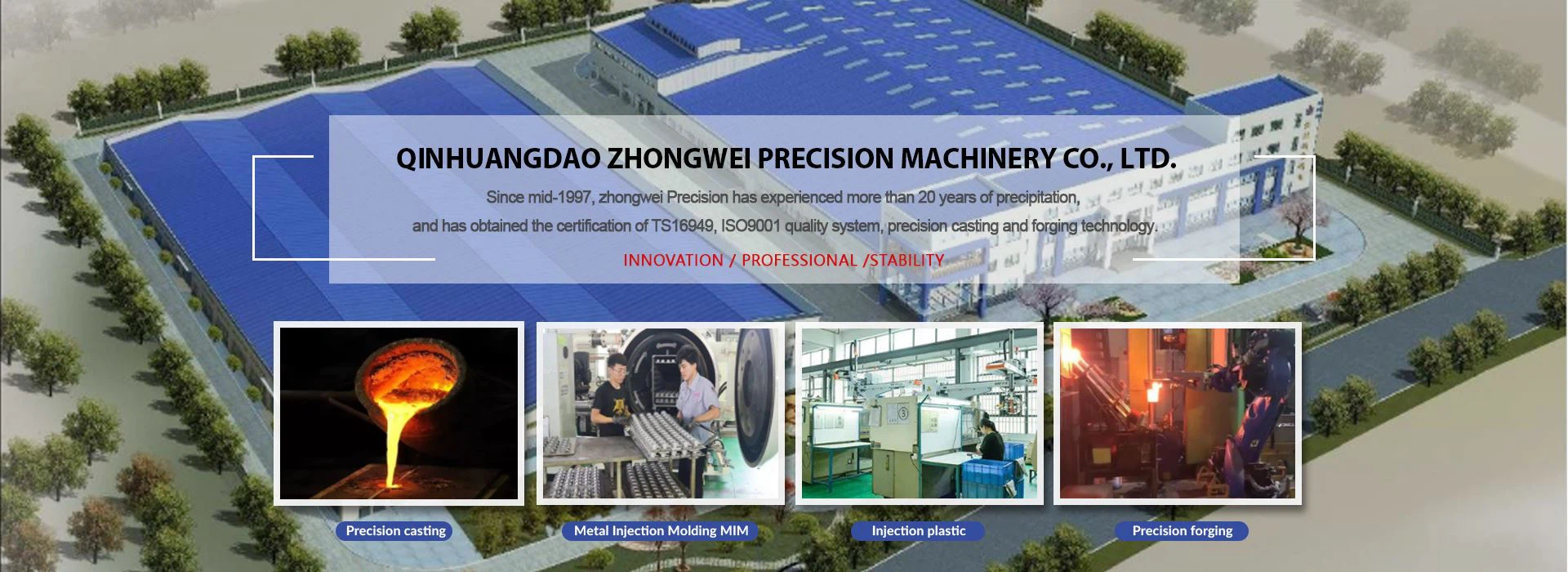
MIM is the abbreviation of Metal Injection Molding, which is a near-net shape molding technology that injects metal powder into a mold after mixing and kneading with a binder. Zhongwei Precision MIM Project was established in 2003, mainly engaged in the research and development and production of tungsten alloy MIM and titanium alloy MIM. As the project continues to grow, production lines for metals such as stainless steel have been added. At present, the project has MIM processing platforms and production lines for tungsten alloy, stainless steel, iron-based alloy, copper alloy, soft magnetic material, non-magnetic steel and other materials, as well as sintering equipment such as atmosphere protection push plate furnace and vacuum furnace, with a monthly production capacity of more than 50 million pieces.


Send Inquiry
