



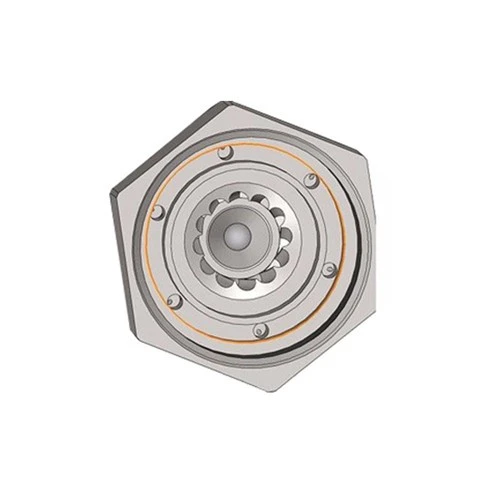

Tungsten Alloy Atomizing Nozzles MIM Parts
Atomizing nozzle enjoys a good reputation in the spray industry for its good spray effect. But few people know that there are actually two common spraying methods for atomizing nozzles, namely medium atomization and mechanical atomization.
Product Description
|
Tungsten Alloy Atomizing Nozzles MIM Parts |
|||||
|
Item |
Material |
Production Process |
Sintering Temperature |
Mold |
Custom |
|
Tungsten Alloy |
Atomizing nozzle |
Metal Injection Molding |
1650°C |
To be customized |
Yes |
|
Available Materials |
Low carbon stainless steel, titanium alloy (Ti, TC4), copper alloy, tungsten alloy, hard alloy, high temperature alloy (718, 713) |
||||
Atomizing nozzle enjoys a good reputation in the spray industry for its good spray effect. But few people know that there are actually two common spraying methods for atomizing nozzles, namely medium atomization and mechanical atomization.
1. Medium atomization
The medium atomization of the atomizing nozzle can be subdivided into bubble atomization and pneumatic atomization according to the different atomization medium.
①Bubble atomization
The advantages of the atomization method of bubble atomization are less air consumption, high atomization quality, and the atomization effect is basically not affected by the outlet diameter. Therefore, bubble atomization is more suitable for atomizing high-viscosity liquid fuels such as heavy oil and residual oil. The principle of bubble atomization is to inject compressed air into the liquid, and make the two form a stable bubble-like two-phase flow in the mixing chamber of the atomizing nozzle, which changes drastically at a very short distance from the outlet of the atomizing nozzle, prompting its sharp change. It expands until it breaks, and further breaks the liquid film wrapped around it into finer liquid mist particles.
②Pneumatic atomization
Pneumatic atomization can obtain good atomization effect under low fuel supply pressure, and can also obtain high atomization quality when using high-viscosity fuel, and can be adjusted in a wide range and used flexibly. The principle of pneumatic atomization is to rely on a certain pressure of gas to form a high-speed airflow, so as to promote the formation of a high relative velocity between the gas and fuel to achieve the purpose of atomization.
2. Mechanical atomization
Mechanical atomization mainly relies on the high-speed jet flow generated by the fuel under the action of pressure difference to atomize the fuel, and can be subdivided into three types: direct spray, centrifugal and rotary atomization.
The atomization of the atomizing nozzle can turn the liquid fuel into very fine particles and a uniform liquid mist to increase the contact area between the liquid fuel and the combustion air, which can effectively promote evaporation, so that the fuel can be fully and effectively burned, and The finer the atomized particles, the more fully the combustion will be. Therefore, choosing a good atomizing nozzle is an important way to improve production efficiency and save energy.
The atomization forms of carbide atomizing nozzles can be divided into pressure atomization, rotary atomization, electrostatic atomization, ultrasonic atomization and bubble atomization. Because of its good atomization effect and wide coverage, it is widely used in spraying, dust removal and humidification in agricultural production and industrial manufacturing. Carbide pressure atomizing nozzle means that under the action of high pressure of the liquid, the jet is sprayed from the nozzle at a high speed and suspended in the static or low-speed air flow to form atomization. According to the internal structure of the nozzle, it can also be subdivided into direct nozzle atomization and centrifugal nozzle atomization.
The principle of the rotary atomizing nozzle is to supply the liquid to the high-speed rotating center, so that the liquid is thrown out by centrifugal force and aerodynamic force to form an atomization effect. When the liquid flow rate is small, the centrifugal force is greater than the surface tension of the liquid, and a small number of large droplets are thrown from the edge of the turntable and split directly. When the flow rate and rotational speed increase, the liquid is pulled into many filamentary jets and becomes extremely unstable, and the liquid separates into small droplets due to friction with the surrounding air after a certain distance away from the edge of the disk. As the flow rate and rotation speed increase to a certain extent, the formed liquid film expands outward and becomes thinner, and at the same time, it rubs against the surrounding air to separate the atomization. Electrostatic atomization, bubble atomization, and ultrasonic atomization are all medium-type atomizing nozzles. This type of nozzle enhances the fluidity of the surrounding air flow, and uses high-speed or even supersonic speed to contact with low-speed liquid or liquid film to generate friction and vibration. small droplets. Compared with other types of nozzles, tungsten carbide nozzles can achieve the spray effect without an air compressor, and the shape of the atomization is generally circular or fan-shaped. In addition, atomizing nozzles also play a very important role in air conditioning. It is configured on the pipeline of the heat exhaust air of the air conditioner, and the heat generated during the working process of the air conditioner can be effectively reduced through the atomized water mist.
Metal Injection Molding Process

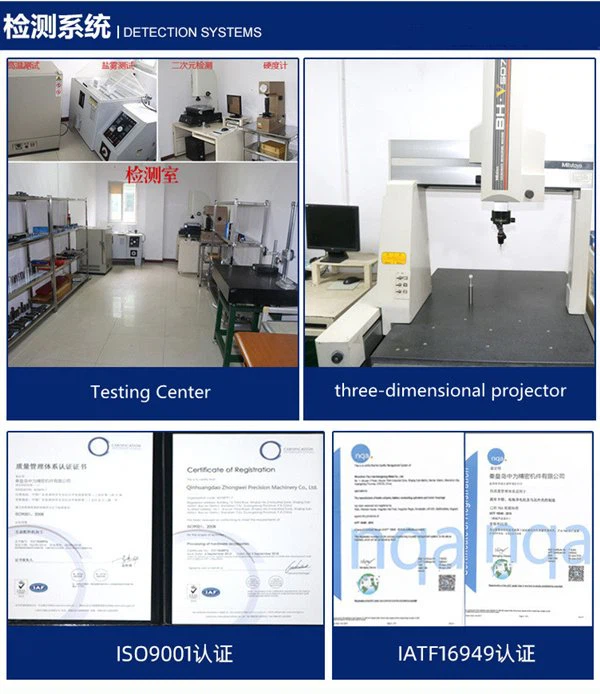
Detection Systems



Send Inquiry
