



JX1200 Sole Threaded Anti-skid Spikes Metal Injection Molding Parts
MIM powder injection molding technology is a new type of powder metallurgy near-net forming technology formed by combining modern plastic injection molding technology with traditional powder metallurgy process.

There are many types of anti-skid spikes, including anti-skid shoes and car tires.
Threaded anti-skid spikes range from standard threaded anti-skid spikes to large threaded anti-skid spikes to racing threaded anti-skid spikes.
Anti-skid shoes generally have 6.5-1 series, JX100, JX110, JX300A, JX300B, etc.
Tires generally have 8-1 series, 9-1 series, 12-1 series, 8-11-2 series, 9-11-2 series, etc.
Racing cars, ice and snow drift races special anti-skid spikes generally have 6-20, 6-25, 6-27, etc., all steel and tungsten steel nail cores are available!
MIM metal powder injection molding - molding processing technology in the 21st century. What is MIM? What kind of products is it suitable for?
MIM powder injection molding technology is a new type of powder metallurgy near-net forming technology formed by combining modern plastic injection molding technology with traditional powder metallurgy process.
It is suitable for mass production of small, precise, three-dimensional complex shapes and metal parts with special performance requirements.
What Are The Technical Characteristics of MIM?
1. Because it is formed by an injection molding machine, the molding method is similar to plastic injection molding, so it can directly form small parts with complex geometric shapes (0.03g~200g);
2. Because the powder is very fine, the part size accuracy is high (±0.1%~±0.5%), and the surface finish is good (roughness 1~5μ);
3. The product has a high relative density (95~100%), uniform organization, excellent performance, density above 7.6, and heat treatment HRC greater than 58.
4. It is suitable for the molding of various powder materials and has a wide range of product applications;
5. The utilization rate of raw materials is high, the degree of production automation is high, and it is suitable for continuous mass production.
What Materials Can MIM Process?
In principle, MIM technology can be applied to any material that can be made into powder. The main MIM material systems currently used are: Zhongwei Precision now provides alloy steel, stainless steel, iron-based alloy, magnetic material, tungsten alloy, titanium alloy, cemented carbide, fine ceramics and other series.
I am using other processes now. Can you introduce the detailed comparison with other processes?
MIM vs. metallurgy
- MIM can manufacture products with complex shapes and avoid more secondary machining.
- MIM products have high density, good corrosion resistance, high strength and good ductility.
- MIM can combine PM products into one MIM product, saving materials and processes.
MIM vs. machining
- MIM design can save materials and reduce weight.
- MIM can repeatedly crush the gate material after injection without affecting product performance and high material utilization.
- MIM forms complex products through molds at one time, avoiding multiple machining processes.
- MIM can manufacture parts with complex shapes that are difficult to machine.
MIM vs. Precision Casting
- MIM can manufacture thin-walled products, the thinnest of which can be 0.2mm.
- MIM products have better surface roughness.
- MIM is more suitable for making fine blind holes and through holes.
- MIM greatly reduces the workload of secondary machining.
- MIM can quickly manufacture small parts in large quantities and at low cost.
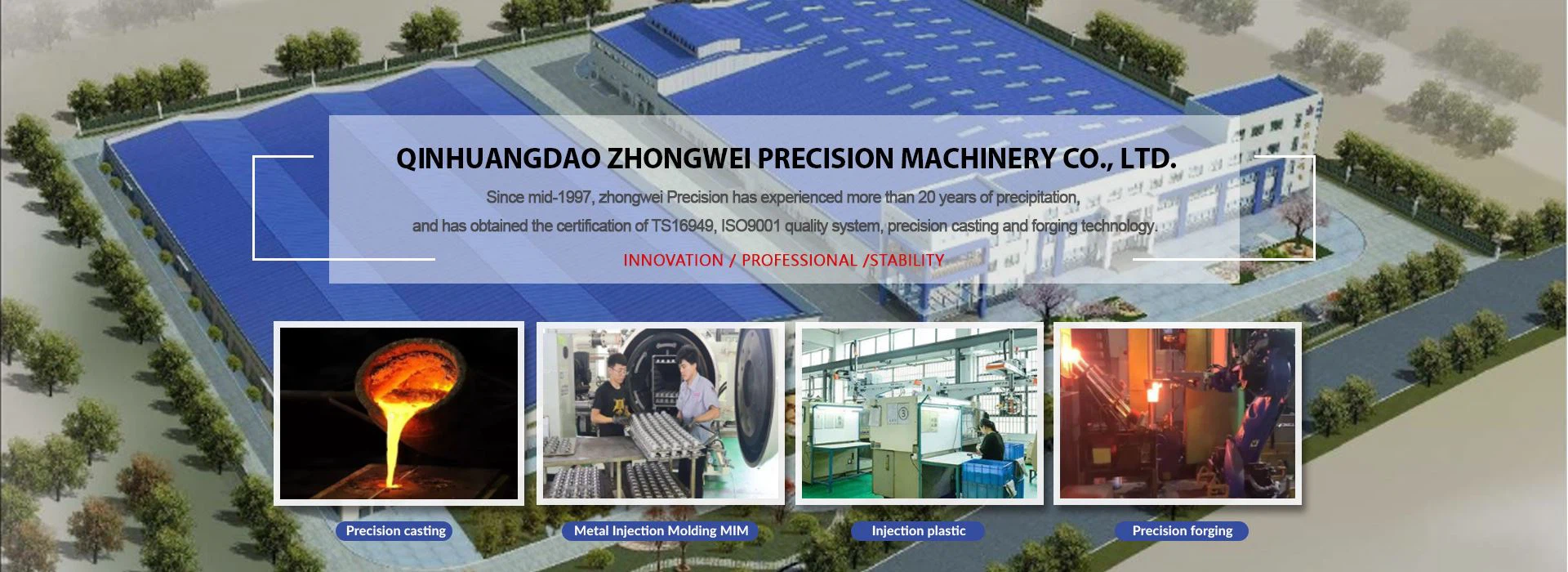
MIM is the abbreviation of Metal Injection Molding, which is a near-net-shape molding technology that injects metal powder into a mold after mixing and kneading with a binder. Zhongwei Precision MIM Project was established in 2003, mainly engaged in the research and development and production of tungsten alloy MIM and titanium alloy MIM. As the project continues to grow and develop, production lines for metals such as stainless steel have been added. At present, the project has MIM and processing platforms and production lines for tungsten alloy, stainless steel, iron-based alloy, copper alloy, soft magnetic material, non-magnetic steel and other materials, and has sintering equipment such as atmosphere-protected push plate furnace and vacuum furnace, with a monthly production capacity of more than 50 million pieces.


Send Inquiry
