



X2CrNi189 Metal Powder Injection Molding
The production process of austenitic stainless steel has good performance, especially chromium-nickel austenitic stainless steel. The conventional means of producing special steel can smoothly produce various commonly used specifications of plates, tubes, strips, wires, bars, forgings and castings. Application of SUS316 metal powder injection molded parts in mechanical design!
Product Description
|
X2CrNi189 metal powder injection molding |
|||||
|
Item |
Material |
Production Process |
Sintering Temperature |
Mold |
Custom |
|
X2CrNi189 |
Stainless steel |
Metal Injection Molding |
1500°C |
To be customized |
Yes |
|
Chemical composition |
C:≤0.03 Si:≤1.00 Mn:≤2.00 P:≤0.045 S:≤0.015 Cr:17.00~19.50 Mo:— Ni:8.00~10.50 N:≤0.11 |
||||
|
Available Materials |
Low carbon stainless steel, titanium alloy (Ti, TC4), copper alloy, tungsten alloy, hard alloy, high temperature alloy (718, 713) |
||||
German standard (EN) X2CrNi18-9 stainless steel, executive standard: DIN 17440-1979
Austenitic stainless steel
The production process of austenitic stainless steel has good performance, especially chromium-nickel austenitic stainless steel. The conventional means of producing special steel can smoothly produce various commonly used specifications of plates, tubes, strips, wires, bars, forgings and castings.
Austenitic stainless steel can also produce castings. In order to improve the fluidity of molten steel and improve casting performance, the alloy composition of cast steel should be adjusted: increase the silicon content, relax the range of chromium and nickel content, and increase the upper limit of the impurity element sulfur content.
X2CrNi18-9 stainless steel, German DIN standard stainless steel. Corresponding to 022Cr19Ni10, the corresponding number that we are more familiar with is 304L. Compared with ordinary 304, 304L has lower carbon content, and there is not much difference in mechanical properties. It is mainly used in welding, because the carbon content is relatively low, which can improve the ability to resist intergranular corrosion. (The carbon content of ordinary 304 is min. 0.15%, and that of 304L is min. 0.030%. 304L should be softer).
Brand: X2CrNi18-9
Standard: DIN 17400
EN 10088-2:2005 Stainless steel. General technical delivery conditions for corrosion-resistant steel sheets/sheets and strips
EN 10088-3:2005 Stainless steel. Technical delivery conditions for semi-finished products, bars, wires, profiles and bright products of corrosion-resistant steel for general purposes
EN 10028-7: 2007 Flat products of steel for pressure purposes. Stainless steel
EN 10222-5: 2000 Steel forgings for pressure purposes. Martensitic, austenitic and austenitic-ferritic stainless steels
EN 10216-5: 2014 Seamless steel tubes for pressure purposes. Technical Delivery Conditions. stainless steel pipe
EN 10217-7: 2005 Welded steel pipes for pressure purposes. stainless steel pipe
EN 10296-2: 2005 Welded circular steel tubes for machinery and general engineering. Stainless steel. technical delivery conditions
EN 10253-3: 2008 Butt welding pipe fittings. Wrought austenitic and austenitic-ferritic (duplex) stainless steels without special inspection requirements
EN 10253-4: 2008 Butt welding pipe fittings. Wrought austenitic and austenitic-ferritic (duplex) stainless steels with specific inspection requirements
EN 10272: 2007 Stainless steel rods for pressure
EN 10269: 1999 Steel and nickel alloys for fasteners having specified high and/or low temperature properties
EN 10263-5: 2001 Steel bars, rods and wires for cold heading and cold extrusion. Technical delivery conditions for stainless steel
EN 10250-4: 2000 Open steel die forgings for general engineering purposes. Stainless steel
EN 10297-2: 2005 Seamless circular steel tubes for machinery and general engineering. Stainless steel. technical delivery conditions
EN 10088-1:2005 Stainless steel. stainless steel list
EN 10088-4:2009 Stainless steel. Technical delivery conditions for corrosion-resistant steel sheets/sheets and strips for construction
EN 10088-5:2009 Stainless steel. Technical delivery conditions for corrosion-resistant steel rods, rods, wires, profiles and bright products for construction
Chemical composition:
Carbon C: ≤0.03
Silicon Si: ≤1.00
Manganese Mn: ≤2.00
Phosphorus P: ≤0.045
Sulfur S: ≤0.015
Chromium Cr: 17.00~19.50
Molybdenum Mo:—
Nickel Ni: 8.00~10.50
Nitrogen N: ≤0.11
Mechanical properties at room temperature
Condition: solution treatment
Thickness/mm: 160/250
σb/MPa: 460~680
σ0.2≥/MPa:180
δ5≥(%): 45/35
ψ≥(%): 60
Akv≥/J: 100/60
/40 hardness HBS30: 215max
Mechanical properties above room temperature:
Thermoforming temperature/℃: 1200~900
Heat treatment temperature and cooling method | Annealing:-
Heat treatment temperature and cooling method|quenching: 1000~1100 air cooling/water cooling
Heat treatment temperature and cooling method|tempering:-
Condition: Solution
High temperature yield strength σ0.2/MPa≥/MPa, lower than temperature/℃|100: 145
High temperature yield strength σ0.2/MPa≥/MPa, lower than temperature/℃|200: 118
High temperature yield strength σ0.2/MPa≥/MPa, lower than temperature/℃|300: 100
High temperature yield strength σ0.2/MPa≥/MPa, lower than temperature/℃|400: 89
High temperature yield strength σ0.2/MPa≥/MPa, lower than temperature/℃|500:81
Typical application:
Medical equipment, chemical equipment.
Mechanical parts X2CrNi189 metal powder injection molding used in corrosion-resistant conditions.
Bolts and nuts, pressure vessels.
Metal Injection Molding Process

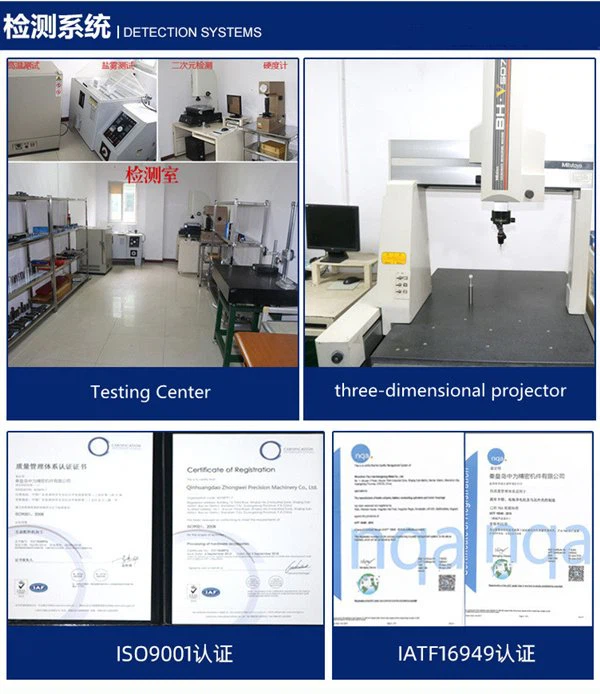
Detection Systems


Send Inquiry
