



S30403 Metal Powder Injection Molded Parts
S30403 austenitic basic steel, widely used, excellent corrosion resistance and heat resistance, low temperature strength and mechanical properties, single-phase austenite structure, no heat treatment hardening phenomenon (non-magnetic, service temperature -196-800C). With all the characteristics of SUS304, it has excellent corrosion resistance and heat resistance; after welding or stress relief, it can also maintain good corrosion resistance, deep drawing, and excellent polishing.
Product Description
|
S30403 Metal powder injection molded parts |
|||||
|
Item |
Material |
Production Process |
Sintering Temperature |
Mold |
Custom |
|
S30403 Metal powder injection molded parts |
Stainless steel |
Metal Injection Molding |
1350°C |
To be customized |
Yes |
|
Available Materials |
Low carbon stainless steel, titanium alloy (Ti, TC4), copper alloy, tungsten alloy, hard alloy, high temperature alloy (718, 713) |
||||
Product details
S30403:
S30403 austenitic basic steel, widely used, excellent corrosion resistance and heat resistance, low temperature strength and mechanical properties, single-phase austenite structure, no heat treatment hardening phenomenon (non-magnetic, service temperature -196-800C). With all the characteristics of SUS304, it has excellent corrosion resistance and heat resistance; after welding or stress relief, it can also maintain good corrosion resistance, deep drawing, and excellent polishing. Its carbon content is low and it is a variant of 304 stainless steel. S30403 Metal powder injection molded parts are used in occasions that require welding. The lower carbon content minimizes the precipitation of carbides in the heat-affected zone near the weld, and the precipitation of carbides may cause intergranular corrosion (welding corrosion) of stainless steel in some environments.
Chemical composition:
(C)≤0.030
(Si)≤1.00
(Mn)≤2.00
(P)≤0.045
(S)≤0.03
(Ni)8.00~12.00
(Cr)18.00~20.00
S30403 performance characteristics:
Yield strength (N/mm2) ≥ 205
Tensile strength ≥520
Elongation (%) ≥ 40
Hardness HB ≤187 HRB≤90 HV ≤200
Density 7.93 g·cm-3
Specific heat c(20℃)0.502 J·(g·C)-1
Thermal conductivity λ/W(m·℃)-1 (at the following temperature/℃)
20 100 500
12.1 16.3 21.4
Linear expansion coefficient α/(10-6/℃) (between the following temperatures/℃)
20~100 20~200 20~300 20~400
16.0 16.8 17.5 18.1
Resistivity 0.73 Ω·mm2·m-1
Melting point 1398~1420℃
Classification of stainless steel materials
304 is a general-purpose stainless steel, which is widely used in the production of equipment and parts that require good overall performance (corrosion resistance and formability).
301 stainless steel shows obvious work hardening phenomenon during deformation, and is used in various occasions requiring higher strength.
302 stainless steel is essentially a variant of 304 stainless steel with a higher carbon content, which can be cold-rolled to obtain higher strength.
302B is a stainless steel with high silicon content, which has high resistance to high temperature oxidation.
303 and 303Se are free-cutting stainless steels containing sulfur and selenium respectively, and are used in occasions where easy cutting and high surface finish are mainly required. 303Se stainless steel is also used to make parts that require hot heading, because under such conditions, this stainless steel has good hot workability.
304L is a variant of 304 stainless steel with a lower carbon content and is used where welding is required. The lower carbon content minimizes the precipitation of carbides in the heat-affected zone near the weld, which can lead to intergranular corrosion (weld attack) in stainless steels in some environments.
304N is a nitrogen-containing stainless steel, and nitrogen is added to increase the strength of the steel.
305 and 384 stainless steel contain high nickel content and low work hardening rate, so they are suitable for various occasions that require high cold formability.
308 stainless steel is used to make welding rods.
The content of nickel and chromium in 309, 310, 314 and 330 stainless steel is relatively high, in order to improve the oxidation resistance and creep strength of steel at high temperature. 309S and 310S are variants of 309 and 310 stainless steel, but the difference is that the carbon content is lower, in order to minimize the precipitation of carbides near the weld. 330 stainless steel has a particularly high resistance to carburization and thermal shock resistance.
Types 316 and 317 stainless steel contain molybdenum, so their resistance to pitting corrosion in marine and chemical industrial environments is much better than that of 304 stainless steel. Among them, the 316 stainless steel variants include low-carbon stainless steel 316L and nitrogen-containing high-strength stainless steel.
316N and free-cutting stainless steel 316F with high sulfur content.
321, 347 and 348 are stainless steels stabilized with titanium, niobium plus tantalum, and niobium respectively, and are suitable for welding components used at high temperatures. 348 is a stainless steel suitable for the nuclear power industry, which has certain restrictions on the content of tantalum and niobium.
304L stainless steel has poor forging performance and is difficult to deform.
due to work hardening. So that the amount of deformation in the process of mandrel elongation cannot be given too much. And the heat loss is bigger. Therefore, it must be molded under multiple fires. If the high temperature insulation stage is not handled well, it will cause coarse grains.
Density table
|
Steel Grade |
Density(g/cm3) |
|
Steel No. |
Density |
|
304,304L,305,321 201,202,301,302 |
7.93 |
|
316,316L,347 309S,310S |
7.98 |
|
405,410,420 |
7.75 |
|
409,430,434 |
7.7 |
Metal Injection Molding Process

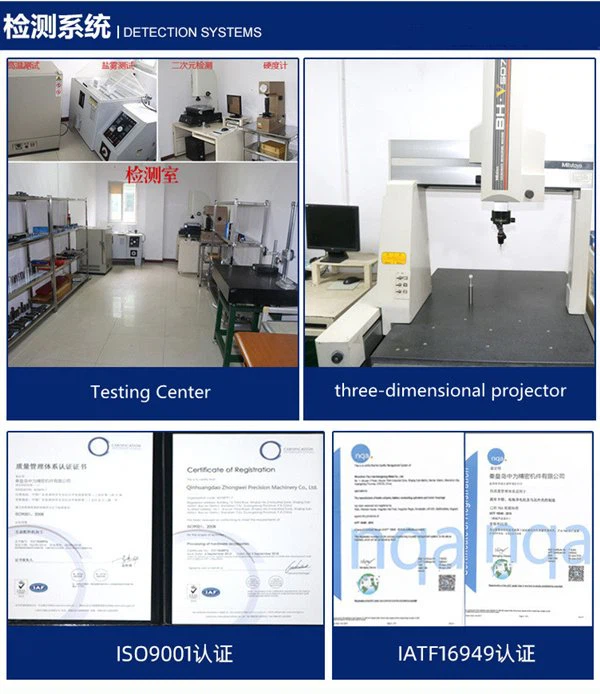
Detection Systems


Send Inquiry
