




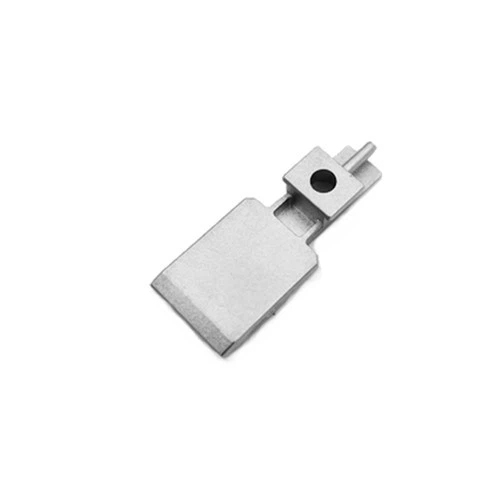
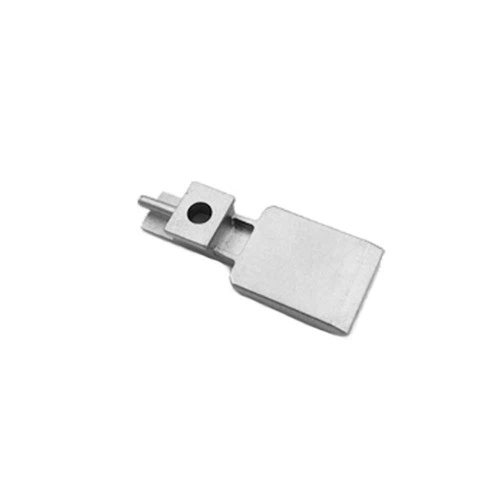
1.4401 Metal Powder Injection Molded Parts
Because the corrosion resistance of stainless steel depends on the alloying elements contained in the steel, each stainless steel has good performance in its specific application field. The key to success is to find out the purpose first, and then determine the correct steel type.
Product Description
|
1.4401 metal powder injection molded parts |
|||||
|
Item |
Material |
Production Process |
Sintering Temperature |
Mold |
Custom |
|
1.4401 |
Stainless steel |
Metal Injection Molding |
1500°C |
To be customized |
Yes |
|
Available Materials |
Low carbon stainless steel, titanium alloy (Ti, TC4), copper alloy, tungsten alloy, hard alloy, high temperature alloy (718, 713) |
||||
1.4401:
Because the corrosion resistance of stainless steel depends on the alloying elements contained in the steel, each stainless steel has good performance in its specific application field. The key to success is to find out the purpose first, and then determine the correct steel type. If you are not sure, please call our company's technical department. 1.4401 has particularly good corrosion resistance, atmospheric corrosion resistance and high temperature strength due to the addition of Mo, and can be used under harsh conditions. Excellent work hardening (non-magnetic). 1.4401 metal powder injection molded parts can be used in sea water equipment, chemical, dye, paper, oxalic acid, fertilizer and other production equipment; photography, food industry, coastal area facilities, ropes, CD rods, bolts, nuts.
1.4401 chemical composition:
C: ≤0.08
Si: ≤0.1.00
Mn: ≤2.00
P: ≤0.045
S: ≤0.030
Cr: 16-18
Ni: 10-14
Mo: 2.00-3.00
1.4401 performance characteristics:
Tensile strength (Mpa) 620 MIN,
Yield strength (Mpa) 310 MIN,
Elongation (%) 30 MIN,
Area reduction (%) 40 MIN,
Density 8.03 g/cm3
1.4401 stainless steel is a stainless steel quality obtained by adding molybdenum and more nickel to 304 stainless steel. Due to this content, the corrosion resistance of grade 1.4401 stainless steel is very good, even under harsh conditions (sea water, acidic liquids, etc.). In addition, the ultimate strength of 1.4401 grade stainless steel is much higher than that of 304 grade stainless steel. Our company's 1.4401 high-quality stainless steel material is available in rods, hexagons, lamashapes and squares in various thicknesses, the material list is as follows. Grade 316 stainless steel is also known as 1.4401 grade stainless steel.
Applied area:
1.4401 high quality stainless steel material, widely used due to its high quality. For example, stainless steel is recommended for use in tanks and storage tanks for corrosive liquids in class 316 (1.4401), the chemical and petrochemical industry, steam boilers, the paint industry, food factories and mining.
Mechanical properties at room temperature
Mass 316 (1.4401) X5CrNiMo17-12-2 316L (1.4404) 316Ti (1.4571)
Tensile strength 515 MPa 485 MPa 485 MPa
Yield strength (0.2%) 205 MPa 170 MPa 170 MPa
Hardness, Rockwell (B) 95 to 95-
Overview of quality characteristics:
1.4401 stainless steel According to the EN standard number 1.4401 high-quality stainless steel.
Stainless steel grade 1.4401 is also known as X5CrNiMo17-12-2 according to EN standards.
1.4401 and 316L stainless steel quality stainless steel 304 quality stainless steel has the most widely used grades of stainless steel.
This quality is stainless steel grade.
These stainless steel grades form well and weld well.
Stainless steel of this quality will not attract magnets and is highly resistant to corrosion.
1. The corrosion resistance of 4401 grade stainless steel is better than that of 304 grade stainless steel.
Development of Injection Molding Process
Injection molding was first used in plastic molding. As early as 1862, Alexander Parkes in England proposed injection molding to manufacture plastic combs, umbrella handles and some other products. The main component of Baishi plastic is nitrocellulose (NC) plus a small amount of other substances, making it plastic and some other physical properties. In 1869, a British printer, Hytt, improved Persian plastic and made celluloid, but still mainly nitrocellulose. In 1878, he injected celluloid into a multi-cavity mold to prepare products. This mold already had a main runner, a runner and a scratch. In 1879, Gray invented the world's first screw extruder in England, and around the same time, many others also designed various models. Because celluloid is highly flammable, it is not very suitable for injection molding. Injection molding technology was further developed until 1919 when Eichengrumn introduced cellulose acid (CA) as an injection molding raw material. In 1920, injection molding has become an industrialized processing method, which can process thermoplastic polymers into products with complex shapes. The feeder is the heart of the injection molding machine. In 1932, Hans Gastrovl of Germany invented the feeder with a shunt shuttle, which increased the heating area of the polymer and overcome the disadvantages of poor thermal conductivity and uneven heating of plastics. Part of the volume of the material is reduced, and the resistance is increased, which makes it more difficult for the melt to inject into the cavity. In 1930, the American Celluloid Company invented the screw melt injection molding method. In 1940, the German BASF company invented the screw direct injection molding method. The 1970s was an important period of change in the development of the entire plastics industry, which led to great development of injection molding.
Metal Injection Molding Process

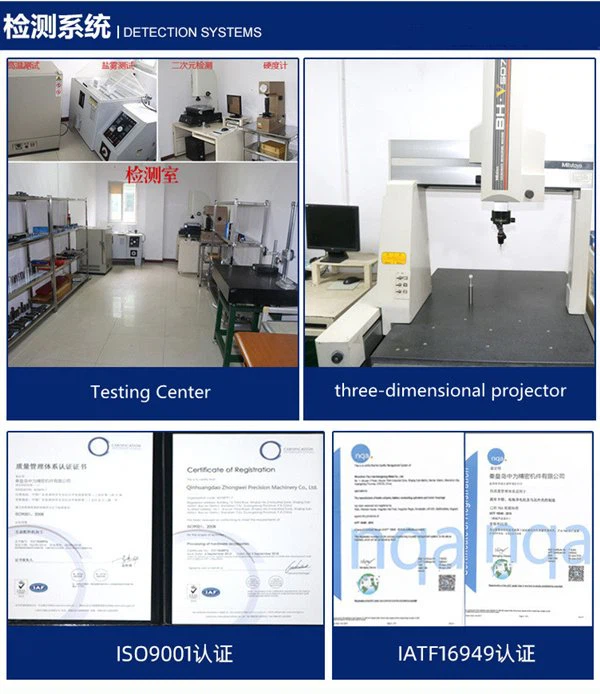
Detection Systems



Send Inquiry
