



Metal Shaft MIM Parts
We all know that a shaft is a connection to a product that enables it to rotate and twist. We all know that the axis has word axis, damping axis, etc., desk lamp has lamp axis, and notebook computer has notebook axis.
Product Introduction
Metal Shaft MIM Parts | |||||||||
Item | Material | Production Process | Sintering Temperature | Mold | Custom | ||||
Metal Shaft | 17-4 | Metal Injection Molding | 1500℃ | To be customized | Yes | ||||
Chemical Composition | C:≤0.07 | ||||||||
Available Materials | Low carbon stainless steel, titanium alloy (Ti, TC4), copper alloy, tungsten alloy, hard alloy, high temperature alloy (718, 713) | ||||||||
Finish | Dimensional Accuracy | Product Density | Appearance Treatment | Appropriate Weight | |||||
Roughness 1~5μm | (±0.1%~±0.5%) | 92~95% | Mirror Reflection | 0.03g~400g) | |||||
Mechanical properties | Tensile strength σb (MPa): aged at 480°C, ≥1310; aged at 550°C, ≥1060; aged at 580°C, ≥1000; aged at 620°C, ≥930 | ||||||||
Hardware shaft classification
We all know that a shaft is a connection to a product that enables it to rotate and twist. We all know that the axis has word axis, damping axis, etc., desk lamp has lamp axis, and notebook computer has notebook axis. According to the characteristics of the shaft, it can be divided into shaft, torsion shaft and transverse shaft. The horizontal axis is very much related to products. During the working process, the shaft sometimes vibrates, so what is the cause of the vibration? What is the effect? Many people will have such problems. Forms of synchronous shaft vibration and synchronous vibration. The reason for synchronous vibration is that the coupling is wrong and the installation is not in place, resulting in unbalanced rotor; and sub-synchronous vibration is very dangerous, as a sudden sub-synchronous vibration, the speed is likely to be lower than the rotor speed at high speed, resulting in broken shaft accident.
When the shaft vibrates, it must be stopped for detection. If it is synchronous vibration, the coupling should be aligned. If it is subsynchronous vibration, the shaft should be replaced. If you don't understand something, you can find a professional manufacturer for inspection and replacement. The small shaft, large function, safe and reliable shaft will make you feel more at ease.
Metal Shaft MIM Parts, the most common in machinery, can be used to connect a small part in product parts. The common shafts in machinery include rotating shafts, main shafts, and transmission shafts. All three are common mechanical axes, but the range of use and functions are not the same. Today I will analyze them for you.
• Differences between shafts, spindles, drive shafts.
1 main shaft: the shaft used to support the rotating parts but only bears the bending moment. The main shaft can be divided into a rotating main shaft and a fixed main shaft, that is, some main shafts can rotate, such as the shaft of a railway vehicle; some main shafts cannot rotate, such as a pulley shaft.
2 Transmission shaft: a high-speed and less-supported rotating shaft. Before leaving the factory, a dynamic balance test should be carried out and adjusted on the balancing machine. The transmission form is the connection between universal joints.
3 shafts: Shafts that can withstand bending moments and torques. It is an essential part of connected products. The common ones are: mobile phone shaft, notebook shaft, portable DVD shaft, LED desk lamp shaft, etc.
Metal shaft production process
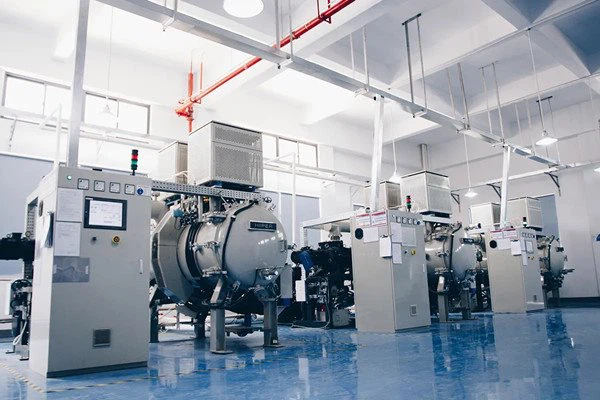
• The process for Metal Injection Molding (MIM) articles is:
Powder + binder → mixing → granulation → injection molding → degreasing (MIM debinding furnace) → sintering (MIM sintering furnace) → subsequent processing → formed products. In the process of producing MIM cemented carbide parts, improper material selection and operation control in any link may cause defects in cemented carbide parts, so how to avoid such defects?
1. Powder selection link.
MIM cemented carbide powder metallurgy not only needs to meet its basic requirements such as particle size distribution and particle size, but also requires high purity powder, and powder with impurities cannot be selected. If the powder contains elements such as sulfur, phosphorus, and silicon, These substances will form pores during the sintering process, resulting in product defects.
2. The production link of feeding.
Cemented carbide powder needs a suitable binder during mixing. The cemented carbide powder and binder are fully mixed during mixing. The temperature must be strictly controlled during the mixing process to avoid volatilization and uneven distribution of the binder. , so that the mixed material has good rheological properties and viscosity value after being made into feed, so as to avoid defects in the subsequent links.
3. The link of forming green body.
It also
It is a key link in the production of cemented carbide parts. To avoid product defects, it is necessary to pay attention to reasonable control of mold temperature, feeding amount, injection pressure, holding pressure, holding time, injection speed, etc. during the injection process, which can effectively avoid Defects in injection green bodies occur.
4. Degreasing link.
For the degreasing of cemented carbide green body, in the degreasing process, if the degreasing furnace heats up too fast, it will cause crack defects in the cemented carbide parts, and the degreasing method can be carried out by increasing the temperature step by step.
5. Sintering link.
Cemented carbide has a high density, and the product is prone to deformation due to its own gravity during liquid phase sintering. Appropriate support devices can be used. For larger products, materials with comparable shrinkage can be selected as support plates. In addition, the liquid phase sintering time should be shortened as much as possible.
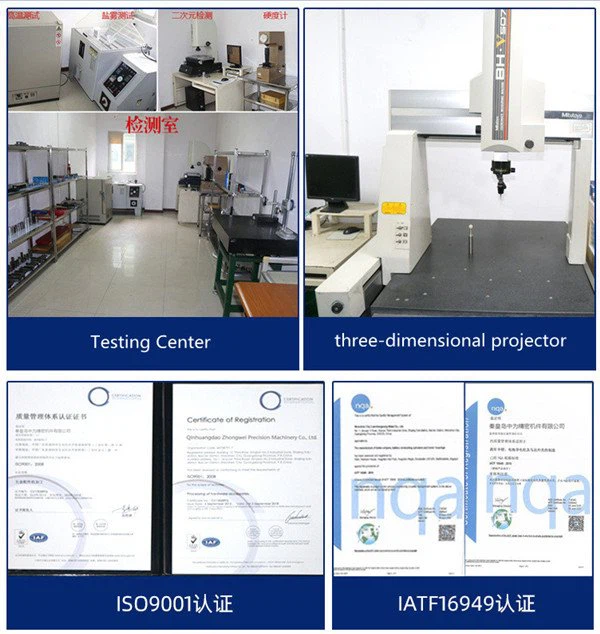
Detection Systems
Metal Injection Molding Process





Send Inquiry
