


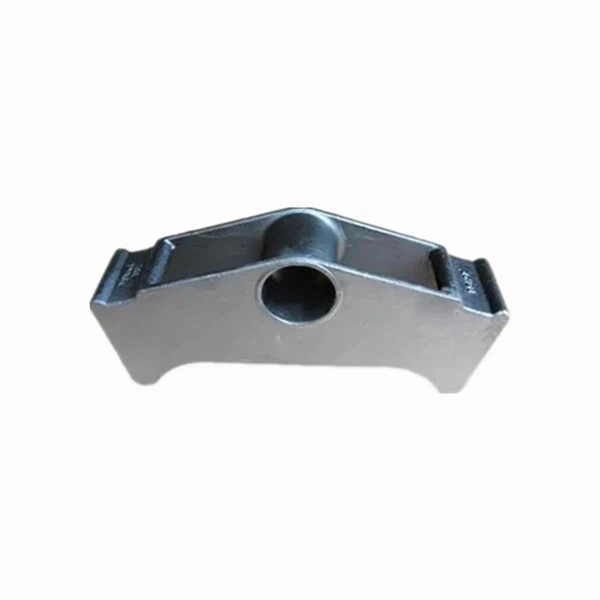


Water Glass Casting Process
Water glass casting is a lost wax investment casting process that uses water glass as the binder for the shell. The lost wax process maintains casting surface and internal inspection at relatively low cost. Water glass casting originated in Russia.
The water glass casting process is one of the most common investment casting processes in China, but it is rare in other countries. Among the foundries in my country, about 80% of the foundries are mainly water glass foundries, and the rest are silica sol foundries.
Water glass casting is a lost wax investment casting process that uses water glass as the binder for the shell. The lost wax process maintains casting surface and internal inspection at relatively low cost. Water glass casting originated in Russia. Suitable for steel castings, especially carbon steel and alloy steel castings. It allows the production of steel castings from 0.5kg to 60kg.
After more than ten years of precipitation, Qinhuangdao Zhongwei Precision Machinery Co., Ltd. has rich production experience in water glass lost wax precision casting, lost foam precision casting, silica sol precision casting, and shell sand casting. We expect manufacturers from all over the world to consult and negotiate business.
Product Description
1. Implementation standards: The company strictly implements ISO9001 & TS 16949 certification.
2. Product material standards: ISO, GB, ASTM, SAE, ISO, EN, DIN, JIS, BS
3. Main processes: sand casting, silica sol investment casting, water glass investment casting,shell casting,deburring, sand blasting, machining, heat treatment, leak testing, surface treatment, etc.
4. Available materials:
Carbon steel, alloy steel, stainless steel, gray iron, cast iron, cast steel, cast aluminum, cast copper, etc. can be customized according to customer requirements.
Lost Wax Casting Hardening Method Of Water Glass
In the mechanical casting industry, water glass sand models are commonly used for production, and sometimes hardening treatment is encountered during the use process. There are mainly two hardening methods that are often used at present:
1. Ordinary CO2 gas hard method
This method is an earlier rapid prototyping process used in the binder, the equipment is simple and the operation is more convenient, and it is more flexible, and the cost is not high, and it is used in many steel casting processing plants.
Advantages: The speed of hardening is relatively fast, and the strength is also high. When the mold is removed after hardening, the precision of the product will be very high.
Disadvantages: The strength of molding sand or core sand is low, and more water glass needs to be added; the water content is relatively large, and it is easy to absorb moisture; in winter, the hard air permeability is poor, which will directly affect the performance of the casting; collapsibility It is also relatively poor, and it is difficult to regenerate old sand, resulting in a large amount of old sand being directly discarded, which affects the environment.
2. Organic ester self-hardening method
The organic ester in the liquid can directly replace the gas mentioned above as the hardener of water glass.
Advantages: molding sand or core sand has strong hardness, and the amount of water glass added can be reduced to a certain value; the hard penetration effect in winter is good, and the hardening speed will be adjusted according to the environment; good collapse behavior, easy to produce sand Cleaning, and the old sand can be recycled, the recycling rate is high, and the pollution to the environment is reduced; the molding sand has good thermoplasticity and low gas generation, which can overcome the defects in the production of castings.
Disadvantages: The hardening speed is relatively slow and the fluidity is poor.
Product Advantages
1、Greatly improve the surface quality
Under the traditional formula, especially in the production of castings with a single piece of more than 20 kilograms, the surface quality is difficult to guarantee, and the defects caused by surface burrs, sticky sand, surface toad peel, orange peel and delamination are unavoidable. In the production of thick and large pieces, the surface almost has to be ground to meet the requirements. The new formula completely solves the above problems, and the castings of almost all materials (except those containing more than 4% manganese) reach or even exceed the level of composite shells.
2、Greatly improve the internal quality
With the traditional formula, due to the low strength of the surface layer, after the shell is fired, when you touch the inner wall of the shell with your hands, white ash is often found. As a result, the quality of the surface shell is very unstable, and the shell delamination occurs from time to time; these factors lead to the inability to guarantee the internal quality of the casting of the traditional water glass shell, especially on the processing surface with high requirements, often due to the processing of sand. Defects such as holes lead to the scrapping of castings, a considerable part of which is caused by the poor quality of the shell, and the new formula solves this problem well and greatly improves the inherent quality of the castings.
3、 Improve the yield, especially greatly improve the yield of good products
Using the traditional formula, because the surface and internal quality cannot be reliably controlled, the scrap rate is relatively high. With the new formula, the surface quality and internal quality are greatly improved, and the yield is also correspondingly improved, especially without repairing. And the rate of high-quality polished products is greatly improved.
4、 Greatly reduce the workload of post-processing
With the traditional formula, due to the poor surface quality, the workload of post-processing is quite large. Today, with the shortage of labor, it is more and more difficult to recruit post-processing workers with poor working environment. After adopting the new formula, the workload of post-processing is greatly reduced. Especially for thick and large pieces, the workload of post-processing can be reduced by more than 80%.
5、Greatly improve the working environment of the shell workshop
In the traditional formula, most surface layers and transition layers are hardened with ammonium chloride. During the hardening process, ammonia gas will be generated, which will seriously pollute the environment and also corrode the equipment. The new formula does not generate ammonia gas during the shell making process, which solves this problem very well.
6、 Reduce production costs
Practice has shown that the cost of shell making is 30-80 yuan per ton higher than the traditional formula, but the cost of post-processing is greatly reduced.
Seven: Greatly improve the ability of traditional water glass shell to produce large pieces.
For the traditional water glass shell, the larger the piece, the more problems and the more difficult it is to produce. With the new formula, many problems are solved, and the ability of the traditional water glass shell to produce large or even extra large pieces is greatly improved.

Post Casting Process
1. Heat treatment: annealing, carbonization, tempering, quenching, normalizing, surface tempering
2. Processing equipment: CNC, WEDM, lathe, milling machine, drilling machine, grinder, etc.;
3. Surface treatment: powder spraying, chrome plating, painting, sandblasting, nickel plating, galvanizing, blackening, polishing, bluing, etc.
Moulds and Inspection Fixtures
1. Mold service life: usually semi-permanent. (except for lost foam)
2. Mold delivery time: 10-25 days, (according to product structure and product size).
3. Tooling and mold maintenance: Zhongwei is responsible for precision parts.
Quality Control
1. Quality control: the defective rate is less than 0.1%.
2. Samples and trial run will be 100% inspected during production and before shipment, sample inspection for mass production according to ISDO standards or customer requirements
3. Testing equipment: flaw detection, spectrum analyzer, golden image analyzer, three-coordinate measuring machine, hardness testing equipment, tensile testing machine;
4. Provide after-sales service.
5. The quality can be traced back.
Application
Trains and railways, cars and trucks, construction machinery, forklifts, agricultural machinery, shipbuilding, petroleum machinery, construction, valves and pumps, motors, hardware, electrical equipment, etc.




Send Inquiry
