



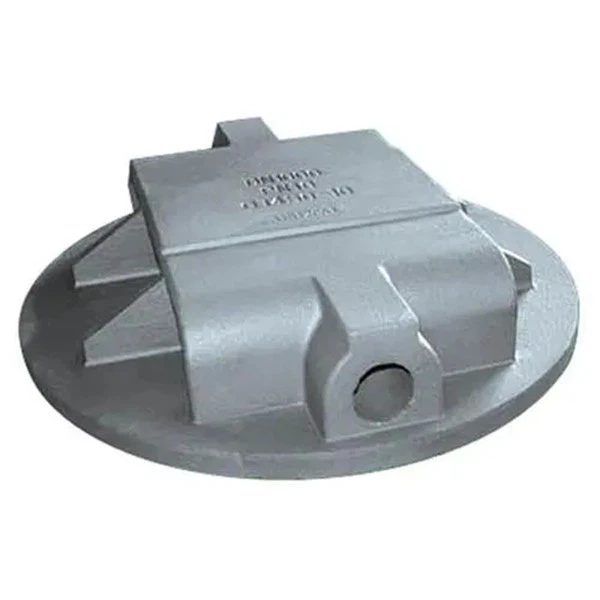


GGG70 Ductile Iron Castings
GGG70 Ductile Iron Castings corresponds to the Chinese brand QT600-3, QT600-3 is the brand of ductile iron, QT is the prefix of "ductile iron", 600 means tensile strength 500MPa, 3 is elongation 3%. German grade GGG60, American grade 80-60-03, international standard 600-3.
Product Description
GGG70 Ductile Iron Castings corresponds to the Chinese brand QT600-3, QT600-3 is the brand of ductile iron, QT is the prefix of "ductile iron", 600 means tensile strength 500MPa, 3 is elongation 3%. German grade GGG60, American grade 80-60-03, international standard 600-3.
After more than ten years of precipitation, Qinhuangdao Zhongwei Precision Machinery Co., Ltd. has rich experience in the production of various grades of ductile iron, superalloy castings, stainless steel and other castings. We expect manufacturers from all over the world to consult and negotiate business.
GGG70 Ductile Iron Castings By Country
1. Implementation standards: The company strictly implements ISO9001 & TS 16949 certification.
2. Product material standards: ISO, GB, ASTM, SAE, ISO, EN, DIN, JIS, BS
3. Main processes: sand casting, silica sol investment casting, water glass investment casting,shell casting,deburring, sand blasting, machining, heat treatment, leak testing, surface treatment, etc.
4. Available materials:
GGG40 | - | GGG50 | GGG60 | GGG70 | GGG80 |
60-40-18 | 65-45-12 | 70-50-05 | 80-60-03 | 100-70-03 | 120-90-02 |
And alloy steel, gray iron, cast iron, cast steel, cast aluminum, cast copper, etc. can be customized according to customer requirements.
Country | Ductile Iron Castings | ||||||
China | QT400-18 | QT450-10 | QT500-7 | QT600-3 | QT700-2 | QT800-2 | QT900-2 |
Japan | FCD400 | FCD450 | FCD500 | FCD600 | FCD700 | FCD800 | - |
U.S. | 60-40-18 | 65-45-12 | 70-50-05 | 80-60-03 | 100-70-03 | 120-90-02 | - |
Russia | B40 | B45 | B50 | B60 | B70 | B80 | B100 |
Germany | GGG40 | - | GGG50 | GGG60 | GGG70 | GGG80 | - |
Italy | GS370-17 | GS400-12 | GS500-7 | GS600-2 | GS700-2 | GS800-2 | - |
France | FGS370-17 | FGS400-12 | FGS500-7 | FGS600-2 | FGS700-2 | FGS800-2 | - |
U.K. | 400/17 | 420/12 | 500/7 | 600/7 | 700/2 | 800/2 | 900/2 |
Poland | ZS3817 | ZS4012 | ZS4505 | ZS6002 | ZS7002 | ZS8002 | ZS9002 |
5002 | |||||||
India | SG370/17 | SG400/12 | SG500/7 | SG600/3 | SG700/2 | SG800/2 | - |
Romania | - | - | - | - | FGN70-3 | - | - |
Spain | FGE38-17 | FGE42-12 | FGE50-7 | FGE60-2 | FGE70-2 | FGE80-2 | - |
Belgium | FNG38-17 | FNG42-12 | FNG50-7 | FNG60-2 | FNG70-2 | FNG80-2 | - |
Australia | 300-17 | 400-12 | 500-7 | 600-3 | 700-2 | 800-2 | - |
Sweden | 0717-02 | - | 0727-02 | 0732-03 | 0737-01 | 0864-03 | - |
Hungary | GV38 | GV40 | GV50 | GV60 | GV70 | - | - |
Bulgaria | 380-17 | 400-12 | 450-5 | 600-2 | 700-2 | 800-2 | 900-2 |
500-2 | |||||||
(International Organization for Standardization) | 400-18 | 450-10 | 500-7 | 600-3 | 700-2 | 800-2 | 900-2 |
(COPANT) | - | FMNP45007 | FMNP55005 | FMNP65003 | FMNP70002 | - | - |
Finland | GRP400 | - | GRP500 | GRP600 | GRP700 | GRP800 | - |
Netherlands | GN38 | GN42 | GN50 | GN60 | GN70 | - | - |
Luxembourg | FNG38-17 | FNG42-12 | FNG50-7 | FNG60-2 | FNG70-2 | FNG80-2 | - |
Austria | SG38 | SG42 | SG50 | SG60 | SG70 | - | - |
Material Name: Ductile Iron
Brand: QT600-3
Standard: GB 1348-88
Chemical Composition of QT600-3 Ductile Iron
Carbon C: 3.6 to 3.8
Silicon Si: 2.4~2.8
Manganese Mn: 0.3~0.5
Sulfur S: 0.03~0.035
Phosphorus P: <0.1
Magnesium Mg: 0.045~0.05
Note: RxOy: 0.033~0.049
Mechanical Properties of QT600-3 Ductile Iron
Tensile strength σb (MPa): ≥600
Conditional yield strength σ0.2 (MPa): ≥370
Elongation δ (%): ≥3
Hardness: 190~270HB
Density: 7.3 in t/m or g/cm
Heat treatment specification and metallographic structure of QT600-3 ductile iron;
Heat treatment specification: (determined by the supplier, the following is the heat treatment; specification of a sample for reference) 930℃, 2h normalizing air cooling, 600℃, 2h, tempering air cooling;Metallographic structure: pearlite + ferrite;
Experimental Process Of GGG70 Ductile Iron Castings
Our factory uses high-quality raw materials, scrap steel carbonization to limit the content of P and S in molten iron, adds appropriate amount of Cu and Mn alloy elements, adopts spheroidization treatment by punching method, and multiple inoculation treatments. 7. Smelting process of ductile iron; repeated tests show that the above-mentioned smelting process is reasonable, low in cost, simple in operation and wide in application.
With the rapid development of the rail transit industry and the continuous improvement of train speed, the performance of trains has put forward higher and higher requirements for the quality of key components such as transmission systems and braking systems. For example, for parts such as calipers and hangers in the braking system, the traditional ductile iron materials such as QT500-7 and GGG70 Ductile Iron Castings selected in the past can no longer meet the requirements of use. High strength and high plasticity performance, so new high-strength and high-plastic ductile iron materials such as QT600-7 came into being.

At present, there are three main ways for domestic and foreign foundries to produce QT600-7 ductile iron materials:
1. Add alloying elements, such as Ni, Mo, etc.;
2. Increase the Si content to obtain high Si solid solution strengthened ferritic ductile iron, which has high strength and high elongation;
3. Change the heat dissipation conditions of the mold and refine the grains, such as using the iron mold sand coating process.
However, the above foundry process also has limitations: the foundry adds alloying elements, and the cost is too high; increasing the Si content will significantly reduce the low-temperature impact performance of the material, making it difficult to adapt to the environment of some alpine trains; changing the heat dissipation conditions of the casting mold makes the process wider Low performance and limited application range. Therefore, a series of material smelting experiments were carried out in this paper, aiming to study the smelting composition and process of as-cast QT600-7, which is low-cost, simple to operate, and suitable for ordinary sand casting.
1、Test Target
The mechanical property requirements of QT600-7 are shown in Table 1 below; at the same time, Table 1 also lists the material property requirements of the two similar grades in GB1348-2009.
Grade | Tensile strength Rm (MPa) | Yield strength Rp0.2 (MPa) | Elongation A (%) | Brinell hardness |
QT600-7 | ≥600 | ≥380 | ≥7 | 200-270 |
QT600-3 | ≥600 | ≥370 | ≥3 | 190-270 |
QT500-7 | ≥500 | ≥320 | ≥7 | 170-230 |
As can be seen from the above table, QT600-7 is higher than traditional ductile iron in tensile strength, yield strength, elongation and other indicators, and has both the high strength of pearlite and the high elongation of ferrite. ;
In order to meet the above performance requirements, it is necessary to refine the grains and strive to improve the roundness of the graphite balls. Therefore, the test requires the metallographic structure of the QT600-7 material, as shown in Table 2 below.
Table 2 As-cast QT600-7 material metallographic requirements | ||
Spheroidization | Ball diameter | Pearlite content |
≥2 | ≥5 | ≥45% |
2.2 Test content
2.1 Chemical composition design
(1) As-cast production of QT600-3 medium carbon and silicon in the foundry
For as-cast ductile iron castings, as long as no graphite floats, high carbon equivalents (between 4.2% and 4.8%) should be used, which can effectively promote graphitization and reduce the tendency of shrinkage cavities and shrinkage porosity. Considering the low temperature use requirements of the material, the Si content should be controlled not to exceed 3.0%. Therefore, the test requires a C content of 3.5%-3.8% and a Si content of 2.2%-2.5%.
(2) Manganese and copper in the as-cast production of QT600-3 in the foundry are all elements that stabilize pearlite. The difference is that Mn increases the tendency of white mouth while promoting the formation of pearlite, while Cu does not. It can promote graphitization and reduce the tendency of white mouth. Therefore, in the test, the Mn content should not be too high, and should be controlled at 0.3%-0.5%; at the same time, in order to promote the formation of quantitative pearlite structure, the Cu content is set at about 0.3%-0.5%.
(3) Phosphorus and sulfur P and S are harmful elements, and the content of these two elements should be strictly limited. This test requires that the P content is not more than 0.05%, and the S content is not more than 0.03%.
2.2 Selection of raw materials for as-cast production of QT600-3 in foundries
The test uses high-quality pig iron and scrap steel as the main raw materials (the composition is shown in Table 3), and adds some low-S recarburizers; other raw materials are ordinary low-rare earth nodularizers, long-acting silicon-barium inoculants containing Ba, Ca and other elements , Electrolytic Cu plates, etc.
Table 3 Chemical composition of raw materials Wt % | |||||||
Charge | C | Si | Mn | P | S | V | Ti |
Pig iron | 4.6 | 0.5 | 0.05 | 0.034 | 0.015 | 0.01 | 0.02 |
Scrap | 0.051 | 0.01 | 0.17 | 0.015 | 0.018 | - | - |
2.3 The smelting process in the as-cast production of QT600-3 in the foundry
Using a 100kg medium frequency induction furnace for smelting, add scrap steel and recarburizer to the bottom of the furnace in turn, and then press pig iron. The smelting temperature is 1530-1560 ℃, and it is released after a certain period of time. The firing temperature is 1480-1500℃. It adopts the spheroidization treatment with simple operation and adopts the multiple inoculation process of pretreatment inoculation + iron inoculation with flow + pouring with flow inoculation.
2.4 Test method A number of standard Y-shaped test blocks (GB1348-2009) were cast with the above-mentioned molten iron and molded with resin sand, and samples were taken from the post-cast Y-shaped test blocks for analysis and testing to test the composition, mechanical properties and gold properties of the samples. Phase structure, the detection equipment used are carbon sulfur analyzer, plasma emission spectrometer, micro-controlled electronic universal testing machine, metallographic microscope and so on.
3. Test results and analysis
3.1 The effect of Cu and Mn in the as-cast production of QT600-3 in the foundry
The effects of Cu and Mn on tensile strength and elongation are shown in Figure 1. It can be seen from the figure that within the composition range of the test, when Cu and Mn coexist, the promotion effect of Cu on the strength is stronger than that of Mn. When the Cu content increases by 0.1%, the material strength increases by about 50Mpa; on the other hand, when the Mn content is low, the tensile strength increases. The elongation is generally higher. At this time, when Cu is added, the material has little effect on the elongation while the strength is improved. The reason for the analysis is that Cu promotes graphitization and reduces cementite during eutectic transformation. During eutectoid transformation, it promotes the formation of pearlite and has a solid solution strengthening effect on the matrix; while Mn promotes the formation of pearlite, However, due to the tendency of large segregation, it is easy to concentrate on the grain boundary, which affects the toughness and plasticity of the material. Therefore, the increase of Mn content does not increase the strength significantly, but it has a certain degree of influence on the elongation. The test results also show that when the Cu content is 0.4% and the Mn content is 0.3%, the comprehensive properties of the material are high, the strength is 662Mpa, and the elongation is 10.5%, which achieves the test target.
a. Effect on strength
a. Effect on elongation
Fig.1 Effect of Cu and Mn content on mechanical properties
3.2 Application effect of scrap carburizing smelting process in as-cast production of QT600-3 in foundry
In as-cast ductile iron, when the content of P increases, the formation of phosphorus eutectic will increase, and the phosphorus eutectic will be distributed on the boundary of the eutectic group in a polygonal shape, which will sharply deteriorate the toughness and plasticity of the material; As-cast ductile iron material, the content of P must be strictly controlled; S is an anti-spheroidizing element, and reducing its content is the premise to ensure the spheroidizing effect; the experiment used a scrap carbon-enhancing melting process with a ratio of 50% scrap and 50% pig iron, and obtained The P content is less than 0.03% and the S content is less than 0.015%, which is far lower than the designed composition requirements. At the same time, another advantage of using the scrap steel carburizing process is that it can reduce the tendency of white mouth, refine the pearlite, and increase the number of pearlite [4]-[5]; Ductile iron materials are beneficial.
3.3 Application effect of multiple compound inoculation process in as-cast production of QT600-3 in foundry
The composite inoculation treatment of pretreatment inoculation + iron casting inoculation + pouring inoculation is compared with the test results without multiple composite inoculation treatments, and the metallographic results are shown in Figure 2 a) and b).
Fig. 2 Effect of compound inoculation on metallography (x100)
The quality of graphite balls directly affects the mechanical properties of ductile iron. Because the molten iron is pretreated before spheroidization and inoculated with flow after spheroidization, it not only improves the purity of molten iron, but also provides a good environment for graphite precipitation and growth, and more importantly, it increases the shape of graphite. The number of nuclei reduces the diameter of the graphite ball and improves the spheroidization effect. It can also be seen from Figure 2 that the samples treated with compound inoculation have a spheroidization of more than 2 and a graphite size of 6, which are better than ordinary samples in terms of size and roundness. Therefore, the use of multiple composite inoculation treatments is the key to obtaining low-alloy high-performance ductile iron.
4. Verification in the production process of as-cast production of QT600-3 in the foundry The above process is used to mass-produce a QT600-7 hanger casting. The properties of the casting are still stable and meet the technical requirements. The composition, metallographic and performance test results are shown in Table 4-6.
Table 4 Chemical composition test results | ||||||
NO | C | Si | Mn | P | S | Cu |
1 | 3.55 | 2.39 | 0.29 | 0.026 | 0.010 | 0.40 |
2 | 3.54 | 2.27 | 0.28 | 0.027 | 0.009 | 0.39 |
3 | 3.49 | 2.17 | 0.30 | 0.029 | 0.016 | 0.39 |
4 | 3.53 | 2.34 | 0.32 | 0.028 | 0.011 | 0.42 |
5 | 3.50 | 2.32 | 0.28 | 0.023 | 0.012 | 0.42 |
6 | 3.46 | 2.38 | 0.28 | 0.028 | 0.013 | 0.43 |
7 | 3.57 | 2.30 | 0.34 | 0.029 | 0.018 | 0.45 |
8 | 3.53 | 2.30 | 0.29 | 0.026 | 0.012 | 0.43 |
9 | 3.51 | 2.33 | 0.35 | 0.025 | 0.004 | 0.39 |
10 | 3.52 | 2.38 | 0.35 | 0.025 | 0.012 | 0.39 |
Table 5 Metallographic structure test results | |||
NO | Spheroidization | Ball Diameter | Pearlite content |
1 | 2 | 6-7 | 65% |
2 | 2 | 6-7 | 70% |
3 | 2 | 6-7 | 65% |
4 | 2 | 6-7 | 70% |
5 | 2 | 6 | 65% |
6 | 2 | 6 | 65% |
7 | 2 | 6 | 70% |
8 | 2 | 6-7 | 65% |
9 | 2 | 6-7 | 60% |
10 | 2 | 6-7 | 60% |
Table 6 Testing results of mechanical properties | ||||
NO | Tensile strength Rm (MPa) | Specified plastic elongation strength Rp0.2 (MPa) | Elongation after break A (%) | Brinell hardness |
1 | 671 | 390 | 11.5 | 229 |
2 | 683 | 387 | 10.5 | 229 |
3 | 645 | 385 | 10.5 | 209 |
4 | 678 | 388 | 10.0 | 225 |
5 | 668 | 384 | 11.0 | 219 |
6 | 691 | 391 | 10.0 | 225 |
7 | 701 | 402 | 9.5 | 232 |
8 | 670 | 388 | 10.5 | 219 |
9 | 666 | 380 | 11.0 | 215 |
10 | 658 | 391 | 11.5 | 215 |
5、Conclusion
1) The reasonable composition range of as-cast QT600-7 is: C3.5-3.8%, Si 2.2-2.5%, Mn about 0.3%, Cu about 0.4%, P<0.03%, S<0.02%.
2) When the Cu content is about 0.4% and the Mn content is about 0.3%, the number of pearlite is 60%-70%. At this time, the material has high strength and elongation. 3) Carburizing and smelting of scrap steel and multiple compound inoculation treatments are important technological guarantees for obtaining the expected chemical composition and excellent as-cast QT600-7 material properties.
Qinhuangdao Zhongwei Precision Machinery Co., Ltd. focuses on a few grams-2 tons of castings. The reasonable composition of as-cast QT600-7 requires casting engineers to test during the actual casting process. Based on the specific local conditions at that time, Qinhuangdao Zhongwei Precision Machinery Co., Ltd. Parts Co., Ltd. continues to innovate technology to improve its casting technology level. If you need to cast large-scale castings, please contact Qinhuangdao Zhongwei Precision Machinery Co., Ltd.!
Post Casting Process
1. Heat treatment: annealing, carbonization, tempering, quenching, normalizing, surface tempering
2. Processing equipment: CNC, WEDM, lathe, milling machine, drilling machine, grinder, etc.;
3. Surface treatment: powder spraying, chrome plating, painting, sandblasting, nickel plating, galvanizing, blackening, polishing, bluing, etc.
Moulds and Inspection Fixtures
1. Mold service life: usually semi-permanent. (except for lost foam)
2. Mold delivery time: 10-25 days, (according to product structure and product size).
3. Tooling and mold maintenance: Zhongwei is responsible for precision parts.
Quality Control
1. Quality control: the defective rate is less than 0.1%.
2. Samples and trial run will be 100% inspected during production and before shipment, sample inspection for mass production according to ISDO standards or customer requirements
3. Testing equipment: flaw detection, spectrum analyzer, golden image analyzer, three-coordinate measuring machine, hardness testing equipment, tensile testing machine;
4. Provide after-sales service.
5. The quality can be traced back.
Application
1. Valve: Stacked valve, combination valve, pressure reducing valve, relief valve, solenoid valve, base plate, hydraulic manifold, etc.
2. Cylinder: piston, top cover, hydraulic cylinder end cover, guide sleeve, etc. Machine tools and general machinery
3. Machine tools: side plates, rear plates, sleeves, pistons, cylinder end caps, pins, spring ferrules, jacket chucks, gears, bushings, flanges, couplings, racks, chucks, Dial seat, clutch, guide rail, etc.
4. Injection molding machine: valve, manifold, oil cylinder, fixed side plate, movable side plate, injection molding plate, etc.
5. Printing machinery: mixing ink rollers, ink rails, guide plates, gears, etc.
6. Civil machinery: valves, cylinder pistons, integrated blocks, etc.
Textile machinery: gears, bearing housings, balance blocks, conduits, bearings, cross slides, bearing bushes, cams, etc. Agricultural machinery: cultivator pulleys, pistons, top covers, bearing bushes, combine harvester pulleys, etc. Power plant
7. Automobile: shock absorbers, valves, conduits, mechanical seals, bushings, gaskets, balance blocks, bearing bushes, etc.
8. Ships: oil separators, oil cylinders, pistons, valve guide sleeves, engine valve stem sleeves, cylinder block parts, etc.
9. Overweight machines: pulleys, bushings, bearing bushes, etc.


Send Inquiry
