



Ductile Iron Machine Tool Parts
Sand casting is preferred for machine bed, mainly because sand casting has lower cost, simpler production process and shorter production cycle than other casting methods. When the wet type cannot meet the requirements, consider using the clay sand surface dry sand type, dry sand type or other sand type.
Product Description
Sand casting is preferred for machine bed, mainly because sand casting has lower cost, simpler production process and shorter production cycle than other casting methods. When the wet type cannot meet the requirements, consider using the clay sand surface dry sand type, dry sand type or other sand type. Ductile Iron Machine Tool Parts are manufactured to standard GB9439-88. The resin sand mold has good rigidity and high sand mold strength at the initial stage of pouring, which makes it possible to use the graphitization expansion during the solidification process of cast iron to eliminate shrinkage holes and shrinkage porosity defects, and realize less riser and no riser casting of gray cast iron and ductile iron.
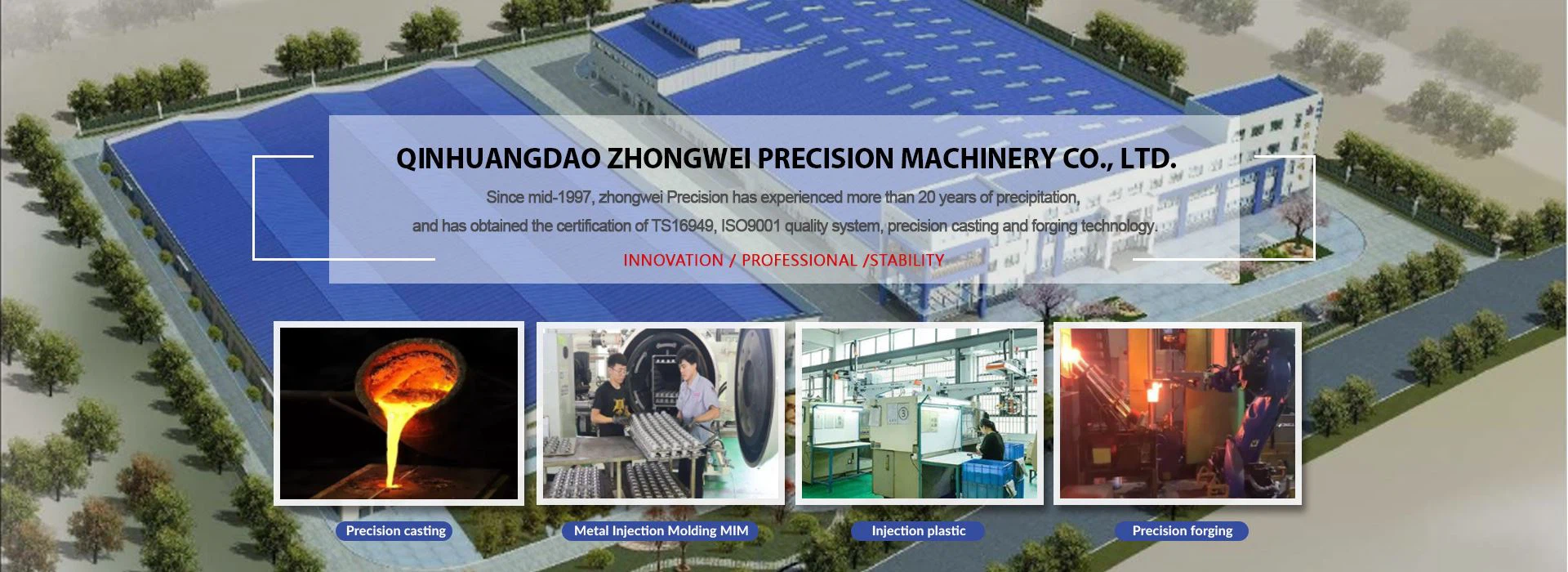
After more than ten years of precipitation, Qinhuangdao Zhongwei Precision Machinery Co., Ltd. has rich experience in the production of various grades of ductile iron, superalloy castings, stainless steel and other castings. We expect manufacturers from all over the world to consult and negotiate business.
Nodular Cast Iron Machine Tool Parts National Grades
1. Implementation standards: The company strictly implements ISO9001 & TS 16949 certification.
2. Product material standards: ISO, GB, ASTM, SAE, ISO, EN, DIN, JIS, BS
3. Main processes: sand casting, silica sol investment casting, water glass investment casting,shell casting,deburring, sand blasting, machining, heat treatment, leak testing, surface treatment, etc.
4. Available materials:
GGG40 | - | GGG50 | GGG60 | GGG70 | GGG80 |
60-40-18 | 65-45-12 | 70-50-05 | 80-60-03 | 100-70-03 | 120-90-02 |
And alloy steel, gray iron, cast iron, cast steel, cast aluminum, cast copper, etc. can be customized according to customer requirements.
Country | Ductile Iron Castings | ||||||
China | QT400-18 | QT450-10 | QT500-7 | QT600-3 | QT700-2 | QT800-2 | QT900-2 |
Japan | FCD400 | FCD450 | FCD500 | FCD600 | FCD700 | FCD800 | - |
U.S. | 60-40-18 | 65-45-12 | 70-50-05 | 80-60-03 | 100-70-03 | 120-90-02 | - |
Russia | B40 | B45 | B50 | B60 | B70 | B80 | B100 |
Germany | GGG40 | - | GGG50 | GGG60 | GGG70 | GGG80 | - |
Italy | GS370-17 | GS400-12 | GS500-7 | GS600-2 | GS700-2 | GS800-2 | - |
France | FGS370-17 | FGS400-12 | FGS500-7 | FGS600-2 | FGS700-2 | FGS800-2 | - |
U.K. | 400/17 | 420/12 | 500/7 | 600/7 | 700/2 | 800/2 | 900/2 |
Poland | ZS3817 | ZS4012 | ZS4505 | ZS6002 | ZS7002 | ZS8002 | ZS9002 |
5002 | |||||||
India | SG370/17 | SG400/12 | SG500/7 | SG600/3 | SG700/2 | SG800/2 | - |
Romania | - | - | - | - | FGN70-3 | - | - |
Spain | FGE38-17 | FGE42-12 | FGE50-7 | FGE60-2 | FGE70-2 | FGE80-2 | - |
Bulgaria | FNG38-17 | FNG42-12 | FNG50-7 | FNG60-2 | FNG70-2 | FNG80-2 | - |
Australia | 300-17 | 400-12 | 500-7 | 600-3 | 700-2 | 800-2 | - |
Sweden | 0717-02 | - | 0727-02 | 0732-03 | 0737-01 | 0864-03 | - |
Hungary | GV38 | GV40 | GV50 | GV60 | GV70 | - | - |
Bulgaria | 380-17 | 400-12 | 450-5 | 600-2 | 700-2 | 800-2 | 900-2 |
500-2 | |||||||
(International Organization for Standardization) | 400-18 | 450-10 | 500-7 | 600-3 | 700-2 | 800-2 | 900-2 |
(COPANT) | - | FMNP45007 | FMNP55005 | FMNP65003 | FMNP70002 | - | - |
Finland | GRP400 | - | GRP500 | GRP600 | GRP700 | GRP800 | - |
Netherlands | GN38 | GN42 | GN50 | GN60 | GN70 | - | - |
Luxembourg | FNG38-17 | FNG42-12 | FNG50-7 | FNG60-2 | FNG70-2 | FNG80-2 | - |
Austria | SG38 | SG42 | SG50 | SG60 | SG70 | - | - |

Product Advantages
The Ductile Iron Machine Tool Parts method is commonly used in sand casting, followed by special casting methods, such as: metal mold casting, investment casting, gypsum mold casting, etc. Sand casting can be divided into clay sand, organic binder sand, resin no-bake sand, lost foam and so on.
The machine tool bed causes differences between similar products according to the different annealing processes. The common annealing processes for the machine tool body mainly include recrystallization annealing, stress relief annealing, and spheroidizing annealing. The purpose of machine bed annealing is mainly to reduce the hardness of metal materials, improve plasticity, facilitate cutting or pressure processing, reduce residual stress, improve the homogenization of structure and composition, or prepare structure for subsequent heat treatment, etc.
Features of machine bed:
1.Good process performance. Due to the high carbon content of gray cast iron, which is close to the eutectic composition, the melting point is relatively low, the fluidity is good, and the shrinkage rate is small, so it is suitable for casting with complex structure or thin-walled castings. In addition, the machinability of gray cast iron is better than that of steel because graphite facilitates chip breaking during cutting.
2. Good performance and shock absorption. Because the graphite in cast iron is conducive to lubrication and oil storage, it has good performance. Also, due to the presence of graphite, gray cast iron is better at shock absorption than steel.
Although there are many advantages of machine tool body products, we have summarized the main points as follows:
1. The machine bed adopts resin sand mold with good rigidity and high sand mold strength at the initial stage of pouring, which makes it possible to use the graphitization expansion during the solidification process of cast iron to eliminate shrinkage holes and shrinkage porosity defects, and realize gray cast iron and ductile iron. Riser casting.
2. In the real casting production of the machine bed, the polystyrene foam model is used to form the self-hardening sand of furan resin. When the molten metal is poured into the mold, the foamed plastic pattern is rapidly vaporized under the action of the high-temperature molten metal, burns and disappears, and the molten metal replaces the position occupied by the original foamed plastic, and cools and solidifies into a solid casting with the same shape as the pattern.
3. Relatively speaking, the use of lost foam casting for the machine bed has great advantages over traditional sand molds for the production of single or small batches of automobile panels, machine bed and other large molds, which not only saves the cost of expensive wood molds , and easy to operate, shorten the production cycle, improve production efficiency, with high dimensional accuracy, small machining allowance, good surface quality and other advantages.
The principle of choosing the casting method of the machine bed:
1. Sand casting is preferred, mainly because sand casting has low cost, simple production process and short production cycle compared with other casting methods. When the wet type cannot meet the requirements, consider using the clay sand surface dry sand type, dry sand type or other sand type. The weight of castings produced by clay wet sand casting can range from a few kilograms to tens of kilograms, while the castings produced by clay dry casting can weigh dozens of tons.
2. The casting method should be adapted to the production batch. Casting methods such as low pressure casting, die casting and centrifugal casting are only suitable for mass production due to the expensive equipment and molds.
3. The modeling method should be suitable for the factory conditions. For example, in the production of castings such as the bed of large machine tools, the core forming method is generally used, instead of making patterns and sand boxes, cores are formed in the pit; while other factories use the sand box modeling method to make patterns. Different enterprises have different production conditions, production habits, and accumulated experience. According to these conditions, we should consider what products are suitable and what products are not suitable (or cannot).
4. Take into account the accuracy requirements and cost of castings.


Post Casting Process
1. Heat treatment: annealing, carbonization, tempering, quenching, normalizing, surface tempering
2. Processing equipment: CNC, WEDM, lathe, milling machine, drilling machine, grinder, etc.;
3. Surface treatment: powder spraying, chrome plating, painting, sandblasting, nickel plating, galvanizing, blackening, polishing, bluing, etc.
Moulds and Inspection Fixtures
1. Mold service life: usually semi-permanent. (except for lost foam)
2. Mold delivery time: 10-25 days, (according to product structure and product size).
3. Tooling and mold maintenance: Zhongwei is responsible for precision parts.
Quality Control
1. Quality control: the defective rate is less than 0.1%.
2. Samples and trial run will be 100% inspected during production and before shipment, sample inspection for mass production according to ISDO standards or customer requirements
3. Testing equipment: flaw detection, spectrum analyzer, golden image analyzer, three-coordinate measuring machine, hardness testing equipment, tensile testing machine;
4. Provide after-sales service.
5. The quality can be traced back.


Send Inquiry
