



Stainless Iron Sol Investment Casting
Stainless steel is a mixed metal material of steel and iron. Stainless iron is made of recycled waste iron and steel as the main raw materials, and is made through demagnetization treatment and special processing technology. It generally does not contain nickel, but it contains chromium.
Stainless steel is a mixed metal material of steel and iron. Stainless iron is made of recycled waste iron and steel as the main raw materials, and is made through demagnetization treatment and special processing technology. It generally does not contain nickel, but it contains chromium. The main components are steel and iron, so Its corrosion resistance and ferromagnetism are better, and the price is lower than that of stainless steel, and its heat resistance is also better, so Stainless iron sol investment casting is widely used to make household appliances, kitchenware, heater elements, etc.
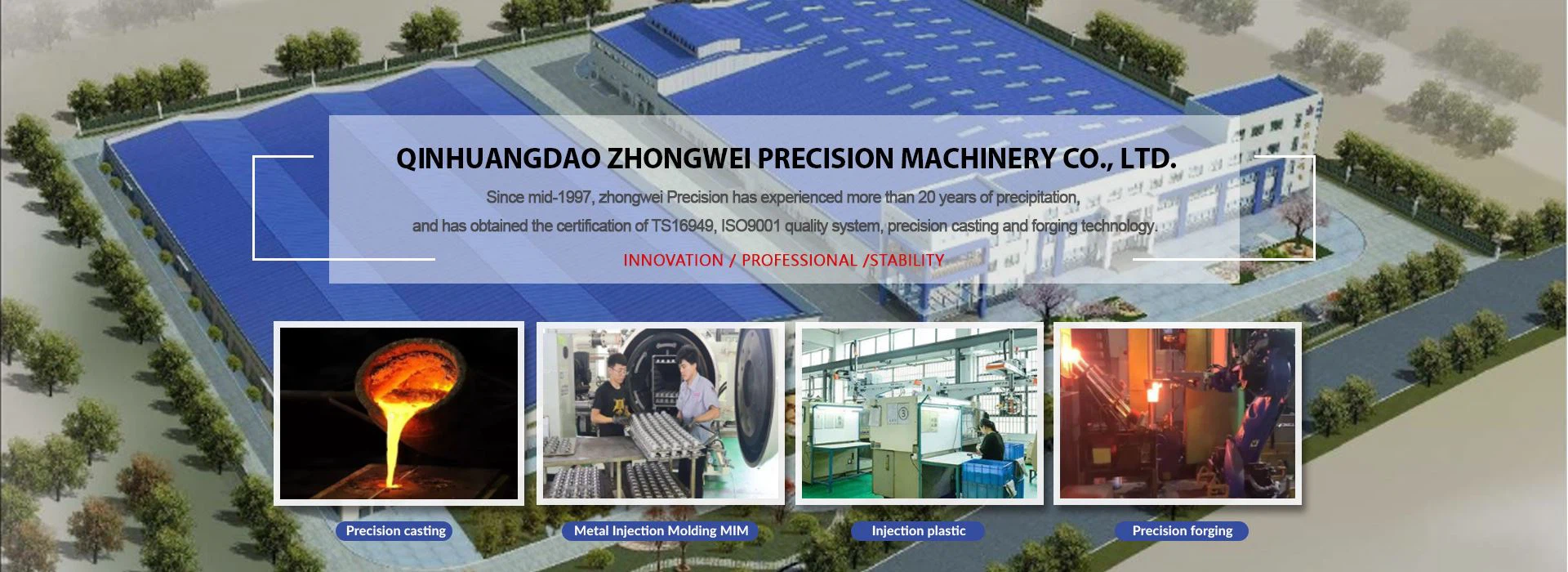
After more than ten years of precipitation, Qinhuangdao Zhongwei Precision Machinery Co., Ltd. has rich production experience in water glass lost wax precision casting, lost foam precision casting technology, silica sol precision casting technology, and shell sand casting technology. We expect manufacturers from all over the world to consult and negotiate business.
Product Description
Basic situation of Stainless iron sol investment casting
1. Implementation standards: The company strictly implements ISO9001 & TS 16949 certification.
2. Product material standards: ISO, GB, ASTM, SAE, ISO, EN, DIN, JIS, BS
3. Main processes: sand casting, silica sol investment casting, water glass investment casting,shell casting,deburring, sand blasting, machining, heat treatment, leak testing, surface treatment, etc.
4. Available materials:
High manganese steel, high chromium steel, high nickel steel, carbon steel, alloy steel, stainless steel, gray iron, cast iron, cast steel, cast aluminum, cast copper, etc. can be customized according to customer requirements.
Stainless steel materials are classified according to metallographic structure and can be divided into austenitic stainless steel, ferritic stainless steel, martensitic stainless steel, duplex stainless steel, and precipitation hardening stainless steel. The representative steel grades of austenitic stainless steel are 304, 316, 321, 347, etc. The typical grade of martensitic stainless steel is Cr13 type, and the typical grade of ferritic stainless steel is Cr17 type.
Stainless Steel Material Has Several Models
The stainless steel material has a brightness close to the mirror surface, and the touch is hard and cold. It has a series of characteristics such as excellent corrosion resistance, formability, compatibility and toughness, and is used in heavy industry, light industry, daily necessities industry, building decoration and other industries.
Ferritic stainless steel, which contains 12%-30% chromium, has better chloride resistance and stress corrosion resistance than other types of stainless steel.
Austenitic stainless steel contains more than 18% chromium, has good comprehensive performance, and is resistant to corrosion by various media. Martensitic stainless steel with high strength

Corrosion Resistance
301 stainless steel exhibits obvious work hardening phenomenon during deformation, and is used in various occasions requiring higher strength.
302 stainless iron is essentially a variant of 304 stainless iron with higher carbon content, which can obtain higher strength by cold rolling.
302B is a kind of stainless iron with high silicon content, which has high resistance to high temperature oxidation.
304 is a general-purpose stainless steel that is widely used to make equipment and parts that require good overall properties (corrosion resistance and formability).
304L is a lower carbon variant of 304 stainless steel used where welding is required. The lower carbon content minimizes carbide precipitation in the heat-affected zone near the weld, which can lead to intergranular corrosion (weld erosion) in stainless steel in some environments.
304N is a nitrogen-containing stainless iron, and nitrogen is added to increase the strength of the iron.
305 and 384 stainless irons contain high nickel and have a low work hardening rate, making them suitable for applications requiring high cold formability.
308 stainless iron is used to make electrodes.
The nickel and chromium content of 309, 310, 314 and 330 stainless irons are relatively high, in order to improve the oxidation resistance and creep strength of iron at high temperatures. The 30S5 and 310S are variants of 309 and 310 stainless steel, the only difference being that the carbon content is lower, in order to minimize the precipitation of carbides near the weld. 330 stainless iron has a particularly high resistance to carburization and thermal shock resistance.
Choose the Stainless iron sol investment casting product that is right for you.
Magnetic Discrimination
People often think that magnets attract stainless iron to verify its pros and cons and its authenticity. If it does not attract non-magnetic materials, it is considered to be good and genuine. If it is magnetic, it is considered to be counterfeit. In fact, this is an extremely one-sided, unrealistic and wrong identification method.
There are many kinds of stainless iron, which can be divided into several categories according to the organizational structure at room temperature:
1. Austenitic type: such as 304, 321, 316, 310, etc.;
2. Martensite or ferrite type: such as 430, 420, 410, etc.;
The austenitic type is non-magnetic or weakly magnetic, and the martensite or ferrite is magnetic.
Post Casting Process
1. Heat treatment: annealing, carbonization, tempering, quenching, normalizing, surface tempering
2. Processing equipment: CNC, WEDM, lathe, milling machine, drilling machine, grinder, etc.;
3. Surface treatment: powder spraying, chrome plating, painting, sandblasting, nickel plating, galvanizing, blackening, polishing, bluing, etc.

Moulds and Inspection Fixtures
1. Mold service life: usually semi-permanent. (except for lost foam).
2. Mold delivery time: 10-25 days, (according to product structure and product size).
3. Tooling and mold maintenance: Zhongwei is responsible for precision parts.
Quality Control
1. Quality control: the defective rate is less than 0.1%.
2. Samples and trial run will be 100% inspected during production and before shipment, sample inspection for mass production according to ISDO standards or customer requirements
3. Testing equipment: flaw detection, spectrum analyzer, golden image analyzer, three-coordinate measuring machine, hardness testing equipment, tensile testing machine;
4. Provide after-sales service.
5. The quality can be traced back.
Application
Stainless iron sol investment casting in mechanical parts, auto parts, lock parts, valve castings, pipe joints, hardware tools, kitchen hardware, bathroom hardware, lighting hardware, marine hardware, architectural decoration hardware, door hinges, stair handrail accessories, glass connectors , electrical hardware castings, stove accessories and many other fields are widely used.


Send Inquiry
