




Reducer Joint Silica Sol Investment Casting
The basic feature of silica sol precision casting is to use fusible material as the pattern, use refractory material as the mold, and melt the pattern before pouring to form a mold cavity. As early as 3000 years ago, this process has been used to cast handicrafts. During the Second World War, due to the needs of the military industry, countries such as the United States and Britain used investment casting methods to produce stator blades for turbojet engines, thus pushing this process to the industrial field, and it has been continuously developed and promoted for more than half a century improve.
Product Introduction
|
Reducer joint silica sol investment casting |
||||||||
|
Item |
Material |
Production Process |
Sintering Temperature |
Mold |
Custom |
|||
|
Reducer joint silica sol investment casting |
304 |
Investment Casting |
1680℃ |
To be customized |
Yes |
|||
|
Chemical composition |
|
|||||||
|
Available Materials |
Low carbon stainless steel, titanium alloy (Ti, TC4), copper alloy, tungsten alloy, hard alloy, high temperature alloy (718, 713) |
|||||||
|
Smoothness |
Dimensional accuracy |
Product density |
Appearance treatment |
Appropriate weight |
||||
|
Roughness 1~5μm |
(±0.1%~±0.5%) |
7.3-7.6g/CM³ |
According to customer requirements |
0.03g~400g) |
||||
Silica Sol Precision Casting
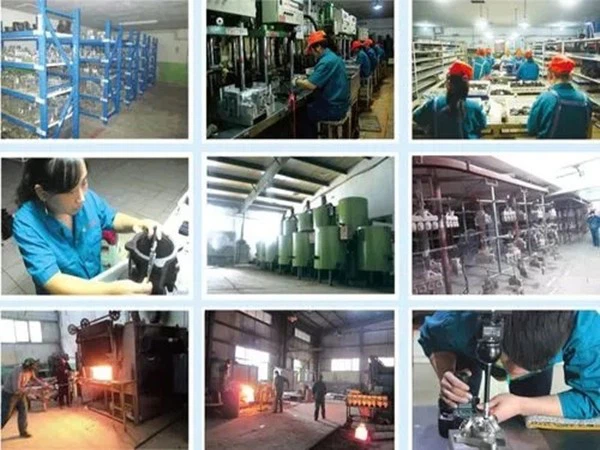
The basic feature of silica sol precision casting is to use fusible material as the pattern, use refractory material as the mold, and melt the pattern before pouring to form a mold cavity. As early as 3000 years ago, this process has been used to cast handicrafts. During the Second World War, due to the needs of the military industry, countries such as the United States and Britain used investment casting methods to produce stator blades for turbojet engines, thus pushing this process to the industrial field, and it has been continuously developed and promoted for more than half a century improve. Silica sol investment casting has many production processes, from wax mold, mold shell, and pouring, to cleaning, it is a tight chain. Any problem in any link will directly affect the final casting shape and quality, and it is necessary to especially strengthen the control of the process with research.
Shell making process
Reducer joint silica sol investment casting The importance of the shell-making process Among all the production processes, wax mold manufacturing and mold shell manufacturing are two process links that reflect the characteristics of investment casting itself, and special attention needs to be paid to process research. In recent years, the worldwide investment casting process has made great progress in the manufacture of wax patterns. Producers can ensure the dimensional accuracy and surface quality of wax patterns by selecting appropriate mold materials and adopting modern process equipment. At the same time, compared with the subsequent manufacturing process of investment casting, wax mold manufacturing is relatively independent, and unqualified products can be screened out by means of visual inspection and dimensional measurement, so as to avoid continued production and increased losses. When entering the shell manufacturing process, the surface quality and dimensional accuracy related to the final quality of the casting are hidden. Until the casting is cleaned out, the change in the quality of the shell cavity can be regarded as a "black box". It is impossible to directly observe the changes in its size and quality. Only by understanding the relationship between the manufacturing process and the defects of the shell more clearly can the controllability of the entire production process be guaranteed. More importantly, the shell is the direct cavity for casting forming, and its performance ultimately affects the forming quality of liquid metal. Therefore, much attention has been paid to the shell-making process of investment casting. At the annual technical conference of the American Investment Casting Association ICI, an important international investment casting conference, research on mold shells has always been a hot spot of attention, and about 1/3 of the papers are related to mold shells, which illustrate the mold shell manufacturing technology The Importance of Development to Investment Casting. In the investment casting shell-making process commonly used internationally, silica sol shells occupy a dominant position due to their environmental protection advantages, but they also need to face the challenges of fierce market competition: on the one hand, they must adapt to more advanced requirements in the aerospace and military fields. The quality requirements of large, thinner, and more complex castings; on the other hand, for a large number of civilian products, shortening the production cycle and improving market responsiveness have also become a top priority.
The development of shell technology puts forward the requirements for the development of new silica sol
1. Meet the requirements of complex investment castings for silica sol shells
To manufacture large, thin-walled, and complex casting shells, on the one hand, it is necessary to solve the problem of shell manufacturing capacity, such as equipment suitable for large shell operations, including shell-making manipulators, dewaxing equipment, etc. On the other hand, the final shell has higher requirements in terms of strength, deformation resistance, and dimensional accuracy, especially the strength and deformation resistance of the shell are the basis for casting large investment castings. Only by ensuring the performance requirements of the shell and making the castings correctly formed can the dimensional accuracy of the castings be further addressed. The strength of the silica sol shell can be divided into normal-temperature strength, high-temperature strength, and residual strength according to the different heating effects. The normal temperature strength is to ensure the integrity of the shell during the shell-making and dewaxing process. The high-temperature strength is to ensure that the shell is not damaged during the firing and pouring process. High-temperature strength is important, but it is determined by experiments that after high-temperature calcination above 950°C, the shell strength of silica sol can reach 7~14MPa, exceeding 6~8MPa of ethyl silicate, which can fully meet the requirements of the investment casting process. On the contrary, with the increase of high-temperature strength, the residual strength also increases, which makes it difficult to clean the casting shell and needs to be appropriately reduced. Compared with ethyl silicate, the weakness of silica sol shell is that the strength at room temperature is relatively low, so when the shell becomes larger and more complex, it is easy to cause cracking or deformation of the shell during shell making and dewaxing, affecting the final surface quality of the casting and dimensional accuracy. Therefore, improving the room temperature strength of silica sol has become an important task to popularize and develop silica sol shell technology, and it is also an important goal of researching new silica sol.
2. Improvement of investment casting efficiency requires the development of silica sol
Compared with large complex thin-walled castings, civilian products have lower requirements for casting quality. However, for the latter, the problem of shortening the production cycle and improving production efficiency becomes more prominent. The gelation process of ordinary silica sol mainly depends on the dehydration and drying of silica sol, which takes longer than that of chemically hardened ethyl silicate. The ethyl silicate shell can be hardened in about 2 hours for each layer of ammonia drying, while the final hardening of silica sol generally takes more than 12 hours, and it takes longer for some deep holes and other difficult-to-dry parts. At the same time, since the investment casting mold shell needs to be manufactured in layers, each layer needs to be fully dried to ensure that the lower shell will not cause the problem of back-melting and falling off when the coating is dipped in the coating itself, and the moisture will soak into the dried mold shell within, resulting in a long overall drying cycle. It is a schematic diagram of the production cycle of silica sol shell investment castings in general. Reducer joint silica sol investment casting shell-making time accounts for more than 50% of the entire casting production cycle. To shorten the delivery time of products, shortening the shell-making cycle is the core link of the problem. The key factors to shorten the shell-making cycle can be divided into two aspects: internal factors and external factors. The internal factors are mainly the characteristics of the binder, and the external factors are the drying conditions.
We provide joint development and one-stop customized services from mold manufacturing to precision casting production and are committed to providing high-quality precision casting for China's high-end manufacturing industry. If you have any questions about precision casting and precision casting, please consult us!
Detection Systems

Copper Silica Sol Investment Casting


Send Inquiry
