

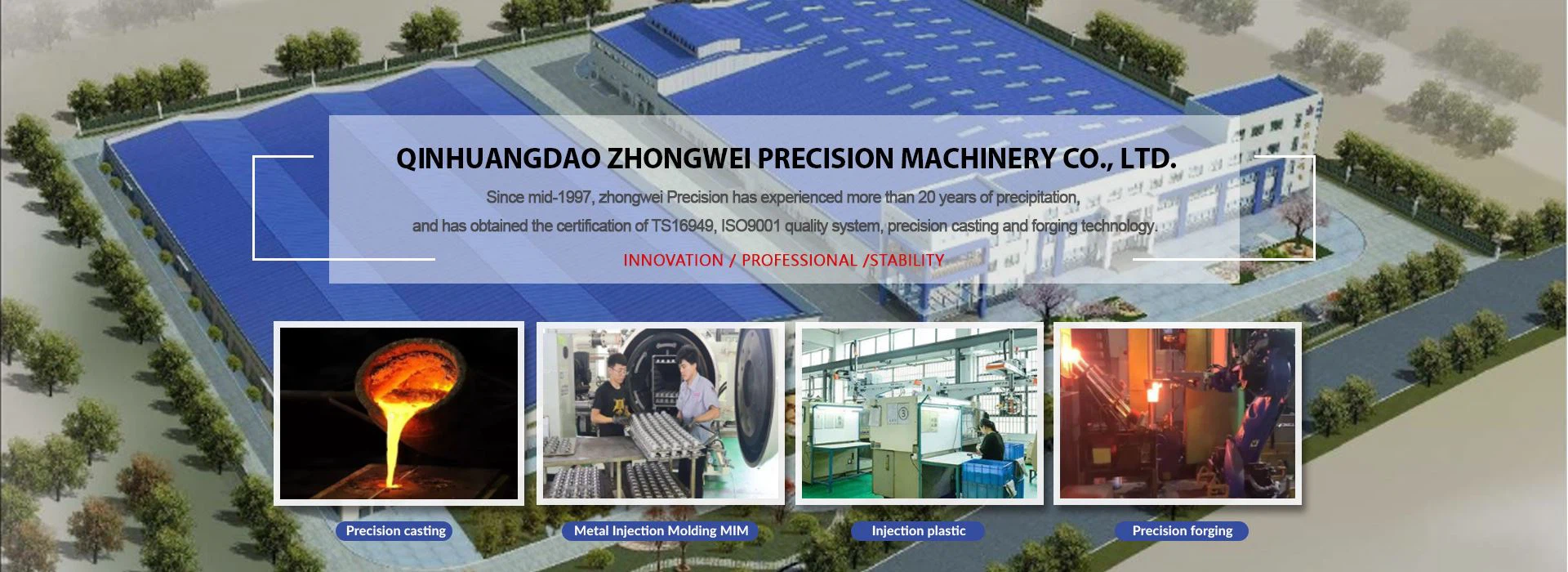


Aluminum Alloy Lost Wax Casting
Aluminum alloy lost wax casting is a foundry company specializing in gravity casting, aluminum alloy casting, investment casting, shell casting, sand casting and CNC machining services, integrating R&D, design, production and sales.
Aluminum alloy lost wax casting is a foundry company specializing in gravity casting, aluminum alloy casting, investment casting, shell casting, sand casting and CNC machining services, integrating R&D, design, production and sales. We have a series of supporting facilities from materials, mold design, sand core, casting, shot blasting, heat treatment, machining, surface treatment; we can design molds and produce products according to customer requirements, samples and drawings. A variety of blank parts and finished parts are produced. The products involve mechanical parts, construction hardware, auto parts, high-speed rail parts, furniture parts, woodworking and medical equipment, pneumatic components, household items and other related fields.
Product Description
Aluminum alloy lost wax casting basics
1. Implementation standards: The company strictly implements ISO9001 & TS 16949 certification.
2. Product material standards: ISO, GB, ASTM, SAE, ISO, EN, DIN, JIS, BS
3. Main processes: sand casting, silica sol investment casting, water glass investment casting,shell casting,deburring, sand blasting, machining, heat treatment, leak testing, surface treatment, etc.
4. Available materials:
Cast aluminum, aluminum-magnesium alloy, zinc alloy, zinc-magnesium alloy, high manganese steel, high chromium steel, high nickel steel, carbon steel, alloy steel, stainless steel, gray iron, cast iron, cast steel, cast copper, etc. according to customer requirements Made to order.
Aluminum Alloy Lost Wax Casting Treatment
Casting cleaning: Generally speaking, the aluminum casting can be further cleaned after it is completely cooled. After the aluminum casting is cast in the mold, the cooling time of the casting in the mold is related to the material of the aluminum casting and the quality of the aluminum casting. The shape and size of the production conditions are directly related. Generally, if the cleaning work of aluminum alloy castings is earlier, it will easily cause deformation and cracks of the aluminum castings. The cooling time of castings with larger size and more complex process should be longer, and the cooling time of castings with smaller size and thin wall and simple process can be shorter.
Cutting the pouring riser: The main methods of cutting the pouring riser are gas cutting, grinding wheel cutting, sawing machine, hydraulic cutting, anode cutting, etc.
Surface cleaning of aluminum castings: After the aluminum castings are shelled, there is always residual iron oxide on the surface of the castings, especially the castings with complex inner cavities, deep grooves and blind holes, which cannot be completely cleaned and must be cleaned.
1.Aging operation: Castings that need to be artificially aged should be aged as soon as possible after quenching.
2. Repeated heat treatment: When the mechanical properties of the heat-treated sand cast aluminum castings do not meet the requirements, repeated treatment can be performed. The holding time for repeated treatment can be shortened as appropriate. The number of repetitions of heat treatment shall not exceed three times.
3. Technical stability and others: During the heat treatment operation, the operator shall not leave the site, pay attention to observe the temperature and the operation of the equipment, wear protective equipment, and make original records.
4. Correction of casting deformation: According to the characteristics of sand-cast aluminum castings and the specific situation of deformation, select the corresponding correction method. When correcting, the force should not be too strong, but should be slow and uniform.
5. Heating and heat preservation: Sand casting aluminum castings should be heated slowly. For complex castings, install the furnace at a lower temperature, and use the time for heating to the quenching temperature for about 2 hours, and heat preservation after reaching the specified temperature.
6. Cooling from the furnace: After the heat treatment and heat preservation are completed, the sand-cast aluminum castings are quickly released from the furnace by a crane or other devices, and then quenched into the specified cooling medium for cooling.
The aluminum wheel hub of automobile is a typical application of aluminum alloy lost wax casting. Many friends think that it is made of aluminum die-casting. This is not true. The global aluminum wheel hub is made of gravity casting or low-pressure casting. It cannot be used. Aluminum die-casting, aluminum die-casting aluminum castings are filled with a large number of vapors, resulting in a large number of small bubbles, which reduces the mechanical properties on the one hand, and at the same time, due to the existence of bubbles, T6 heat treatment cannot be performed, and the mechanical properties cannot be further improved. performance. In addition, the aluminum alloy produced by the aluminum alloy die-casting process needs to have a high iron content, and the iron content determines the elongation of the aluminum casting. It is brittle and has poor impact resistance, so aluminum alloy castings such as aluminum wheel hubs that require high strength, high safety, and impact resistance cannot be produced by aluminum alloy die-casting process.
Defect Analysis of Aluminum Alloy Casting Aluminum alloy gravity casting is a process of casting with metal materials, and then the aluminum alloy and aluminum alloy gravity castings of the parts are obtained. Aluminum alloy gravity casting has fluidity, shrinkage, heat, air tightness, casting stress, and suction. Slag is oxidized slag inclusions that are mostly distributed on the upper surface of the casting, and the corners of the casting mold are not ventilated. Shrinkage of aluminum castings usually occurs at the thick part of the root of the fly riser around the inner runner, the thickness transition of the wall, and the thin wall with a large plane. In the as-cast state, the fracture surface is gray, and the light yellow is gray-white, light-yellow or gray-black after heat treatment. It is cloudy on the X-ray film. The more serious filamentous shrinkage can be checked by X-ray and fluorescent low-magnification fracture surface. method discovery.
After the aluminum alloy gravity casting machine castings are produced, heat treatment may be required, because only after heat treatment can the molding effect be better. So do you know what are the characteristics of this heat treatment? Is the method of heat treatment selection the same? Because there will be relatively large grain structures in the process of gravity casting of aluminum alloys, and it takes a long time to perform solution treatment on these grain structures during casting, so that the finished product will be more ideal. , and when heating, it is necessary to choose a heating furnace and related instruments that are easier to control the temperature to monitor and adjust the temperature appropriately. The heat treatment of aluminum alloy gravity casting machine castings is not the same, because in the process of aluminum alloy casting, the chemical composition of aluminum parts is different. Therefore, when heat treatment is performed, it is also necessary to combine specific components to select the appropriate method. And the reinforcement will be different. During heat treatment, the heating temperature should be controlled, and the appropriate heat treatment method should be selected at the same time.
1) Keep the cast aluminum parts and the surrounding environment clean. For magnesium alloy castings, special attention should be paid to not smoking and drinking water at the work site.
2) The space near the cast aluminum parts is unobstructed, the ventilation and ventilation equipment should be in good working conditions, and the materials and auxiliary appliances used should be placed according to the needs of fixed management.
3) After adding hydraulic oil or lubricating oil, the leaked oil should be wiped off as soon as possible.
4) Magnesium alloy furnace operators should wear safety uniforms, gloves and masks.
5) Work with care and safety first, and prohibit irrelevant personnel from entering the operation area.
6) For magnesium alloy die-casting workshops, fire prevention devices should be set up in conspicuous areas, such as: at least 5 fire extinguishers/set (D-level fire extinguishers) dry salt and dry sand, dust-free asbestos pads, etc. Special attention: Do not use water, ordinary fire extinguishing powder, foam, CO2, N2 to extinguish the fire. Check the safety door should be flexible, check the front and rear safety door limit switches (Jiji) should be normal: turn on the power switch of the machine, close the front and rear safety doors, observe the corresponding output signal lights of the PLC in the electrical box, the lights are on, it means normal, if the lights are off, stop and check the corresponding lines .

Post Casting Process
1. Heat treatment: annealing, carbonization, tempering, quenching, normalizing, surface tempering
2. Processing equipment: CNC, WEDM, lathe, milling machine, drilling machine, grinder, etc.;
3. Surface treatment: powder spraying, chrome plating, painting, sandblasting, nickel plating, galvanizing, blackening, polishing, bluing, etc.

Moulds and Inspection Fixtures
1. Mold service life: usually semi-permanent. (except for lost foam).
2. Mold delivery time: 10-25 days, (according to product structure and product size).
3. Tooling and mold maintenance: Zhongwei is responsible for precision parts.
Quality Control
1. Quality control: the defective rate is less than 0.1%.
2. Samples and trial run will be 100% inspected during production and before shipment, sample inspection for mass production according to ISDO standards or customer requirements
3. Testing equipment: flaw detection, spectrum analyzer, golden image analyzer, three-coordinate measuring machine, hardness testing equipment, tensile testing machine;
4. Provide after-sales service.
5. The quality can be traced back.
Application
Cast aluminum alloy is an aluminum alloy that fills the mold with molten metal and obtains blanks of various shapes. It has the advantages of low density, high specific strength, good corrosion resistance and casting manufacturability, and is less restricted by the structural design of parts. Divided into Al-Si and Al-Si-Mg-Cu-based medium-strength alloys; Al-Cu-based high-strength alloys; Al-Mg-based corrosion-resistant alloys; Al-Re-based heat-strength alloys. Most require heat treatment to strengthen the alloy, eliminate internal stress in the casting, stabilize the structure and size of the parts. Used to manufacture beams, gas turbine blades, pump bodies, pylons, hubs, air intake lip and engine casings, etc. Aluminum alloy lost wax casting is also used to manufacture parts such as cylinder heads, gearboxes and pistons for automobiles, housings for instrumentation and supercharger pump bodies.
Cast aluminum alloys have good casting properties and can be made into parts with complex shapes; they do not require huge additional equipment; they have the advantages of saving metal, reducing costs, and reducing man-hours, and are widely used in the aviation industry and civil industry. Used to manufacture beams, gas turbine blades, pump bodies, pylons, hubs, air intake lip and engine casings, etc. It is also used in the manufacture of automobile cylinder heads, gearboxes and pistons, instrumentation housings and supercharger pump parts.


Send Inquiry
