



Fingerprint Lock Lever MIM Parts
The MIM process adopted by the key parts of the fingerprint lock is a near-net forming technology for manufacturing high-quality precision parts. Fingerprint Lock Lever MIM Parts injects the plasticized mixture of metal powder and binder into the mold.
Product Description
|
Titanium Injection Molding Fingerprint Lock Lever MIM Parts |
|||||||||
|
Item |
Material |
Production Process |
Sintering Temperature |
Mold |
Custom |
|
|||
|
Fingerprint Lock Lever |
17-4 |
Metal Injection Molding |
1350°C-1500°C |
To be customized |
Yes |
|
|||
|
Chemical Composition |
C: ≤0.07 Mn:≤1.00 And: ≤1.00 Cr:15.5~17.5 Ni:3.0~5.0 P: ≤0.04 S:≤0.03 Cu:3.0~5.0 Nb+Ta:0.15~0.45 |
||||||||
|
Available Materials |
Low carbon stainless steel, titanium alloy (Ti, TC4), copper alloy, tungsten alloy, hard alloy, high temperature alloy (718, 713) |
||||||||
|
Finish |
Dimensional Accuracy |
Product Density |
Appearance Treatment |
Appropriate Weight |
|||||
|
Roughness 1~5μm |
(±0.1%~±0.5%) |
92~95%
|
Mirror Reflection |
0.03g~400g) |
|||||
|
Mechanical Properties |
Tensile strength σb (MPa): aged at 480°C, ≥1310; aged at 550°C, ≥1060; aged at 580°C, ≥1000; aged at 620°C, ≥930 Conditional yield strength σ0.2 (MPa): aged at 480°C, ≥1180; aged at 550°C, ≥1000; aged at 580°C, ≥865; aged at 620°C, ≥725 Elongation δ5 (%): aging at 480°C, ≥10; aging at 550°C, ≥12; aging at 580°C, ≥13; aging at 620°C, ≥16 Reduction of area ψ (%): aging at 480°C, ≥40; aging at 550°C, ≥45; aging at 580°C, ≥45; aging at 620°C, ≥50 Hardness: solid solution, ≤363HB and ≤38HRC; 480℃ aging, ≥375HB and ≥40HRC; 550℃ aging, ≥331HB and ≥35HRC; 580℃ aging, ≥302HB and ≥31HRC; 620℃ aging, ≥277HB and ≥28HRC |
||||||||
The MIM process adopted by the key parts of the fingerprint lock is a near-net forming technology for manufacturing high-quality precision parts. Fingerprint Lock Lever MIM Parts injects the plasticized mixture of metal powder and binder into the mold. It is very suitable for the manufacture of parts with complex shapes, allowing the finished parts to have higher precision and tolerance, and at the same time have mass production capacity and lower manufacturing costs, with advantages that cannot be compared with conventional powder metallurgy, machining and precision casting methods.
Advantages of MIM process over traditional powder metallurgy process
1. The MIM process can manufacture products with complex shapes, avoiding more secondary machining.
2. MIM process products have high density, good corrosion resistance, high strength and good ductility.
3. The MIM process can combine 2 or more PM products into one metal product, saving materials and processes.
Advantages of MIM process over machining
1. MIM process design can save materials and reduce weight.
2. The MIM process can repeatedly crush and use the injected gate material without affecting product performance, and the material utilization rate is high.
4. The MIM process forms complex products at one time through the mold, avoiding multiple processing procedures.
5. The MIM process can manufacture complex shape parts that are difficult to machine.
Advantages of MIM process over investment casting
1. The MIM process can produce thin-walled products, the thinnest can be 0.2mm.
2. The surface roughness of MIM process products is better.
3. The MIM process is more suitable for making fine blind holes and through holes.
4. The MIM process greatly reduces the workload of secondary machining.
5. The MIM process can quickly manufacture small parts in large quantities and at low cost.
Which fingerprint lock material is better?
Comparison of common materials and processes of fingerprint locks. There are actually many materials, especially metal materials, that can be applied to smart fingerprint locks, and the materials used in different accessories are also different. Materials include copper alloy, plastic, aluminum alloy, zinc alloy, stainless steel, etc. The main processes mainly include die-casting, powder metallurgy, stretching, stamping, cleaning, polishing, electroplating, machining, etc.
Comparative analysis of common materials and processes of fingerprint locks
The material requirement is to be durable and strong. Therefore, the main material of the current lock body is mainly iron, stainless steel and some zinc alloys. Copper is mainly used on the lock tongue, and copper is rarely used in internal parts. All stainless steel is expensive and difficult to process, but the price is very expensive. Generally, the processes used are mainly precision casting, stretching, cold pier, etc.; iron is the best cost-effective lock body, so the current mainstream lock body use Stainless steel is used for durable parts, such as lock bolts and square rod transmission structures. These are made of stainless steel to increase durability and reliability. Other parts use iron to reduce costs. The application process is basically the same as that of stainless steel, and some are low All of them are made of iron or stainless steel, and even low-end powder metallurgy is used in the lock bolt processing technology (the quality of high-end powder metallurgy parts is very good, and the cost is also very high. Some stainless steels are also made of powder metallurgy, which must be easy to process. Some), low cost, but slightly less reliable and durable.
At present, the materials used by Fingerprint Lock Lever MIM Parts on the panel mainly include the following types: iron, stainless steel, copper, aluminum alloy, zinc alloy, plastic, glass, etc. It is rare to use plastic and glass as the main material.
1. Stainless steel, the so-called stainless steel panel mainly refers to 304 stainless steel, some use 316 medical grade, 201 and 403 two types we call pseudo stainless steel, in fact it is a kind of iron, do not comment on this aspect as a smart fingerprint lock panel One of the main materials used, it has natural advantages in terms of anti-violence and cost, such as high hardness, high strength, and low material price, but its natural disadvantage is difficulty in processing. Generally, the thickness of stainless steel panels is about 2.0mm. The processing technology is mainly applied to bending, stretching, water grinding, polishing, electroplating and individual precision casting processes. Moreover, due to its material characteristics, stainless steel determines that the current panel is going to two extremes. On the one hand, the minimalist and complex-shaped stainless steel panel has the highest cost, and the cost in the middle is the lowest. For example, the smart door lock in Figure 6 is a representative of minimalism. There is only one bending process plus surface treatment process. Due to the minimalist shape and tempered glass, the yield is less than 60%. This is a typical case. At the same time complex shapes, such as the stainless steel shape in Figure 7. Therefore, although the fingerprint lock slider is popular with consumers, there are very few stainless steel ones because the process is too complicated. However, according to rumors, several large stainless steel processing factories are now conquering it.
To distinguish between stainless steel and non-stainless steel panels, you can try it with a magnet, 304 and 316 cannot be sucked
Integrated stainless steel panel material smart fingerprint lock application
Advantages: Durable, simple surface treatment, strong reliability, strong corrosion resistance, not easy to damage the surface, low cost, and moderate weight.
Disadvantages: Difficult to shape
Price: It ranks in the middle of all materials, and some are relatively high.
Comprehensive assessment: Simple smart fingerprint locks are the best choice, and complex appearances are waiting for technological breakthroughs.
Metal Injection Molding Process

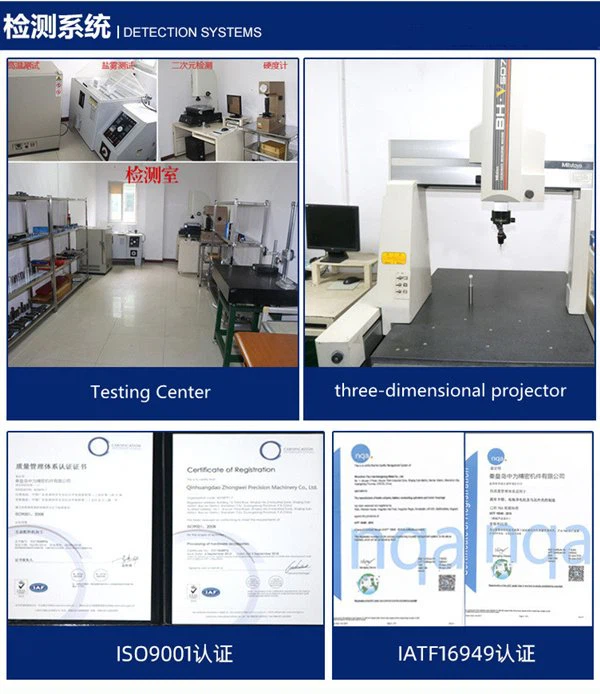
Detection Systems



Send Inquiry
