Process Flow of Powder Metallurgy
Nov 07, 2022
Process Flow of Powder Metallurgy
It is understood that the parts used in many fields are processed and produced by powder metallurgy technology. So, what is the process flow of powder metallurgy? The following is a report of Zhongwei Precision Powder Metallurgy Gear Manufacturer:

1. Pulverizing
Pulverizing is the process of making raw materials into powder. The commonly used methods are oxide reduction method and mechanical method.

2. Mixture
Mixing is the process of mixing various required powders in a certain proportion and homogenizing them into green powder. It is divided into dry type, semi dry type and wet type for different requirements.
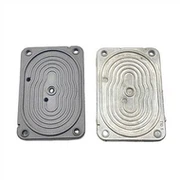
Powder metallurgy gear
3. Forming
Forming is a process in which the uniformly mixed materials are loaded into a die and re pressed into a parison with a certain shape, size and density. The forming methods are basically divided into pressure forming and non pressure forming. Compression molding is the most widely used in pressure molding.
4. Sintering
Sintering is a key process in powder metallurgy. The formed compacts can obtain the required final physical and mechanical properties through sintering. Sintering can be divided into unit system sintering and multi-element system sintering. In addition to ordinary sintering, there are also special sintering processes such as loose sintering, melt leaching, hot pressing, etc.
5. Post processing
The treatment after sintering can adopt various methods according to different product requirements. Such as finishing, oil immersion, machining, heat treatment and electroplating. In addition, in recent years, some new processes, such as rolling and forging, have also been applied to the processing of sintered P/M materials and achieved satisfactory results.
The above is an introduction to the process flow of powder metallurgy of Zhongwei Precision. All kinds of products produced by the powder metallurgy process not only have professional performance, but also have high production efficiency, bringing more benefits to the enterprise. At the same time, energy conservation and emission reduction also contribute to environmental protection.