Analysis of common defects of metal powder injection molding
Oct 15, 2022
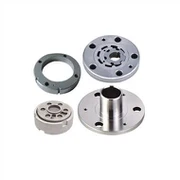
Metal powder injection molding (MIM) is a kind of molding processing method that injects the plasticized mixture obtained by mixing binder and metal powder into a specific mold. It is a new molding technology developed by combining powder metallurgy with polymer injection molding. It is especially suitable for mass production of small metal products with complex shape and large consumption, especially precision metal parts with complex structure, small volume and special requirements. It is difficult to process with traditional processing methods and the processing cost is high. Metal powder injection molding can reduce the processing cost.


The production process of metal powder injection molding (MIM) products is: powder+binder mixing granulation injection molding degreasing (MIM degreasing furnace) sintering (MIM sintering furnace) subsequent processing of formed products. In the process of producing MIM cemented carbide parts, improper material selection and operation control at any link may cause defects in cemented carbide parts. How to avoid such defects?
1. Powder selection. In addition to meeting the basic requirements of particle size distribution and particle size, powder metallurgy of MIM cemented carbide also requires high purity of the powder, and the powder with impurities cannot be selected. If the powder is mixed with sulfur, phosphorus, silicon and other elements, these substances will form pores during the sintering process, causing product defects.
2. Feeding production link. The cemented carbide powder needs a suitable binder when mixing. During mixing, the cemented carbide powder and the binder shall be fully mixed. During mixing, the temperature must be strictly controlled to avoid the volatilization and uneven distribution of the binder, so that the mixture has good rheological property and viscosity value after being made into the feed, and to avoid defects in the subsequent links.
3. The process of forming green billet. This is also a key link in the production of cemented carbide parts. In order to avoid product defects, attention should be paid to the reasonable control of mold temperature, feeding amount, injection pressure, holding pressure, holding time, injection speed, etc. during the injection process, which can effectively avoid defects in the injection green.
4. Degreasing link. In the process of degreasing, if the degreasing furnace heats up too fast, it will cause cracks in the cemented carbide parts. The method of temperature rising step by step can be used to degrease.
5. Sintering link. Due to the high density of cemented carbide, its products are easy to deform due to its own gravity during liquid phase sintering. Suitable supporting devices can be used. For larger products, materials with equivalent shrinkage can be selected as supporting plates. In addition, the liquid phase sintering time should be shortened as much as possible.

Common defects of metal powder injection molded parts are as follows.
1. Underinjection: Underinjection refers to incomplete injection products caused by insufficient pressure of the injection molding machine used or poor fluidity of the injection materials used and other factors when materials fail to fill the entire mold cavity. The reasons for under injection are poor material fluidity, too small wall thickness of products, too low mold temperature and too short injection time. Measures such as improving material fluidity or changing materials, increasing wall thickness, increasing mold temperature, increasing injection pressure and extending injection time can be taken to solve the problem.
2. Weld line: During the injection process, the materials are divided into several streams in the mold cavity and then converged. There may be linear traces at the junction, which are weld lines and affect the appearance quality and even mechanical strength of the products. The reasons for forming the weld line are that the injection pressure is too low, the injection speed is too slow, the material temperature and mold temperature are too low, and there are too many strands of the material flow. Measures such as increasing the injection pressure, accelerating the injection speed, increasing the material temperature and mold temperature, and appropriately reducing the split flow can be taken to solve the problem.
3. Air pockets. During the injection process, the air in the mold cavity cannot be discharged in time. It is wrapped by materials or compressed to the inner wall of the mold to form cavitation, which causes the lack of injection on the surface of the product and affects the appearance quality and even the mechanical strength of the product. The original causes of cavitation are poor exhaust, unsuitable gate position, too fast injection speed and too large change of product thickness. Measures such as adding vent holes or deepening vent holes, changing gate position, appropriately slowing injection speed, extending pressure holding time and avoiding sharp change of product thickness can be taken to solve the problem.
4. Deformation. Deformation refers to bending or twisting of formed products after cooling, which directly affects the appearance and dimensional accuracy of products, and even causes products to be scrapped. The causes of deformation are uneven cooling of the products, too hot and premature jacking of the products, too thin and unreasonable structure of the products, and residual stress inside the products. Measures such as uniform cooling of the mold channel, extending the pressure holding time, timely jacking of the products, improving the wall thickness and structure design of the products, and improving the molding conditions can be taken to solve the problem.

Metal powder injection molding (MIM) can form cemented carbide products with complex shapes. With the solution of defect control problems and the gradual improvement of MIM technology, the application scope of cemented carbide is gradually expanded, which greatly promotes the development of the entire cemented carbide industry.