



AlMg1SiCu Metal Powder Injection Molded Parts
Metal injection molding involves mixing powdered metal with a binder to form a feedstock. This mixture is then injection molded using injection molding equipment similar to that used in the plastics industry. This forms a "green body". The green body has sufficient stiffness and strength to be able to handle. The green body is then further processed to remove the binder and sinter the metal powder particles to form the final article. Binders typically include more than one thermoplastic compound, plasticizers, and other organic substances.
Product Description
|
AlMg1SiCu metal powder injection molded parts |
|||||
|
Item |
Material |
Production Process |
Sintering Temperature |
Mold |
Custom |
|
AlMg1SiCu |
Aluminum alloy |
Metal Injection Molding |
1500°C |
To be customized |
Yes |
|
Chemical composition |
unit:% Cu:0.15~0.4 Mn :0.15 Mg :0.8~1.2 Zn :0.25 Cr:0.04~0.35 Ti :0.15 Si:0.4~0.8 Fe :≤0.7 Al : Margin |
||||
|
Available Materials |
Low carbon stainless steel, titanium alloy (Ti, TC4), copper alloy, tungsten alloy, hard alloy, high temperature alloy (718, 713) |
||||
R & D Data
Metal injection molding involves mixing powdered metal with a binder to form a feedstock. This mixture is then injection molded using injection molding equipment similar to that used in the plastics industry. This forms a "green body". The green body has sufficient stiffness and strength to be able to handle. The green body is then further processed to remove the binder and sinter the metal powder particles to form the final article. Binders typically include more than one thermoplastic compound, plasticizers, and other organic substances. Ideally, the binder is molten or liquid at injection molding temperatures but solidifies in the mold as the green body cools. The raw material can be converted into solid particles, for example by granulation. These pellets can be stored and fed to the injection molding machine at a later time. Typical injection molding equipment includes a heated screw or extruder with a nozzle through which the mixture is extruded into a mold cavity. The extruder is heated to ensure that the binder is in liquid form, and the nozzle temperature is usually carefully controlled to ensure constant conditions. Suitably, the temperature of the mold is also controlled so that the temperature is low enough to ensure that the green body is rigid when it is removed from the mould. The green body is larger than the final article because the binder may occupy a bulky portion of the green body. Further processing of the green body includes binder removal and sintering. The binder can be completely removed prior to sintering. Alternatively, the binder may be partially removed prior to the sintering step, with complete removal of the binder being achieved during the sintering step. The binder may be removed by dissolving the binder with a solvent or by heating the green body to melt, decompose and/or evaporate the binder. Solvent removal and thermal removal can also be used in combination. The sintering step involves heating the green body to metallurgically bond the individual metal particles together. Sintering in the production of AlMg1SiCu metal powder injection molded parts is generally similar to that used in conventional powder metal part production. A non-oxidizing atmosphere is generally used during the sintering step to avoid oxidation of the metal. During sintering in metal injection molding, the porous body left after removal of the binder densifies and shrinks. The sintering temperature and temperature profile are usually tightly controlled to maintain the shape of the article and prevent deformation of the article during sintering. In this way, a net shape article can be recovered from the sintering step. Metal injection molding is suitable for producing articles from almost any metal that can be prepared in a suitable powder form. However, it is difficult to use aluminum in metal injection molding because the adherent aluminum oxide film always present on the surface of aluminum or aluminum alloy particles inhibits sintering. US Patent No. 6,761,852, assigned to Advanced Materials Technologies Pte Ltd, describes a metal injection molding process for forming parts from aluminum and its alloys. In this method, powders of aluminum or aluminum alloys are mixed with powders containing materials said to form eutectics with alumina, such as silicon carbide or metal fluorides. This hybrid powder is then mixed with a binder, injection molded, the binder removed, and sintered. In the method of US6,761,852, silicon carbide or metal fluoride is said to form a eutectic mixture with alumina which is supposed to dissolve the alumina to achieve intimate contact between the aluminum surfaces during sintering. Applicants do not submit that the prior art discussed in this specification forms part of the common general knowledge in Australia or any other country. Throughout this specification, unless the context dictates otherwise, the term "comprising" and its equivalents should be considered in an open sense.
SUMMARY OF THE INVENTION The object of the present invention is to provide a metal injection molding method which makes it possible to produce articles from aluminum, aluminum alloys and aluminum matrix composites. In a first aspect, the present invention provides a method of forming an article by metal injection molding of aluminum or an aluminum alloy, said method comprising the step of * forming an article comprising aluminum powder or aluminum alloy powder or both and optionally ceramic particles , a mixture of a binder and a sintering aid including a low melting point metal; injection molding the mixture; removing the binder; and sintering; wherein the sintering is performed in an atmosphere containing nitrogen and in the presence of an oxygen absorber. The oxygen getter can include any metal that has a higher affinity for oxygen than aluminum. Some examples of suitable metals for use as oxygen absorbers include alkali metals, alkaline earth metals and rare earth metals. If more than one rare earth metal is used as the oxygen absorber, it is preferred to use a rare earth metal of the lanthanide group. Magnesium is the preferred metal for use as an oxygen absorber because it has a high vapor pressure, is readily available, and is relatively inexpensive. In some embodiments, a bulk oxygen absorber may be located around the article being sintered during sintering. In other embodiments, a powdered oxygen absorber may be located around or on the article being sintered during sintering. As a further option, the oxygen absorber can be mixed with aluminum or aluminum powder alloy, or with the mixture fed to the injection molding equipment. In another embodiment, the oxygen absorber is present as a component of the alloy added to the mixture, such as in an alloy powder added to the mixture. For example, alloy powders containing aluminum and magnesium (and possibly other components) may be added to or incorporated into the mixture. Examples of some alloys that can be incorporated into the mixture include Al-7.9 weights. /. Mg and Al-2 weight. /. Cu-9.3 wt. /. Mg-5.4 wt n/. Si. Without wishing to be bound by theory, the inventors hypothesize that the oxygen getter removes any oxygen that may be present in the atmosphere surrounding the part during sintering. Oxygen absorbers can also be used to reduce the alumina surrounding the aluminum or aluminum alloy particles. This helps to break down the alumina layer surrounding the particles, exposing fresh metal and allowing sintering of the aluminum or aluminum alloy particles to occur. As mentioned above, magnesium is a suitable oxygen absorber. In addition to being relatively cheap, magnesium also has a high vapor pressure. Thus, during the sintering step (which occurs at high temperature), magnesium vapor can surround the article being sintered. Sintering aids are added to the mixture prior to injection molding of the mixture. Sintering aids are metals with low melting points. For example, the sintering aid may be a metal having a melting point lower than that of aluminum. Preferably, the sintering aid comprises a low melting point metal that is insoluble in solid aluminum. Some examples of suitable sintering aids include tin, lead, indium, bismuth and antimony. Tin has been found to be particularly suitable for assisting the sintering of aluminum and aluminum alloys. Therefore, tin is a preferred sintering aid. Tin is the preferred sintering aid for use in the present invention because it has been found that tin inhibits the formation of aluminum nitride during sintering (thus avoiding the formation of excess aluminum nitride which may adversely affect the properties of the final article), and The surface tension of the molten aluminum is also changed, thereby promoting a good distribution of the liquid aluminum phase during sintering. Based on the total weight of the metal powder and the sintering aid, the added amount of the sintering aid is not higher than 10% by weight. Preferably, the sintering aid is present in an amount of 0.1% to 10% by weight, more preferably 0.5% to 3% by weight, even more preferably about 2% by weight. If tin is used as a sintering aid, it may be added in an amount of 0.1% to 10% by weight of the mixture, more preferably 0.5% to 4% by weight, still more preferably 0.5% to 2.0% by weight. Tin melts at 232'C, much lower than aluminum (66(TC), and has no intermetallic phase. Tin is insoluble in solid aluminum with a maximum solid solubility of less than 0.15%. Aluminum is completely miscible with liquid tin, forming a miscible In addition, the surface tension of liquid tin is significantly lower than that of aluminum, and the inventors have shown that trace amounts of tin can improve the wetting characteristics and sintering behavior of aluminum. For these reasons, tin is a particularly preferred sintering aid. The sintering step is carried out in a nitrogen atmosphere. Without wishing to be bound by theory, the inventors hypothesize that performing the sintering step in a nitrogen atmosphere can promote the formation of aluminum nitride. The inventors hypothesize that the formation of aluminum nitride during the sintering step can contribute to damage or Breaks down the aluminum oxide film that usually surrounds the aluminum or aluminum alloy particles.Using tin as a sintering aid can also help to control the formation of AlN, as excess aluminum nitride formed during sintering can be detrimental to the properties of the final article. If high-purity aluminum is used as the feed powder, the inventors have found that sintering of the aluminum powder in a nitrogen atmosphere may result in rapid conversion of aluminum to aluminum nitride. Since aluminum can be converted to aluminum nitride in these cases Rapid rate, so there is a danger that the entire article may be converted to aluminum nitride. The use of tin as a sintering aid can limit the formation of excess AlN in these cases. Without wishing to be bound by theory, the inventors postulate that by forming aluminum nitride, The nitrogen atmosphere destroys the aluminum oxide film on the surface of the aluminum or aluminum alloy particles. It is further assumed that the destruction of the aluminum oxide film makes the sintering of the aluminum or aluminum alloy particles take place. The atmosphere carrying out the sintering step can have a low water content, for example, can have A water vapor partial pressure of less than 0.001 kPa. The dew point of the atmosphere used in the sintering step may be below -60°C, more preferably below -70°C. When magnesium is used as an oxygen absorber, it reacts with oxygen and water , thereby further reducing the water content in the atmosphere. It is considered that water vapor is extremely harmful to the sintering of aluminum. The atmosphere is a nitrogen-containing atmosphere. The atmosphere can be mainly nitrogen. The atmosphere can be 100% nitrogen. The The atmosphere may also comprise an inert gas. The inert gas may constitute a small fraction of the atmosphere. The atmosphere may be substantially free of oxygen and hydrogen. In this regard, the gas supplied as the atmosphere during sintering is suitably free of oxygen or hydrogen. The binder used in the present invention may be any binder or binder composition known to be suitable as a binder in metal injection molding. As known to those skilled in the art, bonding The binder is usually an organic component or a mixture of two or more organic components. The binder preferably includes a thermoplastic component that enables the binder to melt when heat is applied. The binder should also be raw after injection molding. The body provides sufficient strength to allow the green body to be handled. Preferably, the binder can be removed from the green body in a manner that maintains the integrity of the green body during binder removal. Preferably, after removal, the adhesive The binder does not leave any residue. The binder can be made of more than two materials. The two or more materials constituting the binder can be selected so that they can be removed sequentially from the green body. In this way, Easier to achieve adhesive control It facilitates the retention of the shape integrity of the green body during the binder removal process. In this regard, it should be appreciated that if the binder is removed too quickly, the risk of the green body losing its shape integrity increases. The binder may be removed using one or more known techniques for removing binder in metal injection molding. For example, the binder may be removed by dissolution in a solvent, by heat treatment to melt, evaporate or decompose the binder, by catalytic removal, or by capillary action. More than two binder removal techniques can be used in the binder removal phase. For example, the first step in binder removal may include solvent extraction followed by thermal removal of remaining binder. Those skilled in the art will understand that a wide range of binder materials can be used. Some examples include organic polymers such as stearic acid, waxes, paraffins and polyethylene. Without wishing to be limited in any way, the inventors have used binders including stearic acid, palm oil wax and high density polyethylene in experimental work related to the present invention. The sintering step used in the present invention involves heating the green body to a temperature at which the aluminum or aluminum alloy sinters to form a dense body. The sintering step preferably includes heating to a temperature of about 550°C to about 650°C, more preferably 590°C to 640°C, most preferably 610°C to 630°C. Sintering times can vary. Generally, for higher sintering temperatures, Use shorter sintering times. Basically, the sintering time should be long enough to ensure that maximum densification of the article has occurred. It has been found that no more than 2 hours of sintering at a temperature of 620°C to 630°C provides satisfactory However, the present invention encompasses both longer sintering times and shorter sintering times. The heating rate and heat profile used in the sintering step are usually tightly controlled in metal injection molding processes to obtain optimum properties in the final article. Those skilled in the art can easily understand how to determine the suitable heating rate and temperature distribution used in the sintering step. The method of the present invention is applicable to aluminum metal and aluminum alloys. Any aluminum alloy can be used in the present invention, including 1000 series, 2000 series, 3000 series, 4000 series, 5000 series, 6000 series, 7000 series and 8000 series aluminum alloys. Ceramic particles can be mixed with aluminum or aluminum alloy powder to produce aluminum metal matrix composites. Ceramic particles are used to improve or control the properties of sintered products Such properties may include, but are not limited to, wear resistance, hardness, or coefficient of thermal expansion. Non-limiting examples of typical ceramic materials include SiC, Al2O3, AlN, SiO2, BN, and TiB2. Can be used in known metal injection molding equipment Carry out the method of the present invention. Specific embodiment test various alloys and powder composition, particle size and particle shape.D5 ( ) is the spherical AA6061 powder of 10pm and the spherical tin of particle diameter<45pm is preferred.Metal injection molding raw material comprises A binder system of 6061 powder containing 2% by weight of tin and 3% by weight of stearic acid, 52% by weight of palm oil wax and 45% by weight of high-density polyethylene. The raw materials were mixed at 165°C for 180 minutes. After granulation, Raw materials were injection molded into standard drawn rods using an Arburg molding machine. Solvent debonding was performed in n-hexane at 40°C for 24 hours. The remaining binder removal and sintering were combined in a sealed tube furnace. Preferred atmosphere is a high-purity nitrogen flow of 1 liter/min. The heat profile used in the experimental work is shown in Table 1. Magnesium rods were placed around the article during sintering. Tensile tests were carried out on the material thus sintered. Extensometer scale The length is 25mm and the crosshead speed is 0.6mm/min. The Rockwell hardness (HRH) of the upper and lower surfaces is measured using a 1/8 inch steel ball and a 60kg load.
The large variation in hardness may be due to the high porosity level. When the sintering time increased to 2 hours, the density and hardness increased to 94.9±0.3% and 66.9±2.9, respectively. However, further increasing the sintering temperature to 630"C did not significantly increase the density and hardness. The density at this condition was 95.3 ± 0.3%, and the hardness was 69.0 ± 0.9. Typical stress/strain of the parts sintered under various conditions The curves are plotted in Figure 4. The part sintered at 620"C for 2 hours had the best mechanical properties with a 0.2% yield strength of 58 MPa, a tensile strength of 156 MPa and an elongation at break of 8.9%. The tensile properties of the parts sintered at 630°C were slightly lower than this, although the density was higher. This may be due to the coarsening of the microstructure at the higher sintering temperature. For the parts sintered at 620°C for 1 hour , low density produces poor mechanical properties. The tensile strength is 98MPa and the strain is 1.7%. Optical micrographs show that the grain size remains at about the original particle size and is smaller than 20pm. Backscattered electron images show a tin-rich phase ( In the electron image white control, in the optical image black control) distribution and size. Do not see obvious hole. Further embodiment prepares various percentages-325 mesh elemental magnesium powder or pre-alloyed powder rich in magnesium, and Mixed into the raw material. The raw material is then compacted into a 25.4mm diameter disc using a thermoforming machine. The disc is sintered in nitrogen without magnesium nuggets in the furnace. Before sintering the disc containing the pre-alloyed powder, the The furnace was run under vacuum at 680°C for 4 hours to remove any magnesium residues in the furnace. The parts were loaded into steel crucibles with loose lids to minimize the effect of air flow. Results The addition of elemental magnesium had an effect on the sintered density The effect is shown in Figure 6. It was found that the highest sintered density of ~94% was obtained with 1.0 wt.% Mg. At 0.5 wt.% Mg, the oxygen was not sufficiently absorbed and the part deformed due to the porous surface layer. Weight % elemental magnesium powder is added in the raw material to cause low sintered density (80%) due to nitriding. For safety considerations, it is not preferred to add elemental magnesium powder to the raw material. Yet, add magnesium in the form of pre-alloyed powder Some disadvantages of elemental powder can be overcome by adding to the raw material.Example - Addition of AlMg powder to the raw material The composition obtained from Aluminum Powder Company is Al-2 wt./oCu-9.3 wt%Mg-5.4 wt./Si and Al-7.9 wt. ./oMg pre-alloyed powder.Al-2 weight./oCu-9.3 weight n/.Mg-5.4 weight n/.The average particle diameter of Si powder is about 25|im, Al-7.9 weight./.Mg powder The average particle size is about 40 μm. Both have regular particle shapes. Al-2 weight./. Cu-9.3 weight y. Mg-5.4 weight./. The solid phase temperature of Si is about 540°C, which is at 600. C is completely liquefied. The solidus temperature of Al-7.9 wt% Mg is about 540°C, which is completely liquefied at 620°C. Figure 7 shows the results for these alloys as well as alloy AA6061 and for AA6061+7.5wt./.Al-2wt %0>9.3wt%Mg-5.4wtn/.Si mixtures, liquid content as a function of temperature. It has been found that sintering AA6061+7.5%Al-2wt./.Cu at 610°C in nitrogen - 9.3 wt./. Mg - 5.4 wt. MSi + 2 wt./. Sn raw material mixture for 2 hours produced a part with no distortion and a theoretical density of 97%. Example - Use of tin as sintering aid for general Sn has been used as an effective sintering aid for pressed or uncompacted aluminum alloys and compacted products produced by rapid prototyping. The inventors have shown that tin plays an important role in the sintering of tapped loose powder and powder injection molded aluminum compacted products. However, tin will remain at the grain boundaries after sintering because tin is practically insoluble in solid aluminum. Excess tin will deteriorate the mechanical properties, especially the ductility, which is very desirable for aluminum alloys prepared from powders. The debonded parts (brown parts) of powder injection molded aluminum compacted products have only about 85% relative density. After removal of the polymeric binder, there are open channels in the porous debonded part connecting the surfaces of the parts. Tapped loose powders have only about 40-60% relative density, and the connected pores can form open channels to the surface. A large volume of fluid is required to seal these channels. In the previous example, we found that 4% tin facilitated the sintering of loosely compacted pure aluminum powder; adding 2% tin enhanced the sintering of powder injection molded AA6061 compacted products. In this example, we minimized the amount of tin added while maintaining liquid volume by adding some pre-alloyed aluminum powder. Adding large amounts of pre-alloyed powder will also help increase the alloy content in the sintered part and increase its strength. Reducing tin content may help improve ductility. In this way, the mechanical properties of the alloy system can be further improved. Elemental tin (<43pm) was used as a sintering aid to reinforce the pre-alloyed Al-2wt%Cu-9.3wt. /. Mg-5.4 weight Q/. Liquid phase sintering of fine AA6061 powder (<20 microns) of Si powder (<30 iim). According to AA6061+X weight n/. Sn+Y weight. /. Al-2 weight. /. Cu-9.3 wt% Mg-5.4 wt. /. For the formulation of Si, the various powders were mixed in a Turbula mixer for 30 minutes. The mixed powder was poured into an alumina crucible, tapped and closed with aluminum foil. Then, they were sintered in a steel tube furnace at different temperatures for 2 hours under a nitrogen flow of 0.5 L/min. The sintered density was obtained by the Archimedes method and converted into a percentage of the theoretical density (TDM) for each alloy. Polished samples were used for optical and scanning electron microscopy (SEM). Figure 8 shows that the sintered density of AA6061+X weight MSn loose powder increases with the increase of sintering temperature. For 2 weight n/. The density of the Sn alloy system increases at 580°C, and for 1 wt./. The density of the Sn system increases at 590°C. The addition of tin significantly enhances sintering, and much higher sintering densities are obtained for alloys containing tin. Alloys containing 1.0 or 2.0 wt% tin have a sintered density above ~95% over the sintering temperature range of 600630°C. Only 83%, 88% and 93% sintered densities were obtained. For liquid phase sintering, liquid volume is one of the most critical factors for densification and part shape retention. Al-Sn alloy systems are controlled by temperature, aluminum alloy composition and tin content The liquid volume of . Figure 7 shows the effect of temperature on the liquid volume fraction for the tested alloys. The data were calculated using ThermoCalc. The addition of tin was not considered. For AA6061+xwt./.Al-2wt./.Cu- 9.3 wt. Q/.Mg-5.4 wt. MSi alloy, calculated based on the final total alloy content.Pre-alloyed Al-2 wt.°/.Cu-9.3 wt./.Mg-5.4 wt./.The solid phase point of Si powder is 582°C, it is completely liquefied at 604°C. Therefore, this alloy, if sintered alone, is very difficult to control during processing because of the narrow melting range. However, the liquid with high magnesium content formed early can be purged from the sintering furnace Oxygen, and helps to seal the open channels in the loose powder before severe oxidation usually begins at about 58060 (TC). Figure 9 shows the addition of 0%, 2.5% and 7.5% Pre-alloyed Al-2 wt. /. Cu-9.3 wt. /. Mg-5.4 wt. /. AA6061 + 0.5 wt. of Si powder. /. Sintered density of Sn loose powder. Because of increased liquid volume, AA6061 + 0.5 wt. /. The sintered density of Sn increases steadily with temperature up to 630°C. Al-2 weight is melted at a sintering temperature of 600°C for a 2.5% by weight addition and 590°C for a 7.5% by weight addition. /. Cu - 9.3 wt. /. Mg - 5.4 wt. /. Si powder gives a drastic increase in density of the liquid. However, for AA6061 + 0.5 wt. /. Sn + 7.5 wt. /. Al - 2 wt. / oCu -9.3 wt./. Mg -5.4 wt. 0/. Si alloy system, after peaking at 610°C, excess liquid soon leads to density reduction at 620°C. Density reduction may be due to early formation inside the part The reason for the gas of the clamping liquid. Adding 2.5% by weight of pre-alloyed Al-2 wt./. Cu-9.3 wt./. Mg-5.4 wt./. Si powder helps to maintain in the temperature range of 600620°C The density plateau of 97°/.Density begins to reduce under 630 ℃. Those skilled in the art can It is understood that the invention is capable of variations and modifications other than those specifically described. It is to be understood that the present invention includes all changes and modifications which fall within its spirit and scope.
Rights request
1. A method of forming an article by metal injection molding of aluminum or an aluminum alloy, said method comprising the steps of forming an article comprising aluminum powder or aluminum alloy powder or both and optionally ceramic particles, a binder and comprising a mixture of sintering aids of low-melting metals; • injection molding said mixture; • removing said binder; and • sintering; wherein said sintering is carried out in an atmosphere containing nitrogen and in the presence of an oxygen absorber.
2. The method of claim 1, wherein the oxygen absorber comprises a metal having a higher affinity for oxygen than aluminum.
3. The method of claim 2, wherein the oxygen absorber is selected from the group consisting of alkali metals, alkaline earth metals and rare earth metals.
4. The method of claim 3, wherein the oxygen absorber is magnesium.
5. The method of claim 1, wherein the bulk oxygen absorber is positioned around the sintered product during sintering, or the powdered oxygen getter is positioned around or on the sintered product during sintering, or absorbs The oxygen agent is mixed with the aluminum or aluminum powder alloy, or with the mixture added to the injection molding equipment, or the oxygen absorber is present as a component of the alloy added to the mixture.
6. The method of claim 1, wherein the sintering aid is a metal that has a melting point lower than that of aluminum and is insoluble in solid aluminum.
7. The method of claim 6, wherein the sintering aid comprises tin.
8. The method of claim 1, wherein the sintering aid is present in an amount not greater than 10% by weight, based on the total weight of the metal powder and the sintering aid.
9. The method of claim 8, wherein the sintering aid is present in an amount ranging from 0.1% to 10% by weight.
10. The method of claim 8, wherein the sintering aid is present in an amount of 0.5% to 3% by weight.
11. The method of claim 1, wherein the atmosphere in which the sintering step is performed has a low water content, wherein the partial pressure of water vapor is less than 0.001 kPa.
12. The method of claim 1, wherein the binder comprises a thermoplastic component capable of causing the binder to melt when heat is applied.
13. The method of claim 1, wherein the binder is made of two or more materials, and the materials are selected such that they are sequentially removed from the green body.
14. The method of claim 1, wherein the binder is removed by dissolving in a solvent, melting, evaporating, or decomposing the binder by heat treatment, by catalytic removal, or by capillary action.
15. The method of claim 14, wherein two or more binder removal techniques are used to remove the binder.
16. The method of claim 1, wherein the binder comprises stearic acid, palm oil wax, and high density polyethylene.
17. The method of claim 1, wherein the sintering step includes heating the green body to a temperature at which the aluminum or aluminum alloy sinters to form a dense body.
18. The method of claim 17, wherein the temperature is in the range of about 550°C to about 650°C.
19. The method of claim 1, wherein the mixture comprises ceramic particles selected from the group consisting of SiC, Al2O3, AlN, SiO2, BN, and TiB2.
20. The method of claim 1, wherein the atmosphere comprises nitrogen or a mixture of nitrogen flakes and an inert gas.
21. The method of claim 1, wherein the atmosphere is substantially free of oxygen or hydrogen. Full Abstract The present invention relates to metal injection molding.
In particular, the present invention relates to a method of forming an article of AlMg1SiCu metal powder injection molded parts by metal injection molding of aluminum or aluminum alloy, said method comprising the steps of forming an article containing aluminum powder or aluminum alloy powder or both and optionally A mixture of ceramic particles, a binder and a sintering aid including a low-melting metal is present; injection molding the mixture; removing the binder to form a green body; sintering the green body in an atmosphere containing nitrogen and in the presence of an oxygen absorber The sintering is carried out in the presence of.
Metal Injection Molding Process

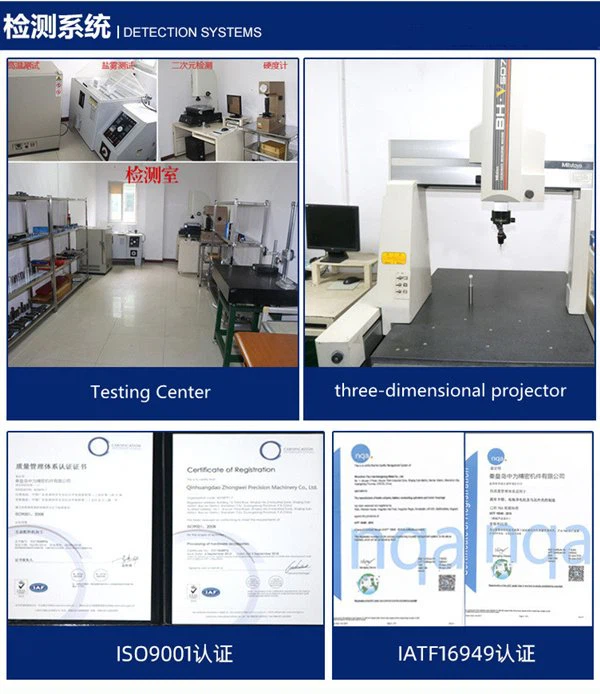
Detection Systems


Send Inquiry
