



Tungsten Carbide Alloy Metal Injection Molding Process MIM Parts
Tungsten carbide (WC) is a compound of tungsten and carbon. The outstanding feature of this material is its high hardness, close to that of diamond. Tungsten carbide is mainly used to produce industrial tools and consumable parts that are subjected to huge stress. Tungsten carbide in cemented carbide tools further improves the efficiency and cost-saving benefits of metal processes such as drilling, grinding and milling.

Tungsten carbide (WC) is a compound of tungsten and carbon. The outstanding feature of this material is its high hardness, close to that of diamond. Tungsten carbide is mainly used to produce industrial tools and consumable parts that are subjected to huge stress. Tungsten carbide in cemented carbide tools further improves the efficiency and cost-saving benefits of metal processes such as drilling, grinding and milling.
Production Method
Using metal tungsten and carbon as raw materials, tungsten powder with an average particle size of 3-5μm is dry-mixed with an equal amount of carbon black in a ball mill. After sufficient mixing, it is pressed and molded into a graphite disk, and then heated to 1400-1700℃ in a graphite resistance furnace or induction furnace, preferably controlled at 1550-1650℃. In a hydrogen flow, W2C is initially generated, and continues to react at high temperature to generate WC. Alternatively, firstly, tungsten hexacarbonyl is thermally decomposed at 650-1000℃ in a CO atmosphere to obtain tungsten powder, and then reacted with carbon monoxide at 1150℃ to obtain WC. W2C can be generated at a temperature higher than this temperature.
Chemical reaction formula:
Tungsten trioxide WO3 is hydrogenated and reduced to obtain tungsten powder (average particle size 3-5μm). Then, a mixture of tungsten powder and carbon black in an equal molar ratio (dry mixed in a ball mill for about 10 hours) is pressed and formed at a pressure of about 1t/cm2. The pressed block is placed in a graphite plate or crucible, and heated to 1400-1700℃ (preferably 1550-1650℃) in a hydrogen flow (using pure hydrogen with a dew point of -35℃) using a graphite resistance furnace or an induction furnace to carburize it to generate WC. The reaction starts around the tungsten particles, because W2C is generated in the early stage of the reaction. Due to the incomplete reaction (mainly due to the low reaction temperature), in addition to WC, there are still unreacted W and intermediate products W2C. Therefore, it must be heated to the above high temperature. The maximum temperature should be determined according to the particle size of the raw material tungsten. For example, for coarse particles with an average particle size of about 150μm, the reaction is carried out at a high temperature of 1550~1650℃.
Chemical reaction formula:
The requirements of cemented carbide for the particle size of tungsten carbide WC. According to the different uses of cemented carbide, different particle sizes of tungsten carbide are used; cemented carbide cutting tools, such as V-CUT knives for cutting machine blades, etc., use ultra-fine and sub-fine particles of tungsten carbide for finishing alloys; use medium particles of tungsten carbide for roughing alloys; use medium and coarse particles of tungsten carbide as raw materials for gravity cutting and heavy cutting alloys; coarse particles of tungsten carbide are used for mining tools with high rock hardness and large impact load; medium particles of tungsten carbide are used as raw materials for wear-resistant parts with small rock impact and small impact load; when emphasizing its wear resistance, pressure resistance and surface finish, ultra-fine and sub-fine particles of tungsten carbide are used as raw materials; impact-resistant tools mainly use medium and coarse particles of tungsten carbide as raw materials.
The theoretical carbon content of tungsten carbide is 6.128% (atomic 50%). When the carbon content of tungsten carbide is greater than the theoretical carbon content, free carbon (WC+C) appears in tungsten carbide. The presence of free carbon causes the surrounding tungsten carbide grains to grow during sintering, resulting in uneven cemented carbide grains. Tungsten carbide generally requires high combined carbon (≥6.07%) and free carbon (≤0.05%), and the total carbon is determined by the production process and scope of use of cemented carbide.
Under normal circumstances, the total carbon of tungsten carbide used in paraffin process vacuum sintering is mainly determined by the combined oxygen content in the compact before sintering. One part of oxygen requires 0.75 parts of carbon, that is, WC total carbon = 6.13% + oxygen content% × 0.75 (assuming that the sintering furnace is a neutral atmosphere, in fact, most vacuum furnaces are carburizing atmospheres, and the total carbon of tungsten carbide used is less than the calculated value).
The total carbon content of tungsten carbide in China is roughly divided into three types:
- The total carbon of tungsten carbide for vacuum sintering in paraffin process is about 6.18±0.03% (free carbon will increase);
- The total carbon content of tungsten carbide for hydrogen sintering in paraffin process is 6.13±0.03%;
- The total carbon of tungsten carbide for hydrogen sintering in rubber process = 5.90±0.03%.
The above processes are sometimes carried out crosswise, so the determination of the total carbon of tungsten carbide should be based on specific circumstances.
The total carbon of WC used in alloys with different use ranges, different cobalt contents, and different grain sizes can be slightly adjusted. Low-cobalt alloys can use tungsten carbide with a relatively high total carbon, while high-cobalt alloys can use tungsten carbide with a relatively low total carbon. In short, the specific use requirements of cemented carbide are different, and the requirements for the particle size of tungsten carbide are also different.
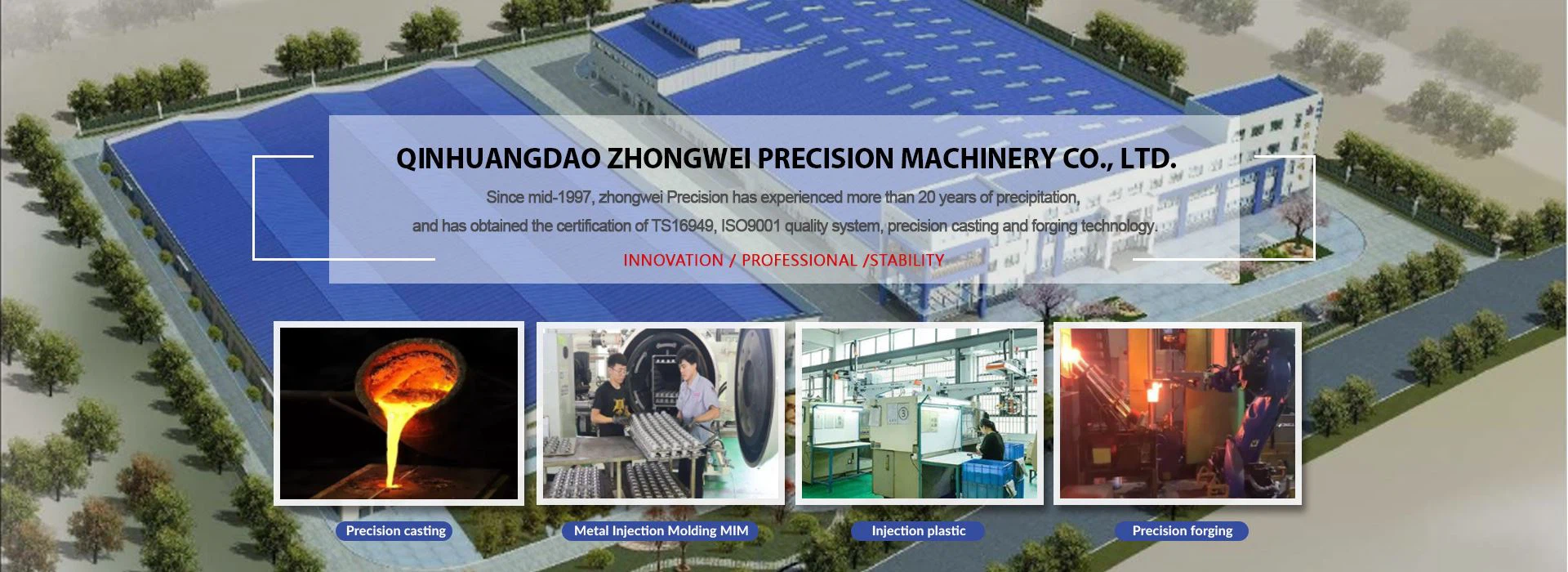
Qinhuangdao Zhongwei Precision Machinery Co., Ltd. was established in 1997 with a registered capital of 3 million yuan and ISO international system certification. It has complete metal injection molding process equipment, as well as ultra-precision spark machines, CNC step-down machines, Sodick discharge motors, and CNC machining centers. It focuses on precision tungsten steel processing and micro-hole processing, including mold accessories (punches, punches, bushings, stretching dies), mechanical parts accessories, dispensing machine nozzle strikers, various dispensing machine valve body accessories, etc.
With mature micro-hole processing technology, the nozzle aperture can be 0.025mm ± 0.001mm, and the finish is Ra0.2. It has rich production experience in dispensing machine jet valve accessories. Welcome to call for consultation and visit the factory for negotiation.
 Metal Injection Molding Tire Anti-skid Spikes
 Metal Injection Molding Of Carbide Snow Anti-skid Sp...
 GT05 Powder Metallurgy, Metal Injection Molding MIM ...
 Automobile Tire Anti-skid Spikes Metal Injection Mol...
 Anti-skid Shoe Spikes 10-8.5mm Metal Injection Moldi...
 Tungsten Carbide Waterjet MIM Parts
Send Inquiry
