



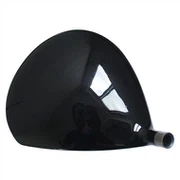
Titanium Alloy Golf Ball Head MIM Parts
Golf is a sports and leisure project that advocates nature, is suitable for all ages, and is beneficial to physical and mental health. Since the use of 17-4PH stainless steel on golf clubs, the golf industry has spared no effort in pursuing the application of new materials.
Product Description
|
Titanium Alloy Golf Ball Head MIM Parts |
|||||
|
Item |
Material |
Production Process |
Sintering Temperature |
Mold |
Custom |
|
Golf Ball Head |
Titanium Alloy |
Metal Injection Molding |
1500°C |
To be customized |
Yes |
|
Available Materials |
Low carbon stainless steel, titanium alloy (Ti, TC4), copper alloy, tungsten alloy, hard alloy, high temperature alloy (718, 713) |
||||
Application of Titanium Alloy on Golf Head
Golf is a sports and leisure project that advocates nature, is suitable for all ages, and is beneficial to physical and mental health. Since the use of 17-4PH stainless steel on golf clubs, the golf industry has spared no effort in pursuing the application of new materials. The golf club manufacturing industry has become an industry that is extremely sensitive to new material technologies. Ti-6Al-4V, various high-strength β-titanium alloys and other advanced materials have been widely used in golf clubs. Browsing the new products of major international golf equipment manufacturers in 2001, we can find that the raw materials are mainly titanium alloys, such as: E.R.CⅡ, VFT, PING of CALLAWAY company; TIST of the company, Ti300 series of Taylormade company. MIZUiNO company's 300R, etc., and more and more high-strength β-titanium alloys are used as the striking surface material.
Titanium alloy materials for striking surfaces mainly include TC4 (Ti-6Al-4V) and high-strength and high-toughness β-titanium alloys (or near-β-titanium alloys) such as SP700, T-153, Ti1023, and β21S. TC4 material has good overall performance. It is also the titanium alloy material with the most mature application and the most complete performance data. It is generally used for TC4 integral casting ball head or pure titanium as the body and forged ball head SP700 with TC4 material as the striking surface. Developed, it exhibits superplasticity at 770~800°C, and the elongation rate reaches 2000%; Ti1023 is a forged titanium alloy with high structural benefits, high reliability and low manufacturing cost to adapt to the principle of damage tolerance design. Tensile strength, fracture toughness, and fatigue performance are significantly better than TC4, and it has excellent forging performance. It can be forged at 760°C; Ti-153 has better cold working performance than industrial pure titanium, and can perform various complicated forging in a solid solution state. Cold forming, after aging, the tensile strength at room temperature is above 1000 MPa, and generally the striking surface is formed by stamping.
β21S is an anti-oxidation, ultra-high-strength titanium alloy developed by the American Titanium Metal Corporation. It has excellent cold and hot processing performance, and the cold rolling deformation can reach 75% without intermediate annealing. The E value is also low, so it is more suitable as a striking surface Material. These high-strength and high-toughness β-titanium alloys (or near-β-titanium alloys) have gradually replaced TCA and become the mainstream of striking surface materials. Since the impact performance of the ball head mainly depends on the striking surface, the body is generally cast with ITC4, and the striking surface is forged with β-titanium alloy, and finally connected as a whole by welding.
The strike surface made of TC4 material is generally formed by integral casting. When using high-strength and high-toughness β-titanium alloy as the striking surface, the plate forming process or hot forging process is generally used, but the variable cross-section structure is generally manufactured by precision forging process.
The metal injection molding process fills the simple manufacturing process and achieves the expected golf head shape through precision molds. After injection molding, degreasing sintering, and surface treatment, one-time molding will become an irresistible trend in the future manufacturing process.
Metal Injection Molding Process

Detection Systems




Send Inquiry
