




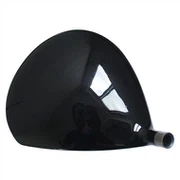
Titanium Alloy Golf 56° Head MIM Parts
Golf is a high-end sport, which often gives people the impression of "high-end atmosphere and class", and is deeply loved by high-end people at home and abroad. People have very high requirements to golf equipment, not only requiring beautiful appearance, but also requiring light clubs, and fast and accurate hitting speeds, thus promoting the continuous development of the golf club manufacturing industry.
Product Description
|
Titanium Alloy Golf 56° Head MIM Parts |
|||||
|
Item |
Material |
Production Process |
Sintering Temperature |
Mold |
Custom |
|
Golf 56° Head |
Titanium Alloy |
Metal Injection Molding |
1500°C |
To be customized |
Yes |
|
Available Materials |
Low carbon stainless steel, titanium alloy (Ti, TC4), copper alloy, tungsten alloy, hard alloy, high temperature alloy (718, 713) |
||||
Application of Titanium Alloys in Golf Head Clubs
Golf is a high-end sport, which often gives people the impression of "high-end atmosphere and class", and is deeply loved by high-end people at home and abroad. People have very high requirements to golf equipment, not only requiring beautiful appearance, but also requiring light clubs, and fast and accurate hitting speeds, thus promoting the continuous development of the golf club manufacturing industry.
Most of the golf clubs used in the early days were made of persimmon wood, which was gradually replaced by stainless steel. In the early 1990s, the Japanese began to introduce titanium golf clubs. The club made of titanium alloy has excellent stability and elasticity, which makes the swing family feel like a treasure, thus greatly promoting the development of titanium golf clubs.
Application Status of Titanium Alloys in Golf Clubs
Golf is largely influenced by the material of the golf equipment, so it is required to use different clubs in different places and situations on the course, and the clubs are also designed into a variety of shapes of different lengths, which can be roughly divided into three categories : Woods, irons and putters.
1. Titanium alloy wood club head
The wood is used for driving and long-distance shots. In order to make the ball hit straighter and farther, the weight of the wood head needs to be maintained at 200g, and the volume should be increased as much as possible to increase the distance between the ball and the wood head. Contact area.
Titanium alloy has low density, high strength and good corrosion resistance. Under the same weight, the hollow ball head made of titanium alloy is 2-3 times larger than the stainless steel ball head, and the mass can be evenly distributed around the ball head, so that players can hit the ball farther and straighter.
2. Titanium alloy iron head
Irons are mainly used for mid-range and precise shots, which require higher accuracy. When the ball is in contact with the striking surface, the striking surface should provide enough friction to increase the spin rate of the ball after being hit. In this way, the rolling of the ball can be better controlled when hitting the ball, making the hitting more accurate.
Some companies add a titanium-diamond composite to the hitting face of the club, and increase the friction coefficient through the diamond particles on the surface of the hitting face and near the surface. But this will make the ball head overweight by nearly 30g, otherwise the ball head will become smaller and even hard to hit the ball. The Titanium Alloy Golf 56° Head MIM Parts, which use titanium alloy as the body, can inlay diamond composites on the striking surface of the same volume, while maintaining the same quality.
3. Titanium alloy putter head
The putter is used to hit the ball into the hole on the putting green[i]. The titanium-tungsten push rod series launched by a certain company uses titanium alloy for the middle body of the ball head, and tungsten weights for both ends[ii]. dense bond.
The density of titanium alloy is generally 4.51g/cm³, while the density of tungsten counterweight is about 19g/cm³, so that 70% of the mass of the ball head is concentrated at both ends. This design can increase the rotational inertia of the ball head striking surface by about 50%. The higher the moment of inertia, the more the putter head can resist twisting due to miss hits on the center of the ball head. This putter has more obvious advantages on the green than the traditional putter.
Market expectation
With the rapid growth of China's economy and the rapid improvement of people's living standards, golf has been favored by the majority of sports enthusiasts. Especially for middle and high-level consumer groups, golfing is not only a way of keeping fit, but also a way of business and social interaction. China will become another consumer market with huge potential besides the United States and Japan.
Titanium alloys have entered the golf equipment industry for more than 20 years, and various titanium materials have been used in golf heads very comprehensively. However, the price of titanium alloy ball heads is higher, almost three times that of stainless steel ball heads, so the ball head market is still dominated by stainless steel. How to improve titanium alloy casting technology and reduce costs will become the main research direction of golf head manufacturers in the future.
Metal Injection Molding Process

Detection Systems




Send Inquiry
