



Silicon Nitride Ceramic Parts
The phase transition from γ-Al2O3 to α-Al2O3 is characterized by a reduction in surface area. Cerium oxide ceramic parts are used to prevent alpha-alumina phase transitions, helping to effectively maintain a high surface area under reducing conditions at temperatures up to 1000°C. Alumina-ceria composites are widely used in catalytic converters.
Silicon nitride ceramic is an inorganic material ceramic that does not shrink during sintering. Silicon nitride is very strong, especially hot-pressed silicon nitride, which is one of the hardest substances in the world. Silicon nitride ceramic parts have the properties of high strength, low density and high temperature resistance.
Si3N4 ceramic is a covalent bond compound, the basic structural unit is [SiN4] tetrahedron, the silicon atom is located in the center of the tetrahedron, and there are four nitrogen atoms around it, which are located at the four vertices of the tetrahedron, and then every three Each tetrahedron shares the form of an atom, forming a continuous and solid network structure in three-dimensional space.
Zhongwei Precision is committed to providing domestic and foreign customers with advanced ceramics with high strength, high toughness, wear resistance, corrosion resistance and high temperature resistance. It is a high-tech enterprise integrating R&D, production and sales of industrial precision advanced ceramic products in the field of precision ceramics. With a variety of modern high-precision equipment, it has independently realized the completion of the entire production process of ceramic parts from ceramic powder preparation, green body molding, high temperature sintering to ceramic material finishing.
Product Description
1. Implementation standards: the company strictly implements ISO9001 certification, and the products have passed ROHS, FDA EU certification, etc.
2. Product material standards: ISO, GB, ASTM, SAE, EN, DIN, BS, AMS, JIS, ASME, DMS, TOCT, GB
3. Main processes: grouting, injection molding, tape casting, isostatic pressing, 3D printing
4. Available materials for ceramics:
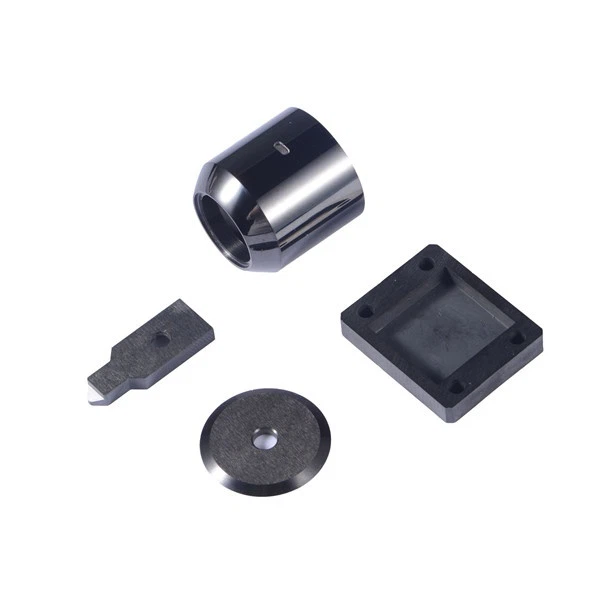
It mainly produces finished ceramic rods, ceramic tubes, ceramic rings, ceramic plates, ceramic suction cups, ceramic blades and other special-shaped ceramic structures. The main ceramic materials are alumina, zirconia, silicon carbide, silicon nitride, and aluminum nitride ceramics. High temperature resistance, wear resistance, corrosion resistance, acid and alkali resistance, anti-magnetic, pressure resistance. And 3D printing, etc. are customized according to customer requirements.
Combined tube, its high wear resistance effectively resists material wear and impact.
The preparation method and current situation of the product
1. Basic properties
Many of the properties of silicon nitride are due to this structure. Pure Si3N4 is 3119, with two crystal structures of α and β, both of which are hexagonal. Its decomposition temperature is 1800 °C in air and 1850 °C in 011MPa nitrogen. Si3N4 has low thermal expansion coefficient and high thermal conductivity, so it has excellent thermal shock resistance. The hot-pressed sintered silicon nitride will not break even when it is heated to 1000℃ and put into cold water. At not too high temperature, Si3N4 has high strength and impact resistance, but it will be damaged with the increase of use time above 1200℃, reducing its strength, and it is more prone to fatigue damage above 1450℃, so Si3N4 The operating temperature generally does not exceed 1300 ℃. Due to the low theoretical density of Si3N4, it is much lighter than steel and engineering superalloy steel. Therefore, in those places that require materials with high strength, low density, high temperature resistance and other properties to use Silicon nitride ceramic parts to replace alloy steel is another time. It is more than appropriate.
2. Material properties
As an excellent high-temperature engineering material, Si3N4 ceramic material can play the most advantage in its application in the high-temperature field. The future development direction of Si3N4 is: (1) to give full play to and utilize the excellent characteristics of Si3N4 itself; (2) to develop some new fluxes when Si3N4 powder is sintered, and to research and control the best components of the existing fluxes; (3) to improve milling , forming and sintering process; ⑷ develop the composite of Si3N4 and SiC and other materials in order to produce more high-performance composite materials. The application of Si3N4 ceramics in automobile engines has created a new situation for the development of new high-temperature structural materials. The automobile industry itself is a multi-disciplinary industry that combines the culmination of various technologies. China is an ancient civilization with a long history and has made brilliant achievements in the history of ceramic development. With the process of reform and opening up, one day, China will also It is bound to rank among the major countries in the world's auto industry and create greater glories for the development of the ceramic industry.
It is extremely resistant to high temperature, and its strength can be maintained at a high temperature of 1200°C without decreasing. It will not melt into a melt after being heated, and will not decompose until 1900°C. And caustic soda solution below 30%, it can also resist the corrosion of many organic acids; at the same time, it is a high-performance electrical insulating material.
3. Process method
It is made of silicon powder as raw material, which is first formed into the desired shape by the usual molding method, and preliminary nitridation is carried out in nitrogen at a high temperature of 1200 ° C, so that a part of the silicon powder reacts with nitrogen to form silicon nitride. The whole body already has a certain strength. Then the second nitridation is carried out in a high temperature furnace of 1350℃~1450℃ to react into silicon nitride. Silicon nitride with a theoretical density of 99% can be obtained by hot pressing sintering.
4. Preparation method
The preparation technology of silicon nitride ceramic parts has developed rapidly in the past few years. The preparation technology mainly focuses on the reaction sintering method, hot pressing sintering method, atmospheric pressure sintering method, air pressure sintering method and other types. Due to the different preparation processes, various types of silicon nitride Ceramics have different microstructures (such as porosity and pore morphology, grain morphology, intergranular morphology, and intergranular second phase content, etc.). Therefore, the performance varies greatly. In order to obtain Si3N4 ceramic materials with excellent performance, high-quality Si3N4 powder should be prepared first. The quality of Si3N4 powder prepared by different methods is not exactly the same, which leads to differences in its use, and the failure of many ceramic material applications is often attributed to Because developers do not understand the differences between various ceramic powders, they have insufficient understanding of their properties. Generally speaking, high-quality Si3N4 powder should have the characteristics of high α-phase content, uniform composition, few impurities and uniform distribution in ceramics, small particle size and narrow particle size distribution and good dispersibility. The α phase in a good Si3N4 powder should account for at least 90%, because during the sintering process of Si3N4, part of the α phase will transform into the β phase, and there is not enough α phase content, which will reduce the strength of the ceramic material.
(1) Reaction sintering method (RS)
The general molding method is adopted. First, the silicon powder is pressed into a green body of the desired shape, and then placed in a nitriding furnace for pre-nitriding (partial nitriding) sintering. The pre-nitriding green body has a certain strength and can be Carry out various mechanical processing (such as turning, planing, milling, drilling). Finally, at a temperature above the melting point of silicon; the green body is again fully nitrided and sintered to obtain products with little dimensional change (ie, after green body sintering, The shrinkage rate is very small, the linear shrinkage rate is < 011%). The product can be used without grinding. The reaction sintering method is suitable for the manufacture of parts with complex shapes and precise dimensions, and the cost is also low, but the nitriding time is very long.
(2) Hot Press Sintering (HPS)
The Si3N4 powder and a small amount of additives (such as MgO, Al2O3, MgF2, Fe2O3, etc.) are hot-pressed and sintered at a pressure above 1916 MPa and a temperature above 1600 °C. The hot-pressed sintered Si3N4 ceramics used by some companies in the United Kingdom and the United States have a strength as high as 981MPa or more. Additives and phase composition during sintering have a great influence on product properties. Due to the strict control of the composition of the grain boundary phase and proper heat treatment after the sintering of Si3N4 ceramics, Si3N4 series ceramic materials whose strength will not decrease significantly even when the temperature is as high as 1300 °C (up to 490MPa or more) can be obtained, and the creep resistance Denaturation can be improved by three orders of magnitude. If the Si3N4 ceramic material is pre-oxidized at a high temperature of 1400---1500 ℃, the Si2N2O phase will be formed on the surface of the ceramic material, which can significantly improve the oxidation resistance and high temperature strength of the Si3N4 ceramic. The mechanical properties of Si3N4 ceramics produced by hot pressing sintering are superior to those of reaction sintering Si3N4, with high strength and high density. However, the manufacturing cost is high and the sintering equipment is complex. Due to the large shrinkage of the sintered body, the dimensional accuracy of the product is limited to a certain extent. It is difficult to manufacture complex parts. Only parts with simple shapes can be manufactured, and the machining of the workpiece is also difficult.
(3) Atmospheric pressure sintering method (PLS)
In terms of increasing the pressure of sintering nitrogen atmosphere, the use of Si3N4 decomposition temperature increases (usually under N2 = 1atm pressure, from 1800 ° C to decompose), after normal pressure sintering in the temperature range of 1700-1800 ° C, and then in Air pressure sintering is carried out in the temperature range of 1800---2000℃. The purpose of this method is to use air pressure to promote the densification of Si3N4 ceramics, thereby improving the strength of the ceramics. The properties of the obtained products are slightly lower than those of hot pressing sintering. The disadvantages of this method are similar to hot pressing sintering.
(4) Gas pressure sintering method (GPS)
In recent years, people have carried out a lot of research on air pressure sintering and achieved great progress. Gas pressure sintering of silicon nitride is carried out at a temperature of about 2000 ℃ under the pressure of 1 ~ 10MPa. High nitrogen pressure suppresses pyrolysis of silicon nitride. Due to the use of high temperature sintering, the addition of less sintering aids is enough to promote the growth of Si3N4 grains, and obtain high-toughness ceramics with in-situ growth of long columnar grains with a density > 99%. Therefore, air pressure sintering can be used in laboratory It has received more and more attention in production. Gas pressure sintered silicon nitride ceramics have high toughness, high strength and good wear resistance, and can directly produce various complex shapes close to the final shape, which can greatly Reduce production cost and processing cost. And its production process is close to cemented carbide production process, suitable for mass production.
5. Research status
For Si3N4 and Sialon ceramic sintered bodies, a process for forming by superplasticity without forming a composite material and maintaining a single state has been provided, and a sintered body formed according to the process is provided. Silicon nitride and Sialon sintered body with a relative density of more than 95% and a linear density of 50 μm in the two-dimensional cross section of the sintered body in the range of 120 to 250; Compression causes plastic deformation to take place at strain rates of less than 10-1/sec. The formed sintered body has excellent mechanical properties especially at normal temperature.
Si3N4 ceramic is an important structural material. It is a superhard substance, which has lubricity and wear resistance; it does not react with other inorganic acids except hydrofluoric acid, and has strong corrosion resistance and high temperature resistance. Oxidation. And it can resist the shock of cold and heat. It can be heated to more than 1,000 ℃ in the air, and it will not be broken after rapid cooling and rapid heating. It is precisely because of the excellent properties of Si3N4 ceramics that people often use it to make bearings. , gas turbine blades, mechanical seal rings, permanent molds and other mechanical components. If the heating surface of engine components is made of silicon nitride ceramics that are resistant to high temperature and difficult to transfer heat, it can not only improve the quality of diesel engines, save fuel, but also improve thermal efficiency. . China, the United States, Japan and other countries have developed this diesel engine.
Process After Sintering
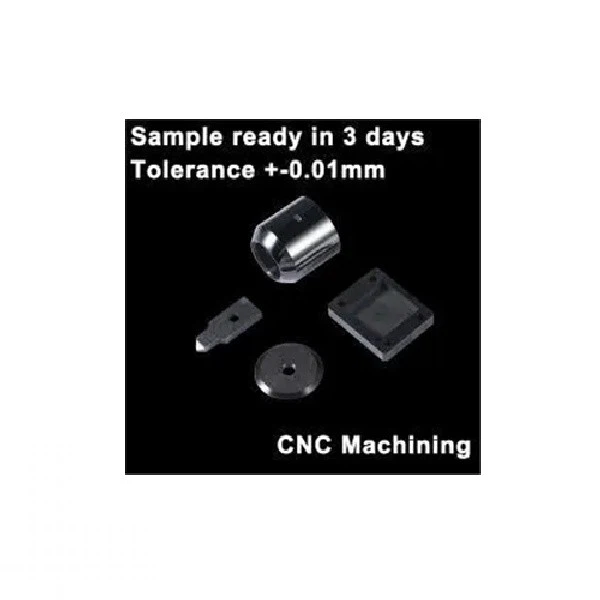
Processing equipment: equipped with CNC engraving machine, centerless grinding, internal and external cylindrical grinding, surface grinding, CNC lathe machining center, wire cutting, turning, milling, grinding and other high-precision production and testing equipment.
Moulds and Inspection Fixtures
1. Mold service life: usually semi-permanent. (except for lost foam).
2. Mold delivery time: 10-25 days, (according to product structure and product size).
3. Tooling and mold maintenance: Zhongwei is responsible for precision parts.
Quality Control
1. Quality control: the defective rate is less than 0.1%.
2. Samples and trial run will be 100% inspected during production and before shipment, sample inspection for mass production according to ISDO standards or customer requirements.
3. Test equipment: roundness measuring instrument, three-coordinate measuring instrument, image coordinate measuring instrument, Hexagon three-coordinate measuring instrument, image measuring instrument, density measuring instrument, smoothness measuring instrument, micro Vickers hardness tester.

Application
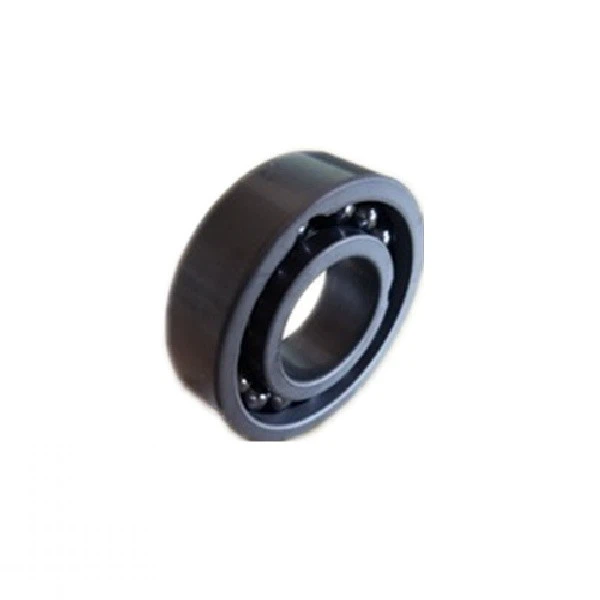
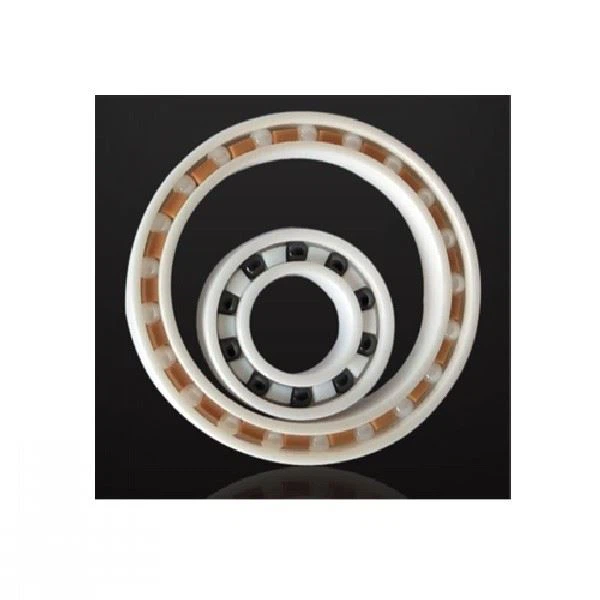
Taking advantage of the light weight and stiffness of Si3N4, it can be used to manufacture ball bearings, which have higher precision than metal bearings, generate less heat, and can operate at higher temperatures and corrosive media. The steam nozzles made of Si3N4 ceramics have the characteristics of wear resistance and heat resistance. They have no obvious damage after being used in a 650°C boiler for several months, while other heat and corrosion resistant alloy steel nozzles can only be used for 1-2 months under the same conditions. .Si3N4 glow plug jointly developed by Shanghai Institute of Silicate, Chinese Academy of Sciences, Shanghai Institute of Internal Combustion Engine, Ministry of Electrical and Mechanical Engineering, and Zhongwei Precision solves the problem of difficult cold starting of diesel engines, and is suitable for direct injection or non-direct injection diesel engines. This glow plug is the most advanced and ideal diesel engine ignition device available today. The Japan Institute of Atomic Energy and Mitsubishi Heavy Industries successfully developed a new crude pump with a rotor composed of 11 Si3N4 ceramic turntables in the pump casing. Because the pump adopts Si3N4 ceramic rotor with small thermal expansion coefficient and precise air bearing, it can operate normally without lubrication and cooling medium. If this pump is combined with an ultra-vacuum pump such as a turbo-molecular pump, a vacuum system suitable for nuclear fusion reactors or semiconductor processing equipment can be formed.
The above are just a few application examples of Si3N4 ceramics as structural materials. It is believed that with the improvement of Si3N4 powder production, molding, sintering and processing technology, its performance and reliability will continue to improve, and silicon nitride ceramics will be more widely used. Due to the improvement of the purity of Si3N4 raw materials, the rapid development of Si3N4 powder molding technology and sintering technology, and the continuous expansion of application fields, Si3N4 is taking an increasingly important position in the industry as an engineering structural ceramic. Si3N4 ceramics has excellent comprehensive properties and abundant resources, and is an ideal high-temperature structural material with broad application fields and markets, and all countries in the world are competing for research and development. Ceramic materials have the characteristics of wear resistance, corrosion resistance, high temperature resistance, oxidation resistance, thermal shock resistance and low specific gravity that are difficult to compare with general metal materials. Silicon nitride ceramic parts can withstand the harsh working environment that metal or polymer materials are incapable of, and silicon nitride ceramic parts have broad application prospects. After metal materials and polymer materials, it has become the key basic material supporting the pillar industry in the 21st century, and has become one of the most active research fields. Today, countries around the world attach great importance to its research and development. As an important member of the high-temperature structural ceramics family The first Si3N4 ceramics have more excellent mechanical properties, thermal properties and chemical stability than other high-temperature structural ceramics such as oxide ceramics and carbide ceramics. Therefore, they are considered to be the most promising materials in high-temperature structural ceramics.


Send Inquiry
