




Crankshaft Water Glass Investment Casting
The most important component in an engine. It takes the force from the connecting rod and converts it into torque, which is output through the crankshaft and drives other accessories on the engine to work. The crankshaft is subjected to the combined effect of the centrifugal force of the rotating mass, the gas inertia force of periodic change and the reciprocating inertial force, so that the crank bearing is subjected to bending torsional load.
Product Introduction
|
Crankshaft water glass investment casting |
|||||||
|
Item |
Material |
Production Process |
Sintering Temperature |
Mold |
Custom |
||
|
Crankshaft |
Investment casting |
1380℃ |
To be customized |
Yes |
|||
|
Available Materials |
Carbon Steel, Alloy Steel, Aluminum Alloy, Low Carbon Stainless Steel, Titanium Alloy (Ti, TC4), Copper Alloy, Superalloy (718, 713) |
||||||
|
Smoothness |
Dimensional accuracy |
Product density |
Appearance treatment |
Appropriate weight |
|||
|
Roughness Ra1-5μm |
(±0.1%~±0.5%) |
7.3-7.6/CM³ |
According to customer requirements |
0.03g~400gg |
|||
The most important component in an engine. It takes the force from the connecting rod and converts it into torque, which is output through the crankshaft and drives other accessories on the engine to work. The crankshaft is subjected to the combined effect of the centrifugal force of the rotating mass, the gas inertia force of periodic change and the reciprocating inertial force, so that the crank bearing is subjected to bending torsional load. Therefore, Crankshaft Water Glass Investment Casting is required to have sufficient strength and rigidity, and the journal surface needs to be wear-resistant, uniform and well-balanced.
In order to reduce the mass of the crankshaft and the centrifugal force generated during movement, the crankshaft journal is often made hollow. Oil holes are made on each journal surface to allow oil to be introduced or withdrawn to lubricate the journal surface. In order to reduce the stress concentration, the connection between the main journal, the crank pin and the crank arm is connected by a transition arc.
The role of the crankshaft counterweight (also known as counterweight) is to balance the rotational centrifugal force and its moment, and sometimes the reciprocating inertia force and its moment. When these forces and moments are in balance on their own, the counterweight can also be used to reduce the load on the main bearing. The number, size and placement of the counterweight should be considered according to the number of cylinders of the engine, the arrangement of cylinders and the shape of the crankshaft. The counterweight is generally cast or forged with the crankshaft, and the counterweight of high-power diesel engines is manufactured separately from the crankshaft and then bolted together.
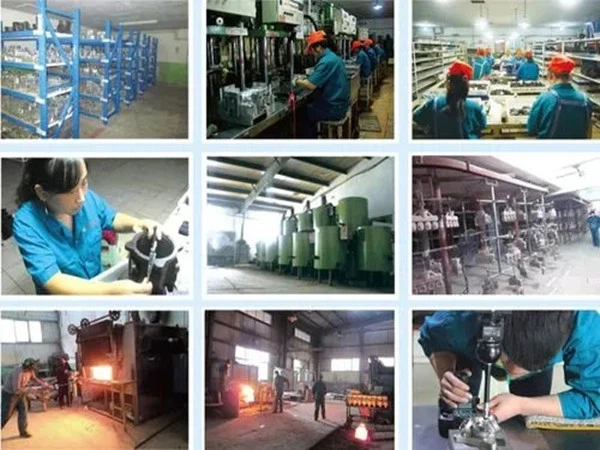
Casting Technology
• Smelting
The acquisition of high-temperature and low-sulfur pure molten iron is the key to the production of high-quality ductile iron. In China, the production equipment is mainly based on cupola furnace, and the molten iron has not been pre-desulfurized, followed by the lack of high-purity pig iron and poor coke quality. The molten iron is melted in a cupola furnace, desulfurized outside the furnace, and then heated and adjusted in an induction furnace. In China, the detection of molten iron composition has been widely carried out by vacuum direct reading spectrometer.
• Modeling
The airflow impact molding process is significantly better than the clay sand molding process, which can obtain high-precision crankshaft castings, and the sand mold produced by this process has the characteristics of no rebound deformation, which is especially important for multi-turn crankshafts. There have been some domestic crankshaft manufacturers from Germany, Italy, Spain and other countries to introduce the airflow impact molding process, however, only a few manufacturers have introduced the entire production line.
• Electroslag casting
Electroslag remelting technology is applied to the production of crankshafts, so that the performance of cast crankshafts may be comparable to forging performance. And it has the characteristics of fast R&D cycle, high metal utilization, simple equipment and superior product performance.
Detection Systems

Copper Silica Sol Investment Casting



Send Inquiry
