



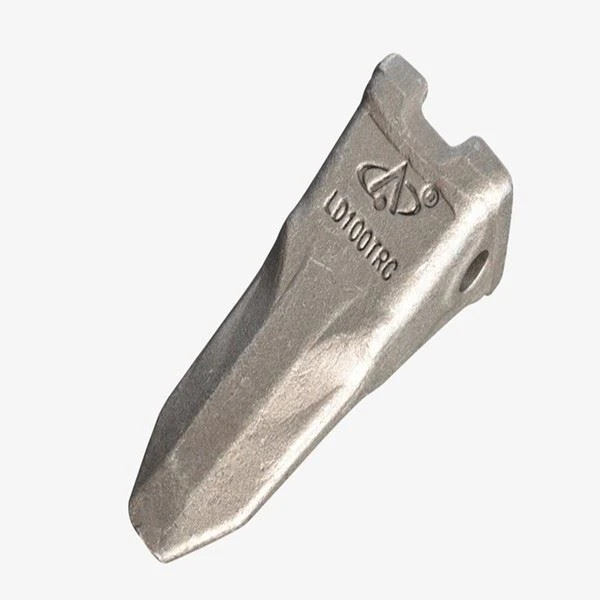


Bucket Tooth Water Glass Lost Wax Casting
Precision casting: The cost is moderate but the requirements for raw materials are very strict, and the technology level is relatively high. Due to the ingredients, some precision casting bucket teeth even surpass the forging casting bucket teeth in terms of wear resistance and quality.
The technological process of bucket teeth: sand casting, forging and precision casting.
Sand casting: The cost is the lowest, and the technology level and the quality of the bucket teeth are not as good as precision casting and forging casting.
Forging: The cost is the highest while the craftsmanship and the quality of the bucket teeth are also the best.
Precision casting: The cost is moderate but the requirements for raw materials are very strict, and the technology level is relatively high. Due to the ingredients, some precision casting bucket teeth even surpass the forging casting bucket teeth in terms of wear resistance and quality. At present, precision casting bucket teeth is the mainstream manufacturing process for bucket teeth on the market.
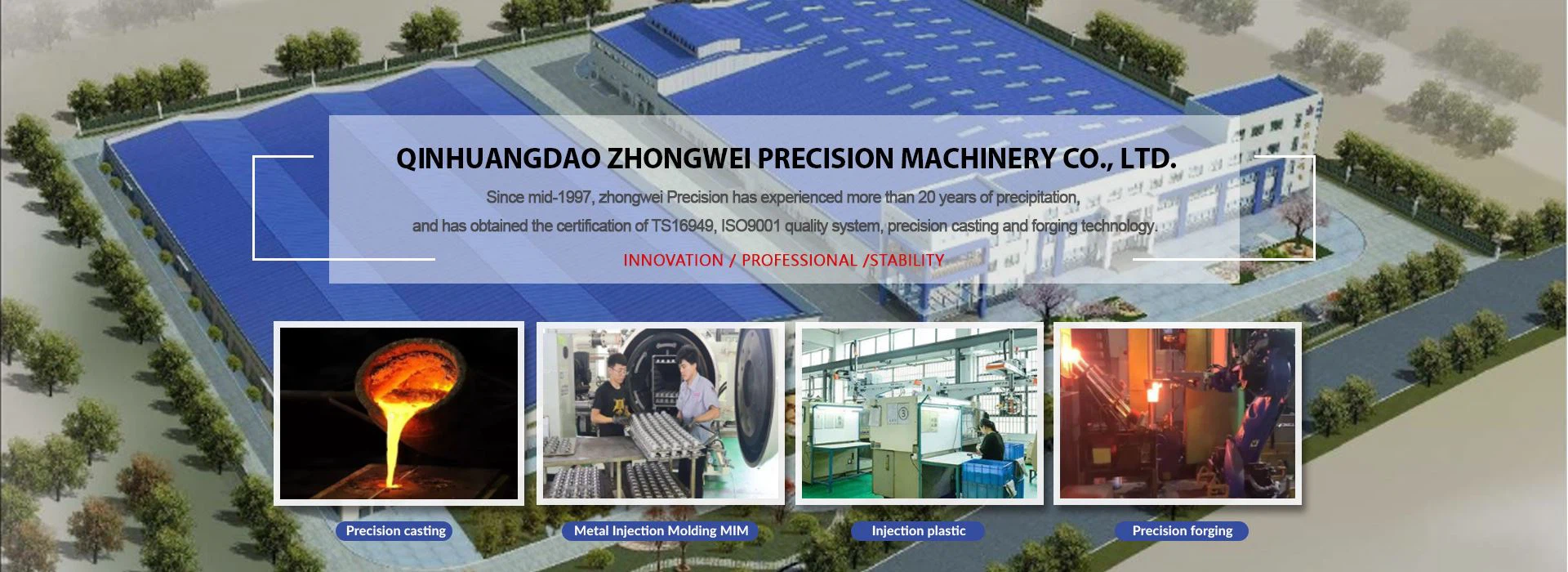
After more than ten years of precipitation, Qinhuangdao Zhongwei Precision Machinery Co., Ltd. has rich production experience in Bucket tooth water glass lost wax casting, lost foam precision casting, silica sol precision casting, and shell sand casting. We expect manufacturers from all over the world to consult and negotiate business.
Product Description
Bucket tooth water glass lost wax castingBasic situation
1. Implementation standards: The company strictly implements ISO9001 & TS 16949 certification.
2. Product material standards: ISO, GB, ASTM, SAE, ISO, EN, DIN, JIS, BS
3. Main processes: sand casting, silica sol investment casting, water glass investment casting,shell casting,deburring, sand blasting, machining, heat treatment, leak testing, surface treatment, etc.
4. Available materials:
Carbon steel, alloy steel, stainless steel, gray iron, cast iron, cast steel, cast aluminum, cast copper, etc. can be customized according to customer requirements.
Process Flow
The technological process of bucket teeth: sand casting, forging and precision casting.
Sand casting: The cost is the lowest, and the technology level and the quality of the bucket teeth are not as good as precision casting and forging casting.
Forging: The cost is the highest while the craftsmanship and the quality of the bucket teeth are also the best.
Precision casting: The cost is moderate but the requirements for raw materials are very strict, and the technology level is relatively high. Due to the ingredients, some precision casting bucket teeth even surpass the forging casting bucket teeth in terms of wear resistance and quality. At present, precision casting bucket teeth is the mainstream manufacturing process for bucket teeth on the market.
The bucket teeth of a surface excavator failed early due to severe wear during use. For this batch of bucket teeth, the failure modes and failure causes of the surface of the bucket teeth were analyzed, and improvement measures were proposed.
Fold Failure Behavior
Failure form Bucket teeth are subjected to different degrees of wear and impact under different working conditions, resulting in different degrees and different forms of failure. The bucket teeth will fail after only 3 days (about 36 hours) under normal working conditions, which is unsatisfactory in terms of economy and use. It can be seen from the macro photos of the batch of failed parts that there are obvious furrow-like scratches on the front working surface of the bucket teeth, a small amount of plastic deformation at the tip, and no cracks. The front working surface (the surface in contact with the ground) is the thinnest, about 4mm, the rear work surface is about 8mm.

Fold Analysis Discussion
1.Force analysis The bucket tooth working face is in contact with the excavated object, and the force is different in different working stages during a complete excavation process. When the tooth tip first touches the surface of the material, due to the high speed, the bucket tooth tip is strongly impacted. If the yield strength of the bucket teeth is low, plastic deformation will occur at the tip. As the excavation depth increases, the force on the bucket teeth will change. When the bucket teeth cut the material, the bucket teeth and the material move relative to each other, and a large positive extrusion force is generated on the surface, thereby generating a large friction force between the bucket tooth working surface and the material.
If the material is a hard rock block, concrete, etc., the friction force will be great. As a result of the repeated action of this process, different degrees of surface wear are produced on the working face of the bucket teeth, which in turn produces a deep furrow. Whether the composition of the bucket teeth is good or not affects the service life of the bucket teeth. Of course, it is more careful to choose the bucket teeth. I have also used the bucket teeth, and the effect is good! The positive pressure of the front working face is obviously greater than that of the rear working face. , the front working face is seriously worn, and it can be judged that positive pressure and friction are the main external mechanical factors for the failure of bucket teeth, and play a major role in the process of failure.
2. Process analysis Take two samples from the front and rear working surfaces respectively, grind them flat for hardness test. It is found that the hardness of the same sample varies greatly, and the preliminary judgment is that the material is not uniform. The samples were ground, polished and corroded, and it was found that there were obvious boundaries on each sample, but the boundaries were different. From a macro perspective, the surrounding is light gray, and the middle part is darker, indicating that the piece is likely to be an inlaid casting. From the surface, the surrounded part should also be an inlaid block. The hardness tests were carried out on both sides of the boundary line on the HRS-150 digital Rockwell hardness tester and the MHV-2000 digital micro hardness tester, and it was found that the difference was obvious.
Through the above analysis, it is confirmed that the bucket tooth is an insert structure. The closed part is the insert and the surrounding part is the base. The components of the two are close, and they are alloyed with elements such as Cr, Mn, and Si. The main alloy components (mass fraction, %) are 0.38C, 0.91Cr, 0.83Mn, and 0.92Si. The mechanical properties of metal materials depend on the composition of the material and the heat treatment process. The composition is similar but the hardness is different, indicating that the bucket teeth are put into use without heat treatment after casting. Subsequent organizational observations also bear this out.
3. Microstructure analysis Metallographic observation shows that the matrix is mainly black flaky structure, and the insert structure is composed of two parts: white block and black thin piece, and there are more white block structures far away from the cross-section area. Further microhardness test It is proved that the white block structure is ferrite, and the black flaky structure is troostite or a mixed structure of troostite and pearlite. The formation of bulk ferrite in the insert is similar to the formation of the partial transformation zone in the welding heat-affected zone. Affected by the heat of the molten metal during the casting process, this region is in the two-phase region of austenite and ferrite, where the ferrite grows sufficiently and its microstructure remains at room temperature. Because the wall of the bucket teeth is relatively thin, and the volume of the insert is large, the temperature of the central part of the insert is low, and no bulk ferrite is formed.
4. Performance analysis The wear test on the MLD-10 wear tester shows that the wear resistance of the matrix and the insert under the small impact abrasive wear test condition is better than that of the quenched 45 steel. At the same time, there are differences in the wear resistance of the matrix and the insert, and the matrix is more wear-resistant than the insert (see Table 2). The composition of the base body and the two sides of the insert is similar, and it can be seen that the insert in the bucket tooth mainly plays the role of cold iron. Refine the matrix grains during casting to improve its strength and wear resistance. Because the insert is affected by the casting heat and produces a structure similar to the welding heat affected zone, it does not play a role in enhancing wear resistance. If proper heat treatment is performed after casting to improve the structure of the matrix and the insert, the wear resistance and service life of the bucket teeth will be significantly improved.


Send Inquiry
