

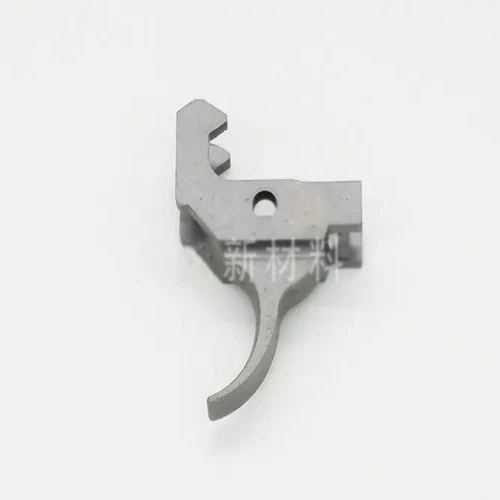


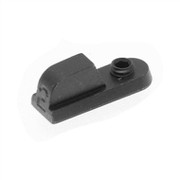
Pistol Trigger MIM Parts
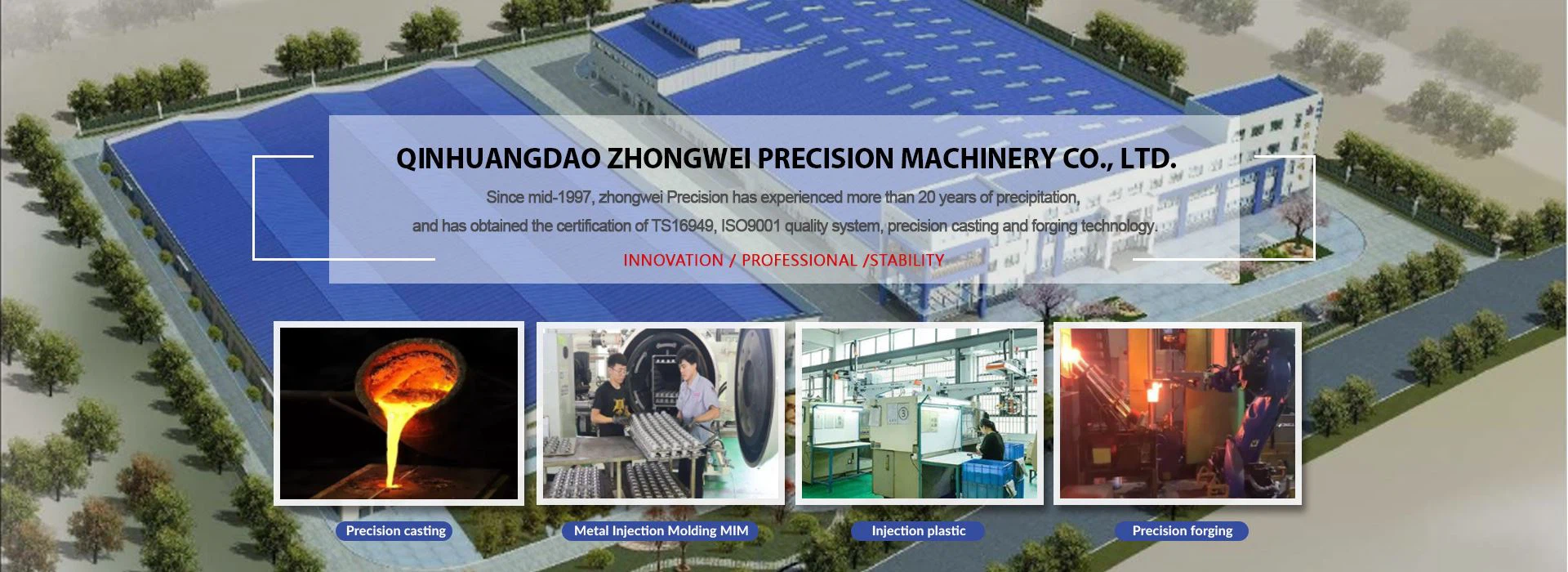
Metal Injection Molding (MIM for short) is a new type of powder metallurgy near-net forming technology derived from the plastic injection molding industry. As we all know, plastic injection molding technology produces products of various complex shapes at a low price, but plastic The strength of the product is not high.
Product Introduction
Pistol Trigger MIM Parts | |||||||||
Item | Material | Production Process | Sintering Temperature | Mold | Custom | ||||
Pistol Trigger | 17-4 | Metal Injection Molding | 1550℃ | To be customized | Yes | ||||
Chemical Composition | C:≤0.07 | ||||||||
Available Materials | Low carbon stainless steel, titanium alloy (Ti, TC4), copper alloy, tungsten alloy, hard alloy, high temperature alloy (718, 713) | ||||||||
Finish | Dimensional Accuracy | Product Density | Appearance Treatment | Appropriate Weight | |||||
Roughness 1~5μm | (±0.1%~±0.5%) | 92~95% | Mirror Reflection | 0.03g~400g) | |||||
Mechanical properties | Tensile strength σb (MPa): aged at 480°C, ≥1310; aged at 550°C, ≥1060; aged at 580°C, ≥1000; aged at 620°C, ≥930 | ||||||||
Product Application
Powder metallurgy metal injection molding MIM has entered your life, maybe you don't realize it, but it is happening in some way and exists in our daily life.
• Medical and dental applications
Orthodontic bracket parts, surgical instruments, implantable MIM parts, knee implant parts
• Applications in the automotive industry
Engine rocker arms, shift levers, turbocharger blades
• Applications in IT, electronic instruments and communications
Optical fiber parts, cold plates and radiators, mobile phone parts
• Application in shipbuilding and aerospace industry
Seat belt parts, oil outlet valve pressure seat, airliner flap screw seal, rocket burner device
• Applications in consumer products
Watch cases and related parts, eyeglass parts, camera tripod bodies, MIM guitar tuner covers
• Applications in military and defense
The trigger of the gun, the "safety and opening safety" rotor, the pistol's upper bend clamping safety parts
• Applications in other fields
The MIM process mainly includes 8 important links such as product design, mold design, quality inspection, mixing, molding, degreasing, sintering, and secondary processing, among which it is determined whether surface treatment is required based on product characteristics.
MIM process flow chart
The following is an analysis of the production process of parts from the four unique processing steps of MIM (mixing, molding, debinding and sintering).
1. mix
Fine metal powders are mixed in precise proportions with thermoplastic and paraffin binders.
2. Forming
Injection molding equipment and techniques are similar to injection molding. The granular raw material is sent into the machine to be heated and injected into the mold cavity under high pressure to form a blank.
3. Degreasing
Debinding is the process of removing binder from molded parts, usually in several steps. After solvent extraction of part of the binder, thermal debonding is required to remove the remaining binder. When debonding, control the carbon content and reduce the oxygen content in the batch.
4. Sintering
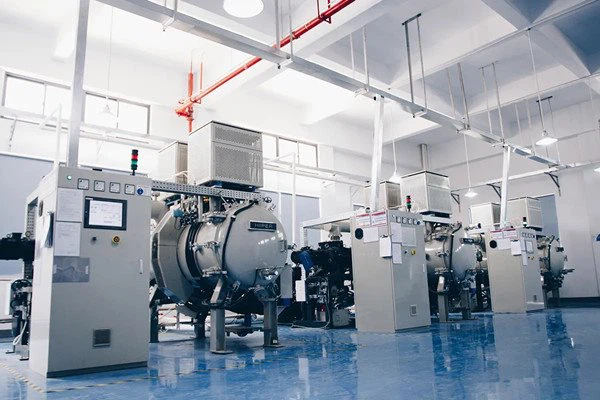
Sintering is carried out in a sintering furnace with a controlled atmosphere. The high density of MIM parts is achieved through high sintering temperature and long sintering time, which greatly improves and improves the mechanical properties of parts materials.
Metal injection molding
Metal Injection Molding (MIM for short) is a new type of powder metallurgy near-net forming technology derived from the plastic injection molding industry. As we all know, plastic injection molding technology produces products of various complex shapes at a low price, but plastic The strength of the product is not high. In order to improve its performance, metal or ceramic powder can be added to the plastic to obtain a product with higher strength and good wear resistance. In recent years, this idea has evolved to maximize the solids content and completely remove the binder and densify the shaped body during subsequent sintering. This new powder metallurgy forming method is called metal injection molding. Chinese name Metal Injection Molding Foreign name Metal Injection Molding The basic process steps of metal injection molding are: first, select metal powder and binder that meet the requirements of MIM, and then use appropriate methods to mix the powder and binder at a certain temperature. Uniform feeding, injection molding after granulation, and the obtained shaped blank is degreased and then sintered and densified to become the final product.
1. MIM powder and powder making technology MIM has high requirements for raw material powder, and the selection of powder should be conducive to mixing, injection molding, degreasing and sintering, which are often contradictory. The research on MIM raw material powder includes: powder shape , particle size and particle size composition, specific surface area, etc. Table 1 lists the properties of the most suitable raw material powder for MIM. Due to the requirement of very fine MIM raw material powder, the price of MIM raw material powder is generally higher, and some even reach 10 times the price of traditional PM powder. This is a key factor that currently limits the wide application of MIM technology. There are carbonyl method, ultra-high pressure water atomization method, high pressure gas atomization method, etc.
2. Binder Binder is the core of MIM technology. In MIM, the binder has the two most basic functions of enhancing fluidity to be suitable for injection molding and maintaining the shape of the block. In addition, it should be easy to remove, Non-polluting, non-toxic, and reasonable cost, etc., for which various adhesives have emerged. In recent years, they are gradually choosing from empirical selection to targeted degreasing methods and adhesive function requirements. The development direction of the design of the binder system. Binders are generally composed of low-molecular components and high-molecular components plus some necessary additives. Low-molecular components have low viscosity, good fluidity, and are easy to remove; high-molecular components have high viscosity and high strength, and maintain the strength of the formed blank. The proper ratio of the two is matched to obtain a high powder loading, and finally a product with high precision and high uniformity.
3. Kneading Kneading is the process of mixing metal powder and binder to obtain uniform feeding. Compounding is an important process step because the properties of the feed material determine the properties of the final injection molded product. This involves many factors such as the way and order of adding the binder and powder, the mixing temperature, and the characteristics of the mixing device. This process step has been stuck at the level of relying on experience and exploration. An important indicator for evaluating the quality of the mixing process is the uniformity and consistency of the obtained feed. The mixing of MIM feed is accomplished under the combined action of thermal effect and shear force. The mixing temperature should not be too high, otherwise the binder may decompose or the powder and binder phase separation may occur due to too low viscosity. As for the shear force, it will vary according to the mixing method. Mixing devices commonly used in MIM include twin-screw extruders, Z-shaped impeller mixers, single-screw extruders, plunger extruders, double planetary mixers, double-cam mixers, etc. These mixing devices All are suitable for preparing mixtures with viscosities in the range of 1-1000Pas. The mixing method is generally to add high melting point components to melt, then lower the temperature, add low melting point components, and then add metal powder in batches. This can prevent the gasification or decomposition of low melting point components, and adding metal powder in batches can prevent the rapid increase of torque caused by too fast cooling and reduce equipment loss. For the feeding method when powders with different particle sizes are mixed, the Japanese patent introduction: first add thicker 15-40um water atomized powder to the binder, then add 5-15um powder, and finally add powder with a powder degree of ≤5um, so that the obtained There is very little shrinkage variation in the final product. In order to evenly coat a layer of binder around the powder, the metal powder can also be directly added to the high melting point component, then the low melting point component is added, and finally the air is removed. For example, Anwar directly added the PMMA suspension to the stainless steel powder for mixing, then added the PE solution, dried it, and then removed the air while stirring. O'connor uses solvent mixing, first dry mixes SA and powder, then adds THF solvent, then adds polymer, after THF escapes in the heat, then adds powder and mixes to obtain uniform feeding.
4. Injection molding The purpose of injection molding is to obtain a MIM molding body with no defects and uniform particle arrangement in the desired shape. As shown in Figure 1, firstly, the granular feed is heated to a certain high temperature to make it fluid, and then it is injected into the mold cavity to cool down to obtain a rigid green body of the desired shape, and then it is removed from the mold Take out to obtain the MIM forming blank. This process is consistent with the traditional plastic injection molding process, but due to the high powder content of the MIM feed, there are great differences in the process parameters and other aspects of the injection molding process, and improper control is prone to various defects.
5. Degreasing Since the emergence of MIM technology, with the different binder systems, a variety of MIM process paths have been formed, and the degreasing methods are also diverse. The degreasing time has been shortened from the first few days to the present several hours. From the degreasing steps, all degreasing methods can be roughly divided into two categories: one is the two-step degreasing method. The two-step degreasing method includes solvent degreasing + thermal degreasing, siphon degreasing and thermal degreasing, etc. The one-step degreasing method is mainly a one-step thermal degreasing method, and the most advanced one is the amaetamold method at present. Several representative MIM degreasing methods are introduced below.
6. Sintering Sintering is the last step in the Pistol Trigger MIM Parts MIM process. Sintering eliminates the pores between powder particles. It makes MIM products reach full densification or close to full densification. Due to the use of a large amount of binder in metal injection molding technology, the shrinkage is very large during sintering, and its linear shrinkage rate generally reaches 13%-25%, so there is a problem of deformation control and dimensional accuracy control. Especially because most of the MIM products are special-shaped parts with complex shapes, this problem becomes more and more prominent. Uniform feeding is a key factor for the dimensional accuracy and deformation control of the final sintered products. High powder tap density can reduce sintering shrinkage, and is also beneficial to the sintering process and dimensional accuracy control. For products such as iron-based and stainless steel, there is also a problem of carbon potential control in sintering. Due to the high price of fine powder at present, it is an important way to reduce the production cost of powder injection molding to study the enhanced sintering technology of coarse powder compacts. This technology is an important research aspect of metal powder injection molding research. Due to the complex shape and large sintering shrinkage of MIM products, most products still need post-sintering treatment after sintering, including shaping, heat treatment (carburizing, nitriding, carbonitriding, etc.), surface treatment (fine grinding, ion nitrogen chemical, electroplating, shot peening, etc.), etc.
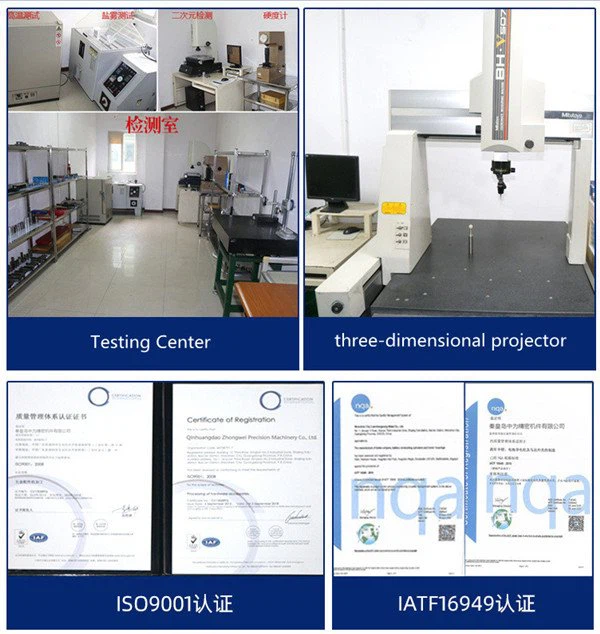
Detection Systems
Metal Injection Molding Process



Send Inquiry
