




Meat Mincer MIM Parts
It takes less than 24 hours to transform a sparse mixture of metals into a hard, sharp cutting blade in a shape that simply cannot be achieved by other methods. Qinhuangdao Zhongwei has successfully developed this unique production process by using Metal Injection Molding (MIM).
Product Introduction
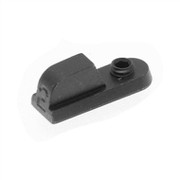
Meat mincer MIM Parts | |||||||||
Item | Material | Production Process | Sintering Temperature | Mold | Custom | ||||
Meat mincer | CoroCut3 | Metal Injection Molding | 1550℃ | To be customized | Yes | ||||
Chemical Composition | Secret | ||||||||
Finish | Dimensional Accuracy | Product Density | Appearance Treatment | Appropriate Weight | |||||
Roughness 1~5μm | (±0.1%~±0.5%) | 92~95% | Mirror Reflection | 0.03g~400g) | |||||
Component Research Process
It takes less than 24 hours to transform a sparse mixture of metals into a hard, sharp cutting blade in a shape that simply cannot be achieved by other methods. Qinhuangdao Zhongwei has successfully developed this unique production process by using Metal Injection Molding (MIM). And this process is still being optimized – the future of technology is here.
Zhongwei Precision in Qinhuangdao is located in the process laboratory of Central South University. The fan is constantly rotating, and people can hear the regular "thump" sound of the injection molding machine during injection molding. The R&D department is further developing the MIM process that led to the CoroCut3 cutting tool launched in 2003.
Wu Zhenliang, a researcher and project manager of Qinhuangdao Zhongwei Precision at Central South University, said: "We have been developing various process parameters to optimize the process and products. The increasing requirements for the quality of Meat mincer MIM Parts have led to greater requirements for the actual product development process. Higher and higher."
MIM parts refer to metal injection molding. In simple terms, the compound (mixed material) is sprayed or injected into a mold or shaping tool. The use of injection molding to produce various parts is not new – it has long been used in the plastics industry.
Qinhuangdao has developed the MIM process for precision for 20 years. To produce CoroCut3, metal powder is mixed with plastic before being injected into the mould. This mixture, which is solid at room temperature, is first poured into a cylinder with a screw inside, and the screw starts to rotate. The rotational motion pushes the mixture towards the top of the "screw" while the mixture is heated and changes from a solid to a semi-liquid, a substance called a "billet". At the far end of the barrel, increasing pressure pushes the screw back into the barrel until the proper billet volume is reached. The billet, which has reached a temperature of about 150-180°C, is then injected into the tool mold.
Since the temperature of the tool mold is much lower than that of the blank, the blank solidifies in the mold. The curing process of CoroCut3 typically takes 15 seconds, after which the robot removes the part and places it on a graphite plate.
Today, however, injection molding operators remove parts by hand. With the help of researchers in the research and development department, she tested the billet injection volume, temperature and chilling time required for processing mim injection molded parts.
The operator modifies temperature and billet size settings through a control panel. When the workpiece solidified, she put on white cotton gloves to remove the workpiece. "That way I don't get burned because they're still pretty hot," she said.
Parts removed from injection molding are very fragile and may break if handled with fingers. Plastic, on the other hand, is just a binder that needs to be removed. This means that the "green body" requires further processing.
When the binder is removed, open pores will appear on the workpiece to facilitate the sintering process, and the workpiece is compressed during the sintering process. During sintering, the workpiece is heated to about 1400°C in the furnace, so that the workpiece will shrink by 18% to 20%, and the shape can be kept uniform after sintering.
Wu Zhenliang, general manager of Zhongwei Precision Project, said, "If the volume of the workpiece is 1 liter, only about 550ml will be left after sintering. In other words, sintering will cause the material to condense or shrink to achieve the desired hardness, durability, toughness, etc. different characteristics."
After about 10 to 12 hours, the sintering is completed, and then the workpiece is slightly processed, and each edge is finished, and then the coating is applied.
Wu Zhenliang, general manager of the project, explained, “During the production process, we usually need to spend more time grinding and sharpening the edge parts before coating the alloy. But with the MIM process, there is no need for such a complete finishing process. .The benefit of injection molding is that we can manufacture complex grooves or products in just one step to finish or semi-finish quality.We can directly approach the end goal, which is the real reason we choose MIM parts .”
Metal Injection Molding Process

Detection Systems




Send Inquiry
