



Firearms MIM Parts
We have extensive experience producing many components for the firearms industry including: triggers, fire extinguishers, magazine catches, cam sets and rear rails. Our MIM fabrication experts will manufacture precision parts for you.
Product Introduction
FirearmsMIM Parts | |||||||||
Item | Material | Production Process | Sintering Temperature | Mold | Custom | ||||
Firearms | 17-4 | Metal Injection Molding | 1550℃ | To be customized | Yes | ||||
Chemical Composition | C:≤0.07 | ||||||||
Available Materials | Low carbon stainless steel, titanium alloy (Ti, TC4), copper alloy, tungsten alloy, hard alloy, high temperature alloy (718, 713) | ||||||||
Finish | Dimensional Accuracy | Product Density | Appearance Treatment | Appropriate Weight | |||||
Roughness 1~5μm | (±0.1%~±0.5%) | 92~95% | Mirror Reflection | 0.03g~400g) | |||||
Mechanical properties | Tensile strength σb (MPa): aged at 480°C, ≥1310; aged at 550°C, ≥1060; aged at 580°C, ≥1000; aged at 620°C, ≥930 | ||||||||
Firearms Product Solutions
We have extensive experience producing many components for the firearms industry including: triggers, fire extinguishers, magazine catches, cam sets and rear rails. Our MIM fabrication experts will manufacture precision parts for you. Zhongwei Precision has 60,000 feet of state-of-the-art production capacity. Parts program management. Zhongwei Precision has accumulated industry expertise in MIM parts, including complete process engineering, design and implementation automation, quality assurance, assembly, packaging, and product fulfillment and distribution.
Send us your CAD file or drawing and we will evaluate the design for feasibility and manufacturability of MIM molding for new or existing projects.
The MIM process is well suited to producing relatively small (1-50 grams), complex-shaped metal parts with tight tolerances, high strength and good surface finish requirements – exactly the type of parts Taurus produces, its largest customer It is the company's parent company that operates a gun manufacturer in Brazil. Therefore, the individual components need to be strong enough to withstand the stress of pistol firing. Before discovering the MIM process, Taurus purchased many of these parts as machined parts or investment castings. Of the more than 60 parts that make up a pistol, Taurus now uses the MIM process to produce an average of seven parts per gun.
DeBarros turned to MIM because many small, complex parts cannot be produced using traditional machining; or, if they can be machined, the process is so extensive that the cost is prohibitive. Other parts can be investment cast, but these parts require secondary operations such as machining to add features and polishing to improve surface finish. However, the MIM process offers great flexibility in part design, shape and features. MIM parts are near net shape without secondary operations; they are 95% - 100% dense depending on the alloy; they have a 32 RMS finish. DeBarros reports that he is able to maintain a tolerance of 0.005" per inch and a high level of consistency from part to part.
One part that DeBarros designed specifically for the MIM process is the Taurus gun's safety lock. The complexity of the part explains why MIM is the only practical way to produce it. The part has a shaft, a helix on the outside, two outside grooves, a 0.180" diameter head, a 0.118" inside diameter, and a hex extending toward the center with a 0.040" diameter pin in the center. Approx. There are 40 different sizes. EDM (Electrical Discharge Machining) is the only traditional machining process that can produce such parts. However, MIM is the only practical, economically viable method of producing 240,000 of these parts per year.
DeBarros cites lower costs as another advantage of the MIM process. "If you have a complex part, the savings are substantial," he said. “The more complex the part, the more competitive it is. That’s because once you design and develop the tooling, you can produce a million or two parts. production of simple parts to compete."
The MIM process isn't just for steel either. It allows a wide selection of metal alloys including stainless steel, alloy steel, tool steel, brass, copper, titanium, tungsten, ceramic and many specialty alloys such as ASTM F17 nickel-free stainless steel.
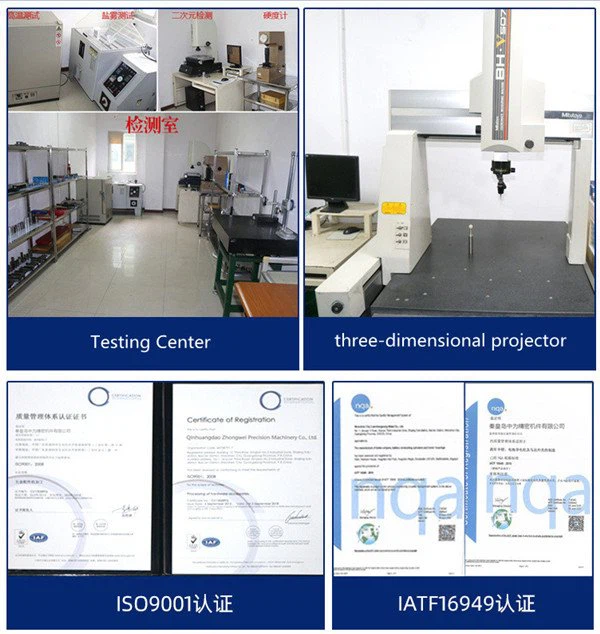
Detection Systems
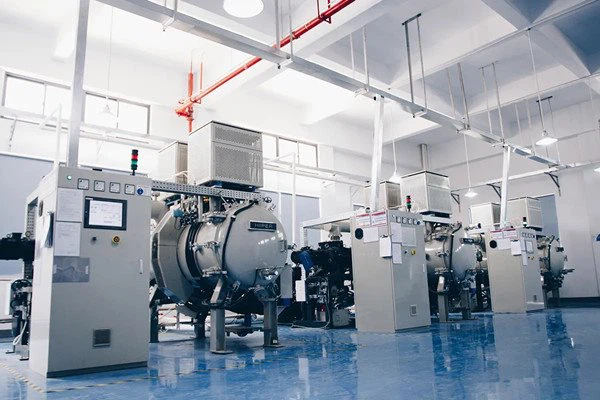
Metal Injection Molding Process




Send Inquiry
