The application range of titanium alloy metal powder injection molding
Aug 06, 2023
The application range of titanium alloy metal powder injection molding:
Titanium and titanium alloys are advanced high-performance lightweight Structural engineering materials, which play an extremely important role in key parts of aerospace, military, medical equipment, chemical and marine engineering industries.
For example, in current jet engines, titanium based alloy components account for 20% to 30% of the overall weight, mainly used in key parts of steam turbines;
In the F22 fighter jet, the proportion of titanium used reaches 39% of the overall structural weight; In the civil aviation passenger aircraft Boeing 777 and Airbus A340-500/600, more than 200 different flight parts use titanium based alloys to replace traditional high-strength low-alloy steel, reducing the weight of aircraft by thousands of kilograms;
Its good biocompatibility makes it irreplaceable in key parts of medical devices;
Its excellent anti-corrosion performance makes it widely used in key parts such as anti-corrosion equipment and equipment in the chemical industry, power generation equipment, environmental pollution control equipment, and piping and fasteners for ship materials in marine engineering. Titanium alloy has a high proportion of applications.

The development trend of titanium alloys:
The current processing process for commercial titanium alloy components is casting+forging+machining. However, due to the harsh melting conditions (extremely high reactivity of titanium), complex processes (self setting crucible melting technology), and poor processing performance of titanium alloys, the current production cost of titanium alloy components is very high, which limits their wider application.
Under current process conditions, the buy to fly ratio from raw materials to final components is greater than 8:1, and the effective utilization rate of titanium alloy is less than 12%. Therefore, titanium component manufacturers often have to purchase raw materials that are 8 times the weight of the required titanium alloy components for processing and manufacturing.
Lockheed set this ratio between 8:1 and 5:1 in the F35 project, however, the effective utilization ratio of materials is still less than 20%. Roll Royce, a supplier of aircraft components, clearly points out that achieving near net formation directly from powder to components is a key focus for the sustainable development of the titanium industry in the future.
Boeing began accepting the famous powder metallurgy company Dynomet to use powder metallurgy technology to produce Ti-6Al-4V non fatigue application parts for it in 2012, and collaborated with South Africa to produce titanium powder in 2013. Obviously, the near net forming manufacturing of titanium alloy components (with a buy fly ratio close to 1:1) has urgent market needs and huge cost advantages, and has currently become one of the important strategic development directions of the country.
Mixing and injection molding of titanium alloy:
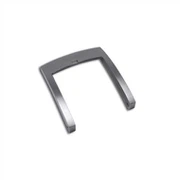
The feasibility of titanium alloy injection molding was demonstrated by Professor German in 1997, but it was questioned by many people at that time. In 2010, Professor German directly provided samples of titanium injection molding in a review of powder metallurgy, such as congestion gear conversion handles, hemostatic forceps, pacemakers, watch straps, and continuous needles in medical surgical instruments, dispelling people's doubts.
In the injection molding of titanium, the control of impurities C, O, and N is the key to ensuring high-performance injection molding of titanium alloys. Therefore, the control of impurities in internal mixing, granulation, injection molding, and sintering is of utmost importance.
Metal titanium and titanium alloys are produced using powder metallurgy methods. Due to the high chemical activity of titanium and its susceptibility to contamination by gases and crucible materials, high-quality titanium powder is mainly produced using centrifugal atomization technology under vacuum or high-purity inert gas protection. Similarly, inert gas protection is also required during the mixing process, and standards such as wear resistance and pollution prevention must be met. This titanium alloy internal mixer has emerged, meeting industry needs.
Zhongwei Precision was established in 2019 as the Zhongwei Precision Titanium Alloy Business Department, which is a department integrating the design, development and production of titanium alloy injection molding products with Central South University, and is committed to providing one-stop procurement services for customers. The main engineering research and development personnel are all from senior Taiwanese funded factories, with over 5 years of rich experience in the research, development, and production of titanium alloy metal injection molding products. They have senior research and development and production capabilities. The company is equipped with high-precision production equipment in the industry, with a high degree of automation, bringing high-quality products and achieving a better user experience. We can provide customers with solutions for titanium alloy parts.