



Copper Alloy Rollers MIM Parts
Copper is a non-ferrous metal closely related to human beings. It is not only rich in natural resources but also has excellent properties such as electrical conductivity, thermal conductivity, ductility, corrosion resistance, and wear resistance. It is widely used in electricity, electronics, Energy and petrochemicals, machinery and metallurgy, transportation, light industry, emerging industries and other fields are second only to aluminum in the consumption of non-ferrous metal materials in my country.
Product Description
|
|
|||||
|
Item |
Material |
Production Process |
Sintering Temperature |
Mold |
Custom |
|
Rollers |
Copper Alloy |
Metal Injection Molding |
1500°C |
To be customized |
Yes |
|
Available Materials |
Low carbon stainless steel, titanium alloy (Ti, TC4), copper alloy, tungsten alloy, hard alloy, high temperature alloy (718, 713) |
||||
Where is copper mainly used?
Copper Application Brief
Copper is a non-ferrous metal closely related to human beings. It is not only rich in natural resources but also has excellent properties such as electrical conductivity, thermal conductivity, ductility, corrosion resistance, and wear resistance. It is widely used in electricity, electronics, Energy and petrochemicals, machinery and metallurgy, transportation, light industry, emerging industries and other fields are second only to aluminum in the consumption of non-ferrous metal materials in my country.
• Power Industry
Power transmission such as wires and cables, transformers, switches, plug-in components and connectors, etc.; motor manufacturing such as stators, rotors, shaft heads and hollow wires, etc.; communication cables and residential electrical circuits also need to use a large amount of copper wires.
• It
Electric vacuum devices such as high-frequency and ultra-high-frequency launch tubes, transition tubes, magnetrons, etc., they require high-purity oxygen-free copper and dispersion-strengthened oxygen-free copper. Copper printed circuits require large amounts of copper foil and copper-based soldering materials. In integrated circuits, copper is used instead of aluminum in silicon chips for interconnects and lead frames.
• Energy and petrochemical industry
Main condenser tube sheets and condenser tubes in thermal power plants for the energy industry are made of brass, bronze or cupronickel. Solar heaters are also commonly manufactured using copper tubing. Copper and many copper alloys in the petrochemical industry are widely used in the manufacture of various containers, piping systems, filters, pumps and valves, various evaporators, heat exchangers and condensers in contact with corrosive media. In the marine industry, copper is not only resistant to seawater corrosion, but also has a bactericidal effect on copper ions dissolved in water, which can prevent marine biofouling. Therefore, copper and its copper alloys are very important materials in the marine industry. They have also been used in seawater desalination plants, Widely used in offshore oil and gas production platforms and other coastal and subsea facilities, such as piping systems, pumps and valves used in seawater desalination and equipment used on oil and gas production platforms, including bolts for splash zones and underwater, anti-corrosion Biofouling bags, pump valves and piping systems, etc.
• Transportation industry
Copper alloys in the shipbuilding industry include aluminum bronze, manganese bronze, aluminum brass, gun metal (tin-zinc bronze), cupronickel and nickel-copper alloy (Monel alloy), etc., which are all standard materials for shipbuilding. In warships and merchant ships, copper and copper alloys are generally used as aluminum bronze propellers, bolts, condenser pipes, rivets, copper-coated paints, etc. In the automotive industry, copper and copper alloys are mainly used in radiators, brake system pipelines, hydraulic devices, gears, bearings, power distribution and power systems, brake friction plates, gaskets, and various joints, accessories and trims. Motors, rectifiers and control, braking, electrical and signaling systems on rail trains also rely on copper and copper alloys to function. In addition, the electrification of railways requires large quantities of copper and copper alloys. The wiring, hydraulic, cooling and pneumatic systems in the aircraft need to use copper materials, the bearing retainers and landing gear bearings use aluminum bronze pipes, and the navigation instruments use antimagnetic copper alloys.
• Mechanical and metallurgical industries
In mechanical engineering, in addition to the large amount of copper used in motors, circuits, hydraulic systems, pneumatic systems, and control systems, various transmission parts and fixed parts, such as cylinder liners, connectors, fasteners, gears, twisting parts, etc., require Antifriction and lubrication with copper or copper alloy. The key components in the continuous casting technology of metallurgical equipment - crystallizer, Copper Alloy Rollers MIM Parts, mostly made of copper alloys with high strength and high thermal conductivity such as chromium copper, silver copper, etc., vacuum electric arc furnace and electroslag furnace water cooling in electrometallurgy The crucible is made of copper pipe, and all kinds of induction heating coils are made of copper pipe or special-shaped copper pipe, and the inside is cooled by water. Alloy Additives Copper is an important additive element in alloys such as steel and aluminum. Adding a small amount of copper to low-alloy structural steel can improve the strength of the steel and its resistance to atmospheric and marine corrosion. Adding copper to corrosion-resistant cast iron and stainless steel can further improve their corrosion resistance.
• Applications in light industry
Copper and copper alloys can be used to manufacture heat exchangers for air conditioners, watch movements, mesh cloth for paper machines, rollers, printing copper plates, linings for fermentation tanks, distillation pots, architectural decorative components, etc.
• Emerging industries and high-tech fields
Copper is also used in emerging industries and high-tech fields, such as sheathing of superconducting alloys, containers and pipelines of ultra-low temperature media, cooling inner villages of rocket engines, and magnet windings of high-energy accelerators.
About the application of copper in various industries
Application of Copper in Industry
Copper is a non-ferrous metal that is very closely related to human beings. It is widely used in electrical, light industry, machinery manufacturing, construction industry, national defense industry and other fields. It is second only to aluminum in the consumption of non-ferrous metal materials in my country.
(1) Application of copper in power industry
• Power delivery
Wire and cable, busbars, transformers, switches, plug-in components and connectors, etc.
• Motor manufacturing
Stator, rotor and shaft head, hollow wire, etc.
Communication cables and residential electrical wiring require large amounts of copper conductors.
(2) Application of copper in electronics industry
• Electric vacuum devices
High-frequency and ultra-high-frequency launch tubes, transition tubes, magnetrons, etc., they require high-purity oxygen-free copper and dispersion-strengthened oxygen-free copper.
• Printed circuits
Copper printed circuits require large amounts of copper foil and copper-based soldering materials.
• integrated circuits
Replacing aluminum in silicon chips with copper for interconnects and lead frames yields a performance gain of 30%.
(3) Application of copper in energy and petrochemical industry
• Energy industry
The main condenser tube plates and condenser tubes of thermal power plants are made of brass, bronze or cupronickel. Every 10,000 kilowatts of installed capacity requires 5 tons of condenser tubes. Solar heaters are also commonly manufactured using copper tubing.
• petrochemical industry
Copper and many copper alloys are widely used in the manufacture of various containers, piping systems, filters, pumps and valves, various evaporators, heat exchangers and condensers in contact with corrosive media.
• Marine industry
Because copper is not only resistant to seawater corrosion, but also the copper ions dissolved in water have a bactericidal effect and can prevent marine biofouling. Therefore, copper and its copper alloys are very important materials in the marine industry. They have been used in seawater desalination plants, marine oil recovery It is widely used in gas platforms and other coastal and subsea installations. For example, piping systems, pumps and valves used in seawater desalination and equipment used on oil and gas production platforms, including splash zone and underwater bolts, anti-biofouling packages, pump valves and piping systems, etc.
(4) Application of copper in transportation industry
• Ships
Copper alloys, including aluminum bronze, manganese bronze, aluminum brass, gun metal
(tin-zinc bronze), cupronickel and nickel-copper alloys
(Monel alloy), is one of the standard materials for shipbuilding. Copper and copper alloys generally account for 2% to 3% of the weight of warships and merchant ships, such as aluminum bronze propellers, bolts, rivets, condenser pipes, copper-coated paint, etc.
• Car
Copper and copper alloys are mainly used in radiators, brake system pipelines, hydraulic devices, gears, bearings, brake pads, power distribution and power systems, gaskets, and various joints, accessories, and trims. Every car uses copper 10~20kg, the copper used in a car accounts for about 6%~9% of its own weight.
• Railway
Motors, rectifiers and control, braking, electrical and signaling systems on trains rely on copper and copper alloys to function. In addition, the electrification of railways requires a lot of copper and copper alloys, and more than 2 tons of special-shaped copper wires are required for each kilometer of overhead conductors.
• Airplane
Copper is used for wiring, hydraulic, cooling and pneumatic systems in aircraft, aluminum bronze tubes are used for bearing retainers and landing gear bearings, and antimagnetic copper alloys are used for navigation instruments.Copper is a non-ferrous metal that is very closely related to human beings. It is widely used in electrical, light industry, machinery manufacturing, construction industry, national defense industry and other fields. It is second only to aluminum in the consumption of non-ferrous metal materials in my country.
(1) Application of copper in power industry
• Power delivery
Wire and cable, busbars, transformers, switches, plug-in components and connectors, etc.
• Motor manufacturing
Stator, rotor and shaft head, hollow wire, etc.
Communication cables and residential electrical wiring require large amounts of copper conductors.
(2) Application of copper in electronics industry
• Electric vacuum devices
High-frequency and ultra-high-frequency launch tubes, transition tubes, magnetrons, etc., they require high-purity oxygen-free copper and dispersion-strengthened oxygen-free copper.
• Printed circuits
Copper printed circuits require large amounts of copper foil and copper-based soldering materials.
• Integrated circuits
Replacing aluminum in silicon chips with copper for interconnects and lead frames yields a performance gain of 30%.
(3) Application of copper in energy and petrochemical industry
• Energy industry
The main condenser tube plates and condenser tubes of thermal power plants are made of brass, bronze or cupronickel. Every 10,000 kilowatts of installed capacity requires 5 tons of condenser tubes. Solar heaters are also commonly manufactured using copper tubing.
• Petrochemical industry
Copper and many copper alloys are widely used in the manufacture of various containers, piping systems, filters, pumps and valves, various evaporators, heat exchangers and condensers in contact with corrosive media.
• Marine industry
Because copper is not only resistant to seawater corrosion, but also the copper ions dissolved in water have a bactericidal effect and can prevent marine biofouling. Therefore, copper and its copper alloys are very important materials in the marine industry. They have been used in seawater desalination plants, marine oil recovery It is widely used in gas platforms and other coastal and subsea installations. For example, piping systems, pumps and valves used in seawater desalination and equipment used on oil and gas production platforms, including splash zone and underwater bolts, anti-biofouling packages, pump valves and piping systems, etc.
(4) Application of copper in transportation industry
• Ships
Copper alloys, including aluminum bronze, manganese bronze, aluminum brass, gun metal(tin-zinc bronze), cupronickel and nickel-copper alloys(Monel alloy), is one of the standard materials for shipbuilding. Copper and copper alloys generally account for 2% to 3% of the weight of warships and merchant ships, such as aluminum bronze propellers, bolts, rivets, condenser pipes, copper-coated paint, etc.
• Car
Copper and copper alloys are mainly used in radiators, brake system pipelines, hydraulic devices, gears, bearings, brake pads, power distribution and power systems, gaskets, and various joints, accessories, and trims. Every car uses copper 10~20kg, the copper used in a car accounts for about 6%~9% of its own weight.
• Railway
Motors, rectifiers and control, braking, electrical and signaling systems on trains rely on copper and copper alloys to function. In addition, the electrification of railways requires a lot of copper and copper alloys, and more than 2 tons of special-shaped copper wires are required for each kilometer of overhead conductors.
• Airplane
Copper is used for wiring, hydraulic, cooling and pneumatic systems in aircraft, aluminum bronze tubes are used for bearing retainers and landing gear bearings, and antimagnetic copper alloys are used for navigation instruments.
Metal Injection Molding Process

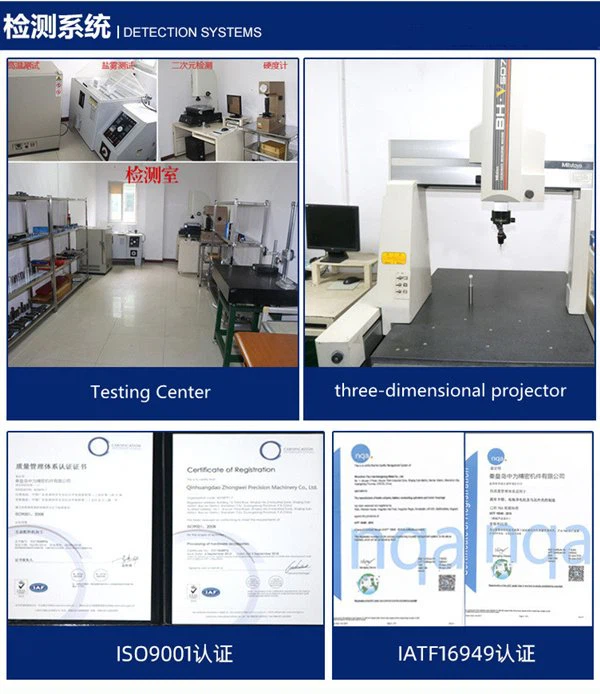
Detection Systems




Send Inquiry
