




Titanium Alloy Lost-wax Casting For Mobile Phone Accessories
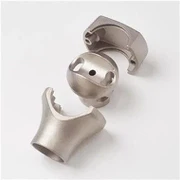
Titanium alloy lost-wax castings for mobile phone accessories are made using the lost-wax casting process and are made from titanium alloy. Titanium alloy has advantages such as low density, high strength, corrosion resistance, and good biocompatibility. Lost-wax casting can produce castings with complex shapes and high precision. The combination of these two factors brings high quality and unique design possibilities to mobile phone accessories.

Product Overview
Titanium alloy lost-wax castings for mobile phone accessories are made using the lost-wax casting process and are made from titanium alloy. Titanium alloy has advantages such as low density, high strength, corrosion resistance, and good biocompatibility. Lost-wax casting can produce castings with complex shapes and high precision. The combination of these two factors brings high quality and unique design possibilities to mobile phone accessories.
Product Features Material Properties
High Strength and Lightweight
Titanium alloy has a strength close to or even exceeding that of high-quality steel, yet it has a lower density. This allows mobile phone accessories using titanium alloy lost-wax castings to maintain structural strength and withstand certain external impacts without deformation, while also reducing the overall weight of the phone and improving user comfort, making them especially suitable for modern smartphones that require high portability.
Corrosion Resistance
A dense oxide film forms on the surface of titanium alloy. This oxide film has good chemical stability and can effectively resist the corrosion of air, water, and some common chemicals. For mobile phone accessories, daily use may expose them to sweat, rain, cosmetics, etc. The corrosion-resistant properties of titanium alloys ensure that these accessories will not rust or corrode over long-term use, extending their lifespan.
Biocompatibility
Titanium alloy is a human-friendly material and will not cause allergic reactions. Since mobile phones are devices used close to the skin for extended periods, using titanium alloy lost-wax casting parts reduces the risk of allergic reactions from skin contact, improving user safety and comfort.
Casting Process Advantages
High Precision
Lost-wax casting is a precision casting method capable of producing mobile phone accessories with extremely high dimensional accuracy. It can accurately replicate the details of the mold, achieving complex geometric shapes and intricate patterns, meeting the requirements of minute dimensions and high precision in mobile phone design. For example, some mobile phone buttons and decorative parts require precise dimensions and a delicate surface texture; the lost-wax casting process can effectively achieve these requirements.
Good Surface Quality
Titanium alloy mobile phone accessories obtained through lost-wax casting have a high surface finish, requiring minimal subsequent processing. This not only saves production time and costs but also ensures the consistency and aesthetics of the component surfaces, enhancing the overall appearance quality of the phone.
High Customizability
The lost-wax casting process can create molds of various shapes and sizes according to different design requirements, thus producing a diverse range of phone accessories. Whether it's a unique appearance or a personalized functional design, the lost-wax casting process can achieve this, providing phone manufacturers with more room for innovation.
Application Scenarios: Exterior Decorative Components
Phone Frames
Titanium alloy lost-wax castings can create exquisite and durable phone frames. Their high strength and corrosion resistance ensure that the frame is not easily damaged or deformed during daily use. At the same time, the exquisite surface treatment and unique shape can enhance the overall aesthetics and texture of the phone, making it stand out among many products.
Buttons
For phone buttons such as power buttons and volume buttons, the tactile feel and texture of titanium alloy provide users with a better operating experience. Moreover, due to its high-precision casting process, it ensures consistent button feel, sensitive operation, and good wear resistance, extending the button's lifespan.
Decorative Pieces
Adding titanium alloy decorative pieces to the back, sides, and other areas of the phone can enhance its unique visual appeal. These pieces can be designed with various patterns and textures, such as metallic patterns and brand logos, to meet the personalized needs of different consumers.
Internal Structural Components
Motherboard Bracket: Provides support and fixation for the phone's motherboard. The high strength of titanium alloy ensures that the motherboard will not easily shift or be damaged when subjected to vibration or impact, thereby improving the phone's stability and reliability.
Camera Bracket: Precise lost-wax casting ensures the dimensional and positional accuracy of the camera bracket, guaranteeing accurate camera installation and improving shooting quality. Simultaneously, the corrosion resistance of titanium alloy prevents the bracket from rusting and affecting the camera, extending its lifespan.
Market Prospects: Driven by Consumer Demand
As consumers' demands for phone quality and personalization continue to rise, the demand for high-quality, uniquely designed phone accessories is also increasing. Titanium alloy lost-wax casting parts, with their superior performance and exquisite appearance, can meet consumers' pursuit of aesthetics, durability, and personalization in mobile phones, representing a huge market potential.
Mobile Phone Industry Development Trends
The smartphone industry is continuously evolving towards thinner, lighter, smarter, and more high-end designs, placing higher demands on the performance and quality of mobile phone components. Titanium alloy lost-wax castings perfectly align with this trend. Their lightweight, high-strength, and high-precision characteristics provide strong support for mobile phone upgrades and innovations, thus holding broad application prospects in the future mobile phone market.
Opportunities Brought by Technological Advancements
With continuous advancements in lost-wax casting technology and titanium alloy processing technology, production costs are gradually decreasing, and production efficiency is constantly improving. This makes titanium alloy lost-wax castings more price-competitive, better meeting market demand and further expanding their market share.
Production Challenges
Material Costs
Titanium alloys are relatively expensive, and their processing is challenging, requiring specialized equipment and processes, resulting in high production costs for titanium alloy lost-wax castings. How to reduce material and processing costs while ensuring product quality is a significant challenge for manufacturers.
Process Difficulty
While lost-wax casting has many advantages, it also presents certain technical challenges. For example, titanium alloys have a high melting point, requiring precise control of temperature and melting time during the casting process to avoid defects such as porosity and shrinkage. Meanwhile, the lost-wax casting process requires strict process control in all stages, including mold making, dewaxing, and pouring. Problems in any stage can affect product quality.
Environmental Requirements
The processing and casting of titanium alloys may generate waste and pollutants, such as exhaust gases and slag from the smelting process. With increasingly stringent environmental requirements, manufacturers need to implement effective environmental measures to reduce their impact on the environment, which increases production costs and management complexity.



Send Inquiry
