


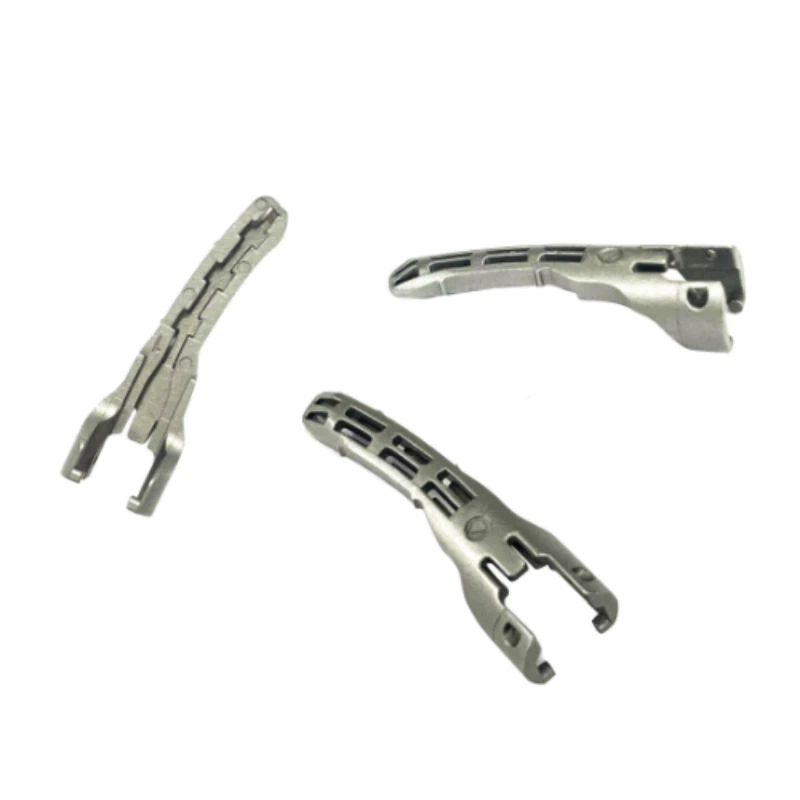

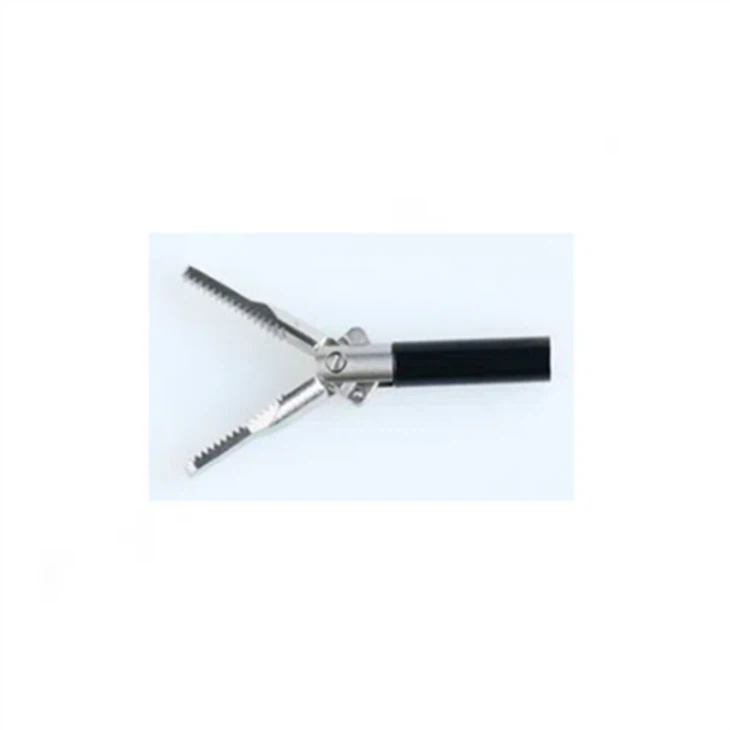
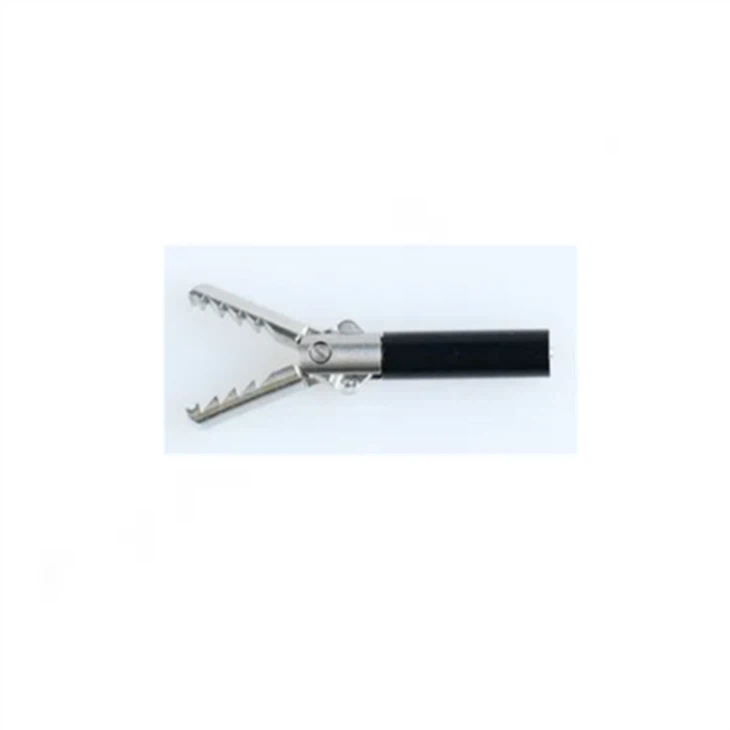
Ultrasonic Knife Pliers Titanium Alloy Wax Loss Casting
Ultrasonic knife forceps are a widely used medical device in surgical procedures. They use ultrasound technology to generate high-frequency vibrations, causing water molecules in tissues to vaporize and protein hydrogen bonds to break, thereby achieving tissue cutting and hemostasis functions. Its design is precise, with extremely high requirements for materials and manufacturing processes to ensure safety and effectiveness during the surgical process.
The following is a complete analysis of wax loss casting of ultrasonic knife pliers titanium alloy:
Overview of Ultrasonic Knife Pliers
Ultrasonic knife forceps are a widely used medical device in surgical procedures. They use ultrasound technology to generate high-frequency vibrations, causing water molecules in tissues to vaporize and protein hydrogen bonds to break, thereby achieving tissue cutting and hemostasis functions. Its design is precise, with extremely high requirements for materials and manufacturing processes to ensure safety and effectiveness during the surgical process.
Selection of Titanium Alloy Materials
Excellent performance characteristics
Biocompatibility
Titanium alloy has good biocompatibility and high affinity with human tissues. It is not easy to cause immune reactions and rejection after implantation in the human body, which is crucial for medical devices such as ultrasonic forceps that directly contact human tissues, and can reduce postoperative complications for patients.
High strength and low density
Titanium alloy has high strength and can withstand high-frequency vibrations and large stresses generated by ultrasonic knives during operation, ensuring the structural integrity of the instrument. At the same time, its low-density characteristics make the ultrasonic forceps lighter in weight, convenient for doctors to operate, and reduce fatigue caused by long-term surgery.
Corrosion resistance
During the surgical process, the ultrasonic knife forceps come into contact with various body fluids and disinfectants. The good corrosion resistance of titanium alloy can prevent rusting and damage to the instruments, extend their service life, and ensure stable performance even after multiple uses and disinfections.
Material composition and characteristics
Common titanium alloys such as Ti-6Al-4V, among which aluminum (Al) can improve the strength and thermal stability of the alloy, and vanadium (V) can improve the processing performance and toughness of the alloy. The comprehensive properties of this alloy make it an ideal material for the manufacture of ultrasonic pliers.
Principle of lost wax casting process
1. Making wax molds: First, according to the design drawings of the ultrasonic pliers, use precision molds to make wax molds that are exactly the same shape as the ultrasonic pliers. The precision of wax mold production directly affects the dimensional accuracy and surface quality of the final product. Injection molding and other methods are usually used to ensure that the details and dimensions of the wax mold meet the requirements.
2. Making shell: Immerse the wax mold in refractory coating, then sprinkle refractory sand, repeat this process multiple times to form a certain thickness of shell on the surface of the wax mold. The shell needs to have sufficient strength and high temperature resistance to withstand the high temperature and impact of molten metal during the subsequent casting process.
3. Dewaxing: Place the wax mold with a shell into a steam dewaxing kettle or high-temperature furnace to melt the wax mold and flow out of the shell, thereby forming a cavity inside the shell that is consistent with the shape of the ultrasonic knife pliers. The dewaxing process should ensure that the wax mold is completely melted and discharged to avoid residual wax affecting the quality of the casting.
4. Roast shell: Place the dewaxed shell into a high-temperature furnace for roasting, further removing impurities and moisture inside the shell, and improving its strength and breathability. The roasting temperature and time need to be precisely controlled according to the requirements of the shell material and workpiece.
5. Smelting and pouring: Place titanium alloy raw materials into a vacuum induction melting furnace for melting to achieve the predetermined temperature and uniformity of composition. During the melting process, it is necessary to strictly control the vacuum degree and atmosphere inside the furnace to prevent titanium alloy from oxidizing and absorbing impurities. Then pour the melted titanium alloy liquid into the baked shell by gravity or centrifugal force.
6. Cooling and Cleaning: After pouring, allow the titanium alloy liquid to naturally cool and solidify inside the mold shell. After the casting cools to a certain temperature, remove the mold shell, clean and polish the casting to remove surface burrs and residual mold shell material.
1. High precision molding: Lost wax casting can achieve high-precision molding of complex shapes, meeting the precise structural design requirements of ultrasonic pliers, such as the serrated shape of the pliers head and the complex structure of the joint parts, ensuring the performance and functionality of the product.
2. Good surface quality: The castings obtained through wax loss casting have a high surface finish, reducing the workload of subsequent processing and also improving the biocompatibility and safety of ultrasonic pliers.
3. High material utilization rate: Compared with other casting methods, lost wax casting can reduce material waste, improve material utilization rate, and reduce production costs.
Key technical challenges and solutions for wax loss casting of titanium alloy using ultrasonic knife pliers
Technical challenge: Titanium alloys have lively chemical properties and are prone to react with elements such as oxygen and nitrogen at high temperatures, resulting in defects such as porosity and inclusions in castings. At the same time, titanium alloys have a high melting point, making it difficult to control the temperature during melting and pouring processes.
Solution: Adopt vacuum induction melting technology to melt and pour titanium alloys in a vacuum environment, reducing the contact between titanium alloys and external gases. At the same time, precise control of melting and pouring temperature, time, and speed ensures the quality and filling effect of titanium alloy liquid.
Technical challenge: The strength, breathability, and thermal stability of the shell have a significant impact on the quality of castings. If the strength of the shell is insufficient, it is prone to cracking during the pouring process; Poor breathability can lead to porosity in castings; Poor thermal stability can cause deformation of the shell at high temperatures, affecting the dimensional accuracy of castings.
Solution: Select appropriate shell materials and preparation processes, optimize the formula and production parameters of the shell. For example, using multi-layer coating technology to improve the strength and breathability of the shell; By high-temperature calcination treatment, the thermal stability of the shell is improved.
Technical challenge: Ultrasonic pliers require extremely high dimensional accuracy, and multiple processes during wax loss casting may affect the dimensional accuracy of castings, such as wax mold shrinkage, shell expansion and shrinkage, and cooling shrinkage of castings.
Solution: Control the dimensional accuracy of wax molds through precise mold design and manufacturing; In the process of shell making and baking, appropriate process parameters are adopted to reduce the deformation of the shell; Simulate and optimize the cooling process of castings, predict and compensate for the shrinkage of castings, and ensure that the dimensional accuracy of the final product meets the requirements.
Quality inspection and subsequent processing
Quality inspection
Non destructive testing: X-ray inspection, ultrasonic inspection and other non-destructive testing methods are used to detect whether there are defects such as pores and cracks inside the casting, ensuring the quality and safety of the product.
Dimensional inspection: Use high-precision measuring equipment such as coordinate measuring instruments to inspect the key dimensions of ultrasonic pliers to ensure that the product meets design requirements.
Performance testing: Testing the performance of ultrasonic knife pliers, such as cutting force, hemostatic effect, ultrasonic vibration frequency, etc., to ensure that the product meets the performance standards in actual use.
Subsequent processing
Surface treatment: Surface treatment of ultrasonic pliers, such as anodizing, coating treatment, etc., to improve their surface hardness, wear resistance, and corrosion resistance, while also improving their appearance quality.
Assembly and Debugging: Assemble, debug, and calibrate the cast ultrasonic knife clamp components to ensure that their various functions are normal and meet the requirements for clinical use.


Send Inquiry
