




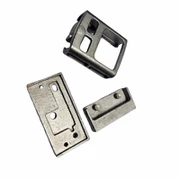
Titanium Alloy Lost-Waste Casting For Barcode Scanner Shafts
Lost-waste casting, also known as investment casting, is an advanced casting process capable of producing high-precision and complex shapes. Its basic principle involves first creating a wax model matching the desired shape of the casting, then covering the wax model with multiple layers of refractory material to form a shell.
Overview of Lost-Waste Casting
Lost-waste casting, also known as investment casting, is an advanced casting process capable of producing high-precision and complex shapes. Its basic principle involves first creating a wax model matching the desired shape of the casting, then covering the wax model with multiple layers of refractory material to form a shell. The shell is then heated to melt the wax model, allowing it to flow out and creating a mold cavity without a parting line. Molten metal is then poured into the cavity, and after the metal cools and solidifies, the shell is removed to obtain the desired casting. This process is widely used in aerospace, medical devices, jewelry, and many other fields because it can manufacture parts with complex shapes and high precision requirements.
Reasons for Using Titanium Alloy Lost-Waste Casting for Barcode Scanner Shafts
o High Strength and Low Density: Titanium alloys have an excellent strength-to-weight ratio; their strength is comparable to high-strength steel, but their density is only about 60% of that of steel. This allows the barcode scanner shaft to maintain sufficient strength to withstand frequent rotation and certain external forces while reducing overall weight, which is beneficial for the portability design of the barcode scanner, especially suitable for handheld barcode scanners.
o Excellent corrosion resistance: Barcode scanners used in different working environments may come into contact with various chemicals, moisture, etc. Titanium alloy has excellent corrosion resistance, resisting oxidation, acid and alkali corrosion, etc., extending the service life of the barcode scanner shaft, reducing failures and damage caused by corrosion, and lowering maintenance costs.
o Biocompatibility: In some special barcode scanning applications, such as barcode scanners in the medical industry, components that come into contact with the human body are required to have good biocompatibility. Titanium alloy is a biocompatible material that will not cause allergic reactions or other adverse reactions in the human body, meeting the requirements of such special applications.
o Manufacturing of Complex Shapes: The structure of the barcode scanner shaft may be relatively complex, for example, it may need to have specific tooth shapes, grooves, holes, etc., to achieve precise fit with other components and transmission functions. Lost-wax casting can produce castings of almost any complex shape, meeting the design requirements of the rotating shaft without requiring additional complex machining processes.
o High Precision: Lost-wax casting achieves high dimensional accuracy and surface quality. For the barcode scanner shaft, high-precision manufacturing ensures smooth and accurate rotation, reducing problems such as jamming and shaking caused by dimensional deviations, and improving the barcode scanner's performance and stability.
o Reduced Machining Allowance: Due to the high precision of lost-wax casting, the dimensions of the casting are close to the final product dimensions, resulting in smaller subsequent machining allowances. This not only saves materials but also reduces machining time and costs, improving production efficiency.
Process Flow of Lost-Wax Casting of Titanium Alloy for Barcode Scanner Shafts
o. Mold Design and Manufacturing: Based on the design drawings of the barcode scanner shaft, mold design is performed using CAD/CAM software, followed by mold manufacturing using machining, EDM, and other methods. The precision and quality of the mold directly affect the quality of the wax model; therefore, strict control of the mold's dimensional accuracy and surface roughness is necessary.
o. Wax Selection and Treatment: Select a suitable wax material. Generally, the wax should have good fluidity, low shrinkage, moderate strength, and easy demolding. Commonly used waxes include mixed waxes composed of paraffin wax and stearic acid. Melt the wax material by heating, removing impurities and gases to ensure the quality of the wax model.
o. Wax Model Forming: Pour the molten wax into the mold. Apply pressure using equipment such as a wax press to fill the mold cavity. After the wax cools and solidifies, open the mold and remove the wax model. Trim the wax model, removing burrs, flash, and other excess parts. Check the dimensions and surface quality of the wax model to ensure they meet requirements.
o. Coating: Immerse the trimmed wax model in coating. The coating is generally composed of refractory materials (such as silica sol, zircon powder, etc.), binders, and additives. The coating's function is to form a uniform coating on the wax model surface, protecting it and providing a base for the subsequent shell. Ensure the coating completely covers the wax model surface with a uniform thickness.
o Sanding: Immediately after applying the coating, place the wax model in a sand box and sprinkle a layer of refractory sand on top, allowing the sand particles to adhere to the coating layer. The particle size and material of the sand are selected according to the different layers and requirements of the shell, generally progressing from fine sand to coarse sand to form a shell with a certain strength and breathability.
o Drying and Hardening: After sanding, place the wax model in a drying chamber for drying and hardening. During the drying process, the moisture in the coating gradually evaporates, and the binder undergoes a chemical reaction, causing the shell to harden. The drying and hardening time and temperature must be controlled according to the type of coating and environmental conditions to ensure the quality of the shell. Repeat the steps of applying coating, sanding, drying, and hardening multiple times until the shell reaches the required thickness.
o Heating Dewaxing: Place the prepared shell into a dewaxing furnace, where heating melts the wax model and causes it to flow out. Heating methods can include steam heating, hot water heating, and electric heating. Heating temperature and time must be controlled according to the melting point of the wax and the heat resistance of the mold shell to ensure that the wax model completely melts and flows out of the mold shell, while avoiding damage to the mold shell due to overheating.
o Cleaning the mold shell: After dewaxing, the mold shell is cleaned to remove residual wax and impurities. High-pressure air purging, ultrasonic cleaning, etc., can be used to ensure the cleanliness of the internal cavity of the mold shell.
o Titanium alloy melting: Titanium alloy raw materials are melted using equipment such as a vacuum induction melting furnace. During the melting process, the melting temperature, time, and atmosphere must be strictly controlled to ensure the chemical composition and quality of the titanium alloy. Because titanium alloy readily reacts with elements such as oxygen and nitrogen in the air, the melting process must be carried out under vacuum or inert gas protection.
o Casting: Once the titanium alloy has reached the appropriate temperature and composition, the molten titanium alloy is quickly poured into the preheated mold shell. Parameters such as pouring speed, pouring temperature, and pouring pressure must be adjusted according to the size, shape, and characteristics of the mold shell of the rotating shaft to ensure that the titanium alloy fills the mold cavity and avoids defects such as incomplete filling and porosity.
o. Shell Removal: After the titanium alloy casting has cooled and solidified, the mold shell is removed using methods such as mechanical vibration or sandblasting. Care must be taken to avoid damaging the casting during the shell removal process.
o. Heat Treatment: The shell-removed casting undergoes heat treatment to improve its microstructure and properties. Common heat treatment processes include annealing, quenching, and tempering. The process parameters for heat treatment must be selected based on the composition of the titanium alloy and the application requirements of the casting to improve its strength, hardness, toughness, and other properties.
o. Machining: According to the final dimensions and precision requirements of the barcode scanner shaft, the casting is machined using methods such as turning, milling, and grinding. Machining can further improve the dimensional accuracy and surface quality of the shaft, ensuring its fit with other components.
o. Surface Treatment: After machining, the shaft undergoes surface treatment such as anodizing, electroplating, or spraying to improve its corrosion resistance, wear resistance, and appearance. The surface treatment method and process should be selected based on the shaft's operating environment and requirements.
Quality Control and Inspection
o Titanium Alloy Raw Materials: Chemical composition analysis and metallographic examination are performed on the purchased titanium alloy raw materials to ensure that their chemical composition meets design requirements and that the metallographic structure is uniform and defect-free. Spectroscopic analysis and metallographic microscopes can be used for testing.
o Wax and Mold Materials: The melting point, hardness, and shrinkage rate of the wax are tested, and the refractoriness, strength, and permeability of the mold materials are tested to ensure stable and reliable raw material quality.
o Wax Mold Quality: During the wax mold making process, the dimensional accuracy, surface quality, and shape deviation of the wax mold are checked regularly. Coordinate measuring machines and optical microscopes can be used for inspection to promptly identify problems and adjust mold and process parameters.
o Shell quality: The thickness, strength, and permeability of the mold shell are tested to ensure it can withstand the pressure and temperature during casting and has good permeability to prevent defects such as porosity and inclusions in the casting. Ultrasonic testing and permeability testing equipment can be used for inspection.
o Melting and casting quality: During the melting process, parameters such as temperature, chemical composition, and melting time of the titanium alloy are monitored in real time to ensure stable melting quality. During the casting process, parameters such as casting speed, temperature, and pressure are controlled to avoid defects such as incomplete filling and cold shuts.
o Dimensional accuracy: The dimensions of the barcode scanner shaft are accurately measured using measuring tools (such as calipers and micrometers) and measuring equipment (such as a coordinate measuring machine) to ensure that its dimensions meet the requirements of the design drawings.
o Surface quality: The surface quality of the shaft is inspected visually and using a surface roughness tester to ensure that there are no defects such as cracks, porosity, or sand holes, and that the surface roughness meets the requirements.
o Mechanical Properties: Mechanical property tests are performed on the shaft, such as tensile tests, hardness tests, and impact tests, to assess whether its strength, hardness, toughness, and other mechanical properties meet the usage requirements.
o Metallographic Structure: The metallographic structure of the shaft is analyzed to check whether its structure is uniform and normal, and whether there are any abnormal phases or defects. Metallographic microscopes and electron microscopes can be used for inspection.
Advantages and Challenges of Lost-Wafer Casting of Titanium Alloy for Barcode Scanner Shafts
o Improved Product Performance: Barcode scanner shafts manufactured using titanium alloy materials and lost-wafer casting technology possess excellent properties such as high strength, low density, and corrosion resistance, which can improve the working stability, reliability, and service life of the barcode scanner, meeting the needs of different working environments.
o Design Flexibility: Lost-wafer casting can produce shafts with complex shapes, providing greater flexibility in barcode scanner design, enabling more optimized structural design and functional integration, and improving the overall performance of the barcode scanner.
o Production Efficiency and Cost Advantages: Compared with traditional machining methods, lost-wafer casting reduces machining steps and machining allowances, improving production efficiency and reducing production costs. Meanwhile, the use of titanium alloys can reduce maintenance and replacement costs caused by corrosion and other factors.
o High Process Difficulty: The melting and casting of titanium alloys require special environments, placing high demands on equipment and processes. The lost-wax casting process itself is also complex, involving the control of multiple stages and parameters; problems in any stage can affect the quality of the casting.
o High Cost: The relatively high price of titanium alloy raw materials, coupled with the significant equipment investment and production costs of the lost-wax casting process, results in high manufacturing costs for the barcode scanner shaft. This limits its application in some cost-sensitive markets.
o High Quality Control Requirements: Since the performance and quality of the barcode scanner shaft directly affect the scanner's performance, the quality requirements for the casting are extremely high. A strict quality control system needs to be established, with precise testing and control at every stage from raw materials to finished products, increasing the difficulty and cost of quality management.



Send Inquiry
