




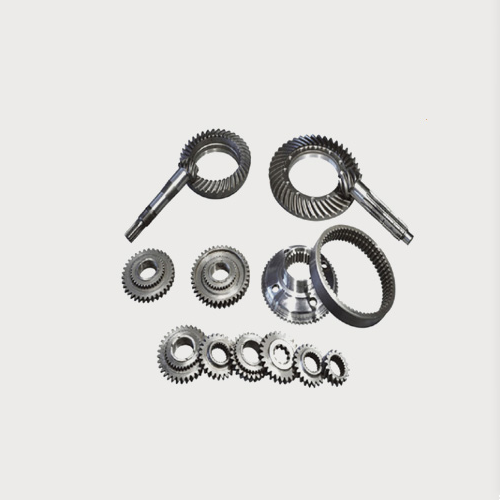


Miniature Module Gear Titanium Alloy Lost-wax Casting
Micro module gears refer to gears with a small module, commonly used in precision machinery, electronic equipment, and other fields with high space and precision requirements. Titanium alloys have advantages such as low density, high strength, and good corrosion resistance, making them ideal for manufacturing high-performance micro module gears.
Overview of Lost-Wafer Casting of Micro Module Gears from Titanium Alloy
Micro module gears refer to gears with a small module, commonly used in precision machinery, electronic equipment, and other fields with high space and precision requirements. Titanium alloys have advantages such as low density, high strength, and good corrosion resistance, making them ideal for manufacturing high-performance micro module gears. Lost-wafer casting is a precision casting method that uses a wax model to create a cavity with the same shape as the part. Molten metal is then poured into the cavity, and after cooling, the desired part is obtained. This method can produce parts with complex shapes and high precision, making it very suitable for manufacturing micro module gears.
Process Flow of Lost-Wafer Casting of Micro Module Gears from Titanium Alloy
• Designing the Wax Model: Based on the size and shape requirements of the micro module gear, a three-dimensional model of the wax model is designed. During the design process, factors such as the shrinkage rate and draft angle of the wax model need to be considered to ensure the dimensional accuracy of the final casting.
• Fabricating the Wax Model Mold: Using methods such as CNC machining and EDM, a wax model mold is fabricated based on the designed three-dimensional wax model model. The precision and surface quality of the mold directly affect the quality of the wax model; therefore, strict control of the mold's machining precision is required.
• Injection Molding: The wax material is heated to a liquid state and then injected into the wax mold using an injection molding machine. During the injection process, parameters such as injection pressure, injection speed, and injection temperature need to be controlled to ensure the quality of the wax mold.
• Wax Mold Finishing: Injection-molded wax molds may have defects such as flash or burrs, requiring finishing. The finished wax mold undergoes quality inspection to ensure its dimensional accuracy and surface quality meet requirements.
• Gating System Selection: A suitable gating system is selected based on the size, shape, and batch production requirements of the micro-module gears. The design of the gating system directly affects the quality of the castings and production efficiency, therefore, optimization is necessary.
• Wax Mold Assembly: The finished wax molds are assembled onto the gating system by welding or bonding to form the wax mold assembly. During assembly, the spacing and positional accuracy between wax molds must be ensured to avoid mutual interference between castings.
• Coating: The wax mold assembly is immersed in coating material, allowing the coating to be evenly applied to the surface of the wax mold. The choice of coating and the coating process directly affect the quality of the mold shell. Therefore, it is necessary to select a suitable coating based on the material and requirements of the casting, and strictly control the coating process parameters.
• Sand Sprinkling: A layer of sand is sprinkled onto the surface of the coated wax mold assembly to ensure the sand adheres firmly to the coating surface. The purpose of sand sprinkling is to increase the strength and permeability of the mold shell; therefore, the appropriate sand particle size needs to be selected according to the number of layers and requirements.
• Drying and Hardening: After coating and sand sprinkling, the wax mold assembly needs to undergo drying and hardening treatment to form a strong bond between the coating and the sand particles. The drying and hardening process parameters need to be adjusted according to the type of coating and environmental conditions to ensure the quality of the mold shell.
• Repeated Coating and Sand Sprinkling: Depending on the required number of layers, the coating, sand sprinkling, and drying and hardening processes are repeated until the mold shell reaches the required thickness and strength.
• Steam Dewaxing: The prepared mold shell is placed in a steam dewaxing kettle, where the high temperature of steam melts the wax and causes it to flow out of the mold shell. Steam dewaxing offers the advantages of fast dewaxing speed, high efficiency, and minimal damage to the mold shell.
• Hot water dewaxing: The prepared mold shell is placed in hot water, where the high temperature melts the wax and allows it to flow out. Hot water dewaxing is advantageous due to its simple equipment and low cost, but it is slower and more prone to damaging the mold shell.
• Low-temperature calculation: The dewaxed mold shell is placed in a calculation furnace for low-temperature calculation to remove moisture and residual wax. The temperature and time for low-temperature calculation need to be adjusted according to the material and thickness of the mold shell to ensure its quality.
• High-temperature calculation: After low-temperature calculation, the mold shell is subjected to high-temperature calculation to improve its strength and hardness. The temperature and time for high-temperature calculation need to be adjusted according to the material and requirements of the casting to ensure the mold shell can withstand the impact and pressure of the molten metal.
• Titanium alloy smelting: The titanium alloy raw material is placed in a vacuum induction melting furnace and smelted under vacuum. During the smelting process, parameters such as smelting temperature, smelting time, and alloy composition must be strictly controlled to ensure the quality of the titanium alloy.
• Pouring: The molten titanium alloy is poured into the mold shell through the gating system. During pouring, parameters such as pouring temperature, pouring speed, and pouring pressure need to be controlled to ensure the quality of the casting.
Cleaning and Post-treatment
Sand Removal
The caster is removed from the mold shell after pouring, and the mold shell and sand particles are removed by methods such as vibration and sandblasting.
Gate Cutting
The gating system on the casting is cut off using cutting equipment, separating the casting from the gating system.
Heat Treatment
The casting is heat-treated according to its intended use to improve its mechanical properties.
Machining
The casting is machined to achieve the required dimensional accuracy and surface quality.
Advantages of Lost-Wafer Casting of Micro Module Gears Titanium Alloys
High Dimensional Accuracy: Lost-wafer casting can produce parts with high dimensional accuracy, meeting the dimensional accuracy requirements of micro module gears. By precisely designing wax patterns and mold shells, and strictly controlling casting process parameters, the dimensional tolerances of castings can be kept within a small range.
Good Surface Quality: Castings produced by lost-wax casting have excellent surface quality and low surface roughness. This is because the surface quality of the wax pattern can be guaranteed through processes such as mold making and wax pattern finishing, while the inner surface quality of the mold shell can be controlled through coating and shell-making processes.
Capable of Manufacturing Complex Shapes: The shapes of miniature module gears are often quite complex. Lost-wax casting can produce parts with complex shapes, meeting the design requirements of miniature module gears. By designing suitable wax patterns and gating systems, miniature module gears with various tooth profiles and structures can be manufactured.
High Material Utilization: Lost-wax casting has high material utilization, reducing material waste. Because lost-wax casting can produce parts close to the final shape, it can reduce the amount of machining work and improve material utilization.
Challenges of Lost-Waste Casting of Miniature Module Gears from Titanium Alloys
High Difficulty in Titanium Alloy Melting
Titanium alloys are highly chemically reactive and easily react with elements such as oxygen and nitrogen in the air during melting, leading to defects such as porosity and inclusions in the casting. Therefore, melting must be carried out in a vacuum environment with strict control of melting process parameters.
Compatibility Issues Between the Mold and Titanium Alloy
Titanium alloys exhibit strong chemical reactivity at high temperatures, easily reacting with the mold material, causing adhesion between the mold and the casting, affecting the quality of the casting. Therefore, it is necessary to select a mold material with good compatibility with titanium alloys and perform surface treatment to reduce the occurrence of chemical reactions.
High Cost
The lost-waste casting process is complex and requires a large amount of equipment and materials, resulting in high costs. This is especially true for expensive materials like titanium alloys. To reduce costs, it is necessary to optimize the process flow, improve production efficiency, and reduce material consumption.
Application Prospects of Lost-Waste Casting of Miniature Module Gears from Titanium Alloys
In the aerospace field, there are high requirements for lightweight, high-precision, and high-performance components. Miniature module gears made from titanium alloy lost-wax castings possess advantages such as low density, high strength, and excellent corrosion resistance, making them ideal for precision transmission systems in aerospace equipment.
In the electronics field, with the continuous miniaturization and precision of electronic devices, the demand for miniature module gears is increasing. Titanium alloy lost-wax casting can produce miniature module gears with high dimensional accuracy and good surface quality, meeting the high precision requirements of electronic equipment components.
In the medical device field, there are high requirements for the biocompatibility, corrosion resistance, and precision of components. Titanium alloys have good biocompatibility and corrosion resistance, and lost-wax casting can produce miniature module gears with complex shapes and high precision, suitable for precision transmission systems in medical devices.


Send Inquiry
