



GGG70 Ball Milled Iron Castings
In the precision supply of ductile iron castings, gray iron castings, imported ductile iron castings, high temperature resistance ductile iron castings, high strength ductile iron castings, high precision ductile iron castings, high hardness ductile iron castings.
Product Introduction
|
GGG70 ball milled iron castings |
|||||||
|
Item |
Material |
Production Process |
Sintering Temperature |
Mold |
Custom |
||
|
GGG70 ball milled iron castings |
GGG70 |
Molten mold casting |
1380℃ |
To be customized |
Yes |
||
|
Available Materials |
Carbon steel, alloy steel, aluminum alloy, low -carbon stainless steel, titanium alloy (TI, TC4), copper alloy, high temperature alloy (718, 713) |
||||||
|
Smoothness |
Dimensional accuracy |
Product density |
Appearance treatment |
Appropriate weight |
|||
|
Roughness 1~5μm |
(±0.1%~±0.5%) |
7.3-7.6/CM³ |
According to customer requirements |
0.03g~40kg |
|||
GGG70 ball ground cast iron lost wax investment casting
In the precision supply of ductile iron castings, gray iron castings, imported ductile iron castings, high temperature resistance ductile iron castings, high strength ductile iron castings, high precision ductile iron castings, high hardness ductile iron castings. Northwest China's largest ductile iron foundry, strong technical force, integrity enterprises, manufacturers "ductile iron rod quote", "ductile iron rod manufacturers" direct sales, "ductile iron rod manufacturers"/agents sales of many world famous welding materials, the company specializes in the production and sales of various models and specifications of special welding rods, product range is complete, reliable quality, It is widely used in petrochemical industry, iron and steel metallurgy, machinery manufacturing, railway Bridges, oil and gas pipelines, vehicles and ships, boiler vessels, electric power and water conservancy, aerospace, mining construction and many other fields. Nodular castings quote ", "Nodular castings manufacturers" direct sales "nodular castings manufacturers"/Further cost increases since the end of March and the recent decline in steel manufacturers may change the momentum of the recovery, and the decline in Chinese steel manufacturers is starting to pass on to developed countries. The European steel industry's profit squeeze in the second half of last year should not be repeated and the upswing in raw materials producers should moderate in the medium term, its chief executive said. The steel industry in Europe and the United States has recovered from a slump in the second half of last year, and ArcelorMittal, the world's largest steelmaker, forecast earlier this month that second-quarter profit would hit a post-crisis high.
He said that the cost of exporting steel from China to Europe accounted for more than 10% of the product manufacturers, and the operating profit margin of the industry was generally about 5%. This is much more important than the situation in Europe. "Eighty percent of the countries in Europe are doing well," he said. This suggests that the danger of a structural downturn in the second half of the year is very limited," he said. European stocks are also under control." We have less than five weeks' worth of inventory available. The annual inventory of European countries has not exceeded the normal level.," Nodular cast iron castings quote "," Nodular cast iron castings manufacturers "direct sales" nodular cast iron castings manufacturers "/ Some countries are even lower than the normal level. Spot plants may come under pressure in the summer, which is normal for the steel industry, but from September at the latest they should rise,Eder said." This year is likely to be very different from last year. Inventories were high going into the summer last year, and the decline continued through November. I think the chance of this happening is very small. "Ductile iron bar quote" Eder also said he was not overly concerned about the economic situation in Europe, although some countries are receiving bailouts, but the United States is a bit of a concern." If the United States does not recover in the short term, it will have a big impact on global economic development. In the longer term,Eder believes current raw material producers, particularly iron ore producers, are not sustainable given the expected decline in steel production growth in China and the fact that more iron ore production is coming on stream." In 2012 or early 2013,(iron ore) producers should be down," he said. Ductile iron bar manufacturers"
In the precision supply of ductile iron, gray iron
Nodular cast iron
A general term for alloys consisting primarily of iron, carbon, and silicon. In these alloys, the carbon content exceeds the amount that can be retained in the austenitic solid solution at eutectic temperatures. Cast iron is a general term for an alloy consisting primarily of iron, carbon, and silicon. In these alloys, the carbon content exceeds the amount that can be retained in the austenitic solid solution at eutectic temperatures.
Iron-carbon alloys containing more than 2% carbon. Industrial cast iron generally contains 2% to 4% carbon. Carbon exists in cast iron mostly in the form of graphite, and sometimes in the form of cementite. In addition to carbon, cast iron also contains 1% to 3% silicon, as well as manganese, phosphorus, sulfur and other elements. Alloy cast iron also contains nickel, chromium, molybdenum, aluminum, copper, boron, vanadium and other elements. Carbon and silicon are the main elements that affect the microstructure and properties of cast iron.
Cast iron can be divided into
① Gray cast iron. The carbon content is high (2.7% ~ 4.0%), the carbon mainly exists in the form of flake graphite, the fracture is gray, referred to as gray iron. Low melting point (1145 ~ 1250℃), small shrinkage during solidification, compressive strength and hardness close to carbon steel, good shock absorption. Used to manufacture machine tool bed, cylinder, box and other structural parts.
② White cast iron. The content of carbon and silicon is low, the carbon mainly exists in the form of cementite, and the fracture is silver-white. Shrinkage during solidification is large, which is easy to produce shrinkage holes and cracks. High hardness, brittleness, can not withstand the impact load. It is often used as a blank for malleable cast iron and to make wear-resistant parts.
③ malleable cast iron. Obtained from white cast iron after annealing treatment, the graphite is distributed in clumps and flocculation, referred to as tough iron. It has uniform microstructure, abrasion resistance, good plasticity and toughness. It is used to manufacture parts with complex shapes that can withstand strong dynamic loads.
④ Nodular iron. Gray cast iron molten iron is obtained by spheroidizing treatment, and the precipitated graphite is spherical, referred to as ductile iron. Compared with ordinary gray cast iron, it has higher strength, better toughness and plasticity. Used in the manufacture of internal combustion engines, auto parts and agricultural machinery.
⑤ vermicular graphite cast iron. The graphite precipitated from gray cast iron molten iron was worm-like. The mechanical properties are similar to nodular cast iron, and the casting properties are between gray cast iron and nodular cast iron. Used to make parts for cars.
⑥ Alloy cast iron. Ordinary cast iron is obtained by adding appropriate alloying elements (such as silicon, manganese, phosphorus, nickel, chromium, molybdenum, copper, aluminum, boron, vanadium, tin, etc.). Alloying elements make the matrix structure of cast iron change, so that it has the corresponding heat resistance, wear resistance, corrosion resistance, low temperature resistance or no magnetic properties. Used in the manufacture of mining, chemical machinery and instruments, instruments and other parts.
Classification of cast iron
Classification Method Description of the classification name
Divide by fracture color
(1) Most or all of the carbon in this cast iron is in the form of a free state of flake graphite, its fracture is dark gray, has a certain mechanical properties and good cutting performance, widely used in industry
(2) White cast iron White cast iron is an iron-carbon alloy with no or almost no graphite in the organization, its fracture is white and bright, hard and brittle, can not be cut, and is rarely used directly in the industry to make mechanical parts. Because of its high surface hardness and wear resistance, it is also called chilled cast iron or chilled cast iron
(3) pitted cast iron pitted cast iron is a kind of cast iron between white cast iron and gray cast iron, its fracture is gray and white dotted, poor performance, rarely used
By chemical composition
(1) Ordinary cast iron refers to cast iron that does not contain any alloying elements, such as gray cast iron, malleable cast iron, ductile cast iron, etc
(2) Alloy cast iron is a high-grade cast iron prepared by adding some alloying elements to ordinary cast iron to improve some special properties. Such as a variety of corrosion resistance, heat resistance, wear resistance of the special properties of cast iron
According to the production method and organizational performance
(1) Ordinary gray cast iron see "gray cast iron"
(2) Inoculation cast iron This is on the basis of gray cast iron, the use of "metamorphic treatment", also known as metamorphic cast iron. Its strength, plasticity and toughness are much better than the general gray cast iron, and the organization is more uniform. It is mainly used in the manufacture of large castings with high mechanical properties and large cross-section size changes
(3) Malleable cast iron Malleable cast iron is made of a certain composition of white cast iron by graphitization annealing, has higher toughness than gray cast iron, also known as ductile cast iron. It cannot be forged and is commonly used to make castings that withstand impact loads
(4) nodular iron referred to as ductile iron. It is obtained by adding a certain amount of spheroidizing agent and inking agent to the liquid iron before casting to promote the crystallization of spheroidal graphite. Compared with steel, in addition to plasticity, toughness is slightly lower, other properties are close, is an excellent material with the advantages of steel and cast iron, widely used in mechanical engineering
(5) Special performance cast iron This is a kind of cast iron with certain characteristics, according to the different uses, can be divided into wear-resistant cast iron, heat-resistant cast iron, corrosion resistant cast iron and so on. Most of them belong to alloy cast iron, which is widely used in mechanical manufacturing
Cast iron - Heat treatment process
1. Stress relief annealing Due to the uneven wall thickness of the casting, in the process of heating, cooling and phase change, there will be an effect force and organizational stress. In addition, large parts are also prone to residual stress after machining, and all these internal stresses must be eliminated. The usual heating temperature of stress relief annealing is 500 ~ 550℃, the holding time is 2 ~ 8h, and then furnace cooling (gray iron) or air cooling (ductile iron). Using this process can eliminate 90 to 95% of the internal stress of the casting, but the cast iron structure does not change. If the temperature exceeds 550 ° C or the holding time is too long, it will cause graphitization, reducing the strength and hardness of the casting.
2. Eliminate the high temperature graphitization annealing of cast iron white edges
When the casting is cooled, the surface and thin section often produce white holes. White tissue hard and brittle, poor processing performance, easy to flake. Therefore, the method of annealing (or normalizing) must be used to eliminate the white tissue. The annealing process is: heating to 550-950 ° C for 2 to 5 h, and then cooling to 500-550 ° C and then air cooling. During the high temperature holding period, the hypercementite and eutectic cementite decompose into graphite and A, and in the subsequent cooling process, the secondary cementite and eutectoid cementite also decompose and graphitization occurs. Due to the decomposition of cementite, the hardness decreases, thus improving the machinability.
3. Normalizing of ductile iron
The purpose of ductile iron normalizing is to obtain pearlite matrix structure, and refine grain, uniform structure, in order to improve the mechanical properties of castings. Sometimes normalizing is also the preparation of ductile iron surface quenching on the structure, normalizing high temperature normalizing and low temperature normalizing. The high temperature normalizing temperature is generally not more than 950 ~ 980℃, and the low temperature normalizing is generally heated to the co-folding temperature range of 820 ~ 860℃. After normalizing, it is generally necessary to carry out four-person treatment to eliminate the internal stress generated during normalizing.
4. Quenching and tempering of ductile iron
In order to improve the mechanical properties of ductile iron, the general casting is heated to 30 ~ 50 ° C above Afc1 (Afc1 represents the final temperature formed by A when heating), and is quenched into the oil after heat preservation to obtain martensitic structure. In order to properly reduce the residual stress after quenching, the general quenching should be tempered, and the low temperature tempering structure is tempered martensite plus residual bainite and spherical graphite. This kind of structure has good wear resistance and is used for parts requiring high wear resistance and high strength. The tempering temperature is 350-500℃, and the tempered structure is tempered troostenite and spherical graphite, which is suitable for thick parts that require good wear resistance and have certain effective stability and elasticity. Boyang Company - related talents are more concentrated in the iron and steel talent network. The high-temperature tempering temperature is 500-60D℃, the tempered structure is tempered Soxlet for spherical graphite, and the tempered structure is tempered Soxlet for spherical graphite with good toughness and strength combination is 500-60D℃, and the tempered structure is tempered Soxlet for spherical graphite, which has a good combination of toughness and strength, so it is widely used in production.
5. Multi-temperature quenching of ductile iron
Ductile iron can obtain high strength after isothermal quenching, and has good plasticity and toughness. The selection of multi-temperature quenching heating temperature is mainly to make the original structure all A, no residual F, but also to avoid the growth of A grain. The heating temperature is generally 30 ~ 50℃ above Afc1, and the isothermal treatment temperature is 0 ~ 350℃ to ensure that the lower bainite structure with comprehensive mechanical properties is obtained. After isothermal quenching, σb=1200 ~ 1400MPa, αk=3 ~ 3.6J/cm2, HRC = 47 ~ 51. However, attention should be paid to adding a tempering process after isothermal quenching.
6. Surface hardening
In order to improve the surface hardness, wear resistance and fatigue strength of some castings, surface hardening can be used. Gray cast iron and ductile iron castings can be surface quenched. High (medium) frequency induction heating surface quenching and electrical contact surface quenching are generally used.
7. Chemical heat treatment
For castings requiring surface wear resistance or oxidation resistance and corrosion resistance, chemical heat treatment processes similar to steel can be used, such as gas soft chlorination, chlorination, boriding, sulfurizing and other treatments.
Gray cast iron
GB China HT100 HT150 HT200 HT250 HT300 HT350
JIS Japanese FC100 FC150 FC200 FC250 FC300 FC350
KS Korea GC100 GC150 GC200 GC250 GC300 GC350
AWS USA NO.20 NO.25 NO.30 NO.35 NO.40 NO.45
NO.50 NO.55 NO.60
UNS F11401 F11701 F12101 F12801 F13101 F14101 USA
Nodular cast iron
GB China QT400-18 QT400-15 QT450-10 QT500-7 QT600-3 QT700-2 QT800-2 QT900-2
JIS Japan FCD350-22 FCD400-18 FCD400-15 FCD450-10 FCD500-7 FCD600-3 FCD700-2 FCD800-2
KS Korea GCD370 GCD400 GCD450 GCD500 GCD600 GCD700 GCD800
AWS American 40-60-18, 65-45-12 80-55-06, 100-70-03, 120-90-02
UNS F32800 F33100 F33800 F34800 F36200 USA
Features: Complete product specifications, preferential prices, intact packaging, pure copper, good straightness, large inventory, can provide material certification and SGS report.
Specifications can be customized, for the company welcome your call, we will sincerely serve you.
Zhongwei Precision has the following services
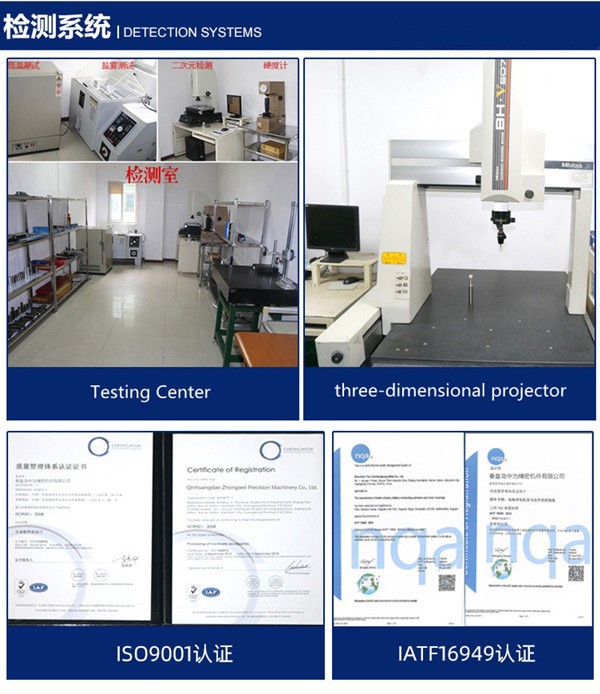
Detection Systems
Copper Silica Sol Investment Casting


We are the manufacturer of "GGG70 ball milled iron castings", if you need more information please contact us!


Send Inquiry
