




Lock Accessories MIM Parts
Qinhuangdao Zhongwei Precision Machine Parts Co., Ltd. was formerly known as the Metal Powder Research Institute of Central South University. It specializes in R&D and production of MIM products. It has a rich scientific research team and high new material research capabilities.
Product Description
Lock accessories MIM Parts | |||||||||
Item | Material | Production Process | Sintering Temperature | Mold | Custom | ||||
Lock accessories | 17-4 | Metal Injection Molding | 1550℃ | To be customized | Yes | ||||
Chemical Composition | C:≤0.07 | ||||||||
Available Materials | Low carbon stainless steel, titanium alloy (Ti, TC4), copper alloy, tungsten alloy, hard alloy, high temperature alloy (718, 713) | ||||||||
Finish | Dimensional Accuracy | Product Density | Appearance Treatment | Appropriate Weight | |||||
Roughness 1~5μm | (±0.1%~±0.5%) | 92~95% | Mirror Reflection | 0.03g~400g) | |||||
Mechanical properties | Tensile strength σb (MPa): aged at 480°C, ≥1310; aged at 550°C, ≥1060; aged at 580°C, ≥1000; aged at 620°C, ≥930 | ||||||||
Process introduction
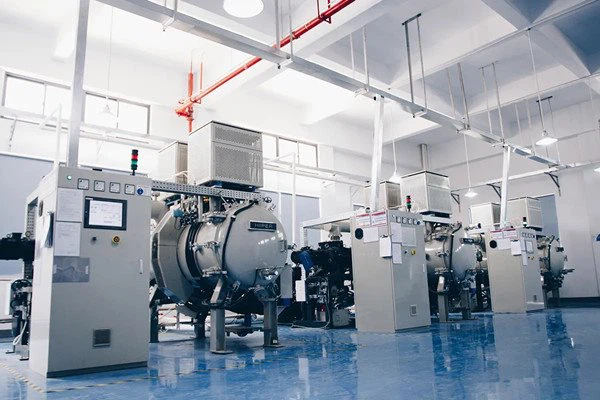
Qinhuangdao Zhongwei Precision Machine Parts Co., Ltd. was formerly known as the Metal Powder Research Institute of Central South University. It specializes in R&D and production of MIM products. It has a rich scientific research team and high new material research capabilities. It has 3 supporting mold factories with a monthly production capacity of 50. sets, multiple purely imported Arburg and Nissei injection machines, catalytic degreasing furnace, vacuum sintering furnace, degreasing and sintering integrated furnace, annual production capacity of 70 to 80 million pieces, high-end MIM parts can be customized, and according to customer needs Give the solution whether it can be solved by MIM.
The following are the advantages of the MIM process:
1. High design freedom: Compared with other metal forming methods, MIM can manufacture parts with more complex shapes. Basically, all structures that can be realized by injection molds can be applied to MIM.
2. More material options: Lock accessories MIM Parts can use almost most metal materials. Considering the economy, the main application materials include iron-based, nickel-based, copper-based, titanium-based metals or alloys.
3. Excellent physical and chemical properties: Because the sintered density of MIM is very close to the theoretical density, its physical and chemical properties are also very good, such as mechanical strength, which greatly surpasses traditional powder metallurgy.
4. Exquisite appearance: the surface roughness (Ra) of MIM sintered billet can reach 1μm, and dazzling appearance effects can be obtained through various surface treatment methods.
5. Excellent dimensional accuracy: MIM can generally achieve a tolerance accuracy of ± 0.5%, and with other processing methods, higher dimensional accuracy can be obtained.
6. Strong and flexible mass production capacity: MIM can flexibly adjust and rapidly increase production, and can quickly respond from hundreds of pieces per day to hundreds of thousands per day.
The difference between PM and MIM products
Project | Press forming (PM) | Metal Injection Molding (MIM) |
Process characteristics | Press forming, which belongs to the later stage of two-dimensional forming and needs machining | Injection molding, three-dimensional integrated forming "near-net" forming method, less post-machining |
Raw material | Generally, metal powders larger than 50 microns are used | Use fine powder (5-30 microns), special feeding |
Finished density | Finished product density is relatively low | High density of finished product |
Finished product weight | 1g-2kg | 0.1g-500g |
Cost of production | The mold cost is relatively high and the raw material cost is relatively low | The mold cost is relatively low, and the raw material cost is relatively high, which is more suitable for mass production |
Use | Production of tools, home appliances, and auto parts | Complex parts and high-strength applications in tools, home appliances, automobiles and other fields |
Application range | Production of various products | Lock accessories MIM Parts are mainly used in the production of three-dimensional complex parts for tools and automobiles |
Sales status
Although the development of China's MIM process technology started relatively late, the industry's development momentum is strong, especially driven by the rapid development of mobile Internet and smart terminals in recent years, the domestic MIM market has shown rapid growth.
According to the data from the Powder Metallurgy Branch of the China Steel Structure Association, the sales of MIM products in China in 2019 were 6.7 billion yuan, a year-on-year increase of 17.5% over 2018.
Source: Powder Metallurgy Branch of China Steel Structure Association, compiled by Zhiyan Consulting
MIM products are widely used downstream, and China's MIM products are mainly used in mobile phones, hardware and automobile industries; based on sales, in 2019, mobile phone applications accounted for 59.10%, hardware applications accounted for 12%, and automotive applications accounted for 10.3% .
Source: Powder Metallurgy Branch of China Steel Structure Association, compiled by Zhiyan Consulting
According to the "2021-2027 China Metal Injection Molding Industry Market Research Analysis and Investment Strategic Planning Report" data released by Zhiyan Consulting: MIM materials are still dominated by stainless steel. In 2019, stainless steel materials accounted for 70%, low alloy steel accounted for The ratio is 21%, cobalt-based alloy and tungsten-based alloy account for 6.0% and 2.0% respectively, and the others are a small amount of titanium, copper and cemented carbide.
Source: Powder Metallurgy Branch of China Steel Structure Association, compiled by Zhiyan Consulting
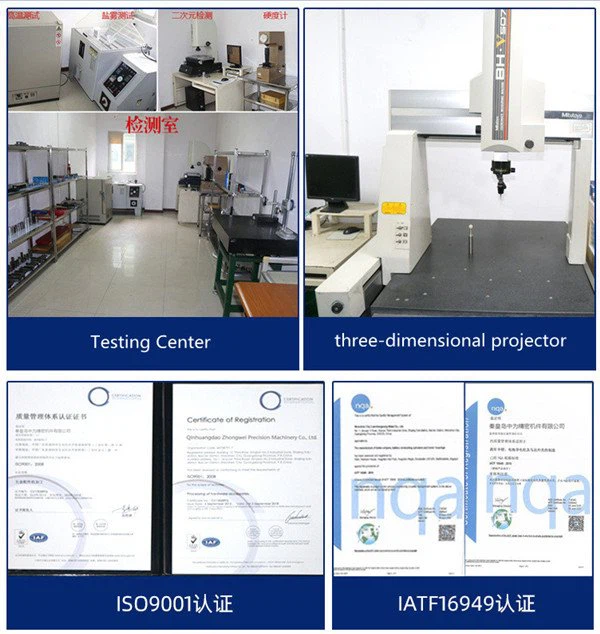
Detection Systems
Metal Injection Molding Process



Send Inquiry
