




Hemostat Tip MIM Parts
Hemostats come in various shapes and lengths to suit the needs of different operations and sites. In addition to the common straight and curved types, there are toothed vascular forceps, toothless hemostatic forceps, mosquito-style straight and curved hemostatic forceps, etc.
Product Description
|
Titanium Injection Molding Hemostat tip MIM Parts |
|||||||||
|
Item |
Material |
Production Process |
Sintering Temperature |
Mold |
Custom |
|
|||
|
Hemostat tip |
17-4 |
Metal Injection Molding |
1350°C-1500°C |
To be customized |
Yes |
|
|||
|
Chemical Composition |
C: ≤0.07 Mn:≤1.00 And: ≤1.00 Cr:15.5~17.5 Ni:3.0~5.0 P: ≤0.04 S:≤0.03 Cu:3.0~5.0 Nb+Ta:0.15~0.45 |
||||||||
|
Available Materials |
Low carbon stainless steel, titanium alloy (Ti, TC4), copper alloy, tungsten alloy, hard alloy, high temperature alloy (718, 713) |
||||||||
|
Finish |
Dimensional Accuracy |
Product Density |
Appearance Treatment |
Appropriate Weight |
|||||
|
Roughness 1~5μm |
(±0.1%~±0.5%) |
92~95%
|
Mirror Reflection |
0.03g~400g) |
|||||
|
Mechanical Properties |
Tensile strength σb (MPa): aged at 480°C, ≥1310; aged at 550°C, ≥1060; aged at 580°C, ≥1000; aged at 620°C, ≥930 Conditional yield strength σ0.2 (MPa): aged at 480°C, ≥1180; aged at 550°C, ≥1000; aged at 580°C, ≥865; aged at 620°C, ≥725 Elongation δ5 (%): aging at 480°C, ≥10; aging at 550°C, ≥12; aging at 580°C, ≥13; aging at 620°C, ≥16 Reduction of area ψ (%): aging at 480°C, ≥40; aging at 550°C, ≥45; aging at 580°C, ≥45; aging at 620°C, ≥50 Hardness: solid solution, ≤363HB and ≤38HRC; 480℃ aging, ≥375HB and ≥40HRC; 550℃ aging, ≥331HB and ≥35HRC; 580℃ aging, ≥302HB and ≥31HRC; 620℃ aging, ≥277HB and ≥28HRC |
||||||||
Hemostat Type
Hemostats come in various shapes and lengths to suit the needs of different operations and sites. In addition to the common straight and curved types, there are toothed vascular forceps, toothless hemostatic forceps, mosquito-style straight and curved hemostatic forceps, etc. The main difference in the structure of the hemostatic forceps is the alveolar bed. Due to the needs of surgical operations, Alveolar beds are divided into straight, curved, right angle, arc and so on. When used for hemostasis, the tip should be perpendicular to the tissue, clamp the stump of the bleeding vessel, and clamp nearby tissues as little as possible.
1. Non-injury hemostatic forceps: Hemostatic forceps mainly used for vascular surgery. The teeth of the alveolar are thinner, shallower, and have better elasticity. The front end of the forceps is smooth, easy to insert into the fascia, not easy to puncture veins, can be used for separating anatomical tissues, pulling sutures, pulling out suture needles, or used as a substitute for tweezers, but it is not suitable for clamping skin, organs and relatively small fragile tissue.
2. Curved hemostat and toothed hemostat: The tip of the curved hemostat is curved, used for separation, clamping tissue or blood vessel hemostasis, and assisting in suturing. It is mainly used for hemostasis in deep tissues or internal organs during surgery. The toothed hemostat is mainly It is used for hemostasis of tough tissues, lifting the part of the incision, etc., and is used to clamp blood vessel bleeding in thicker tissues and tissues that are prone to slippage, such as mesentery, omentum, etc. The front teeth can prevent slippage, but they cannot be used for For subcutaneous hemostasis, blood vessels, nerves and other tissues should not be clamped.
3. Straight hemostat and toothless hemostat: used for subcutaneous tissue hemostasis, mainly used for superficial hemostasis and tissue separation at the surgical site.
4. Right-angle forceps: used for guiding free blood vessels, nerves, ureters, biliary tracts and other tissues and pulling objects.
5. Mosquito hemostatic forceps: relatively small, suitable for separating small blood vessels and connective tissue around nerves, used for hemostasis of small blood vessels, not suitable for clamping large or hard tissues. When the external opening of the organ or the wound is small, it is convenient to go deep into the treatment site to grab objects or tissues, and the hemostatic forceps with elbows can grab the surrounding tissues on the side.
How to use hemostatic forceps
The right way to hold the scissors is to insert the thumb and the fourth finger into the two rings of the hemostat handle respectively, place the middle finger on the hemostat handle of the fourth ring, and press the index finger on the shaft joint to stabilize and guide the operation, which is beneficial to the operation. After use, when releasing the hemostat, use your thumb and forefinger to hold one ring of the vascular clamp, and your middle finger and ring finger to block the other ring, and gently press your thumb and ring finger against each other.
Precautions for using hemostatic forceps
1. The hemostatic forceps should not clamp the skin, intestines, etc., to avoid tissue necrosis.
2. To stop the bleeding, only fasten one or two teeth. Check whether the buckle is malfunctioning. Sometimes the handle of the forceps will loosen automatically, causing bleeding. Be vigilant.
3. Before use, check whether the two pages of the transverse alveolar at the front end are consistent. If they do not match, do not use it to prevent the tissue clamped by the vascular forceps from slipping.
4. During the operation, clamp the possible bleeding site or the seen bleeding point first. Hemostat tip MIM Parts requires accurate bleeding point. It is best to succeed at the first time. Don’t bring too much healthy tissue into it. Ligate the thread The thickness of the clamp should be selected according to the amount of tissue to be clamped and the thickness of the blood vessel. When the blood vessel is thick, it should be ligated separately.
5. When ligating, the tip of the upper vascular clamp must be rotated and pulled out. The ligature must completely cover the tissue to be ligated. When tightening the first knot, put down the raised vascular clamp and gradually loosen it. When tightening, loosen the pliers and remove.
Metal Injection Molding Process

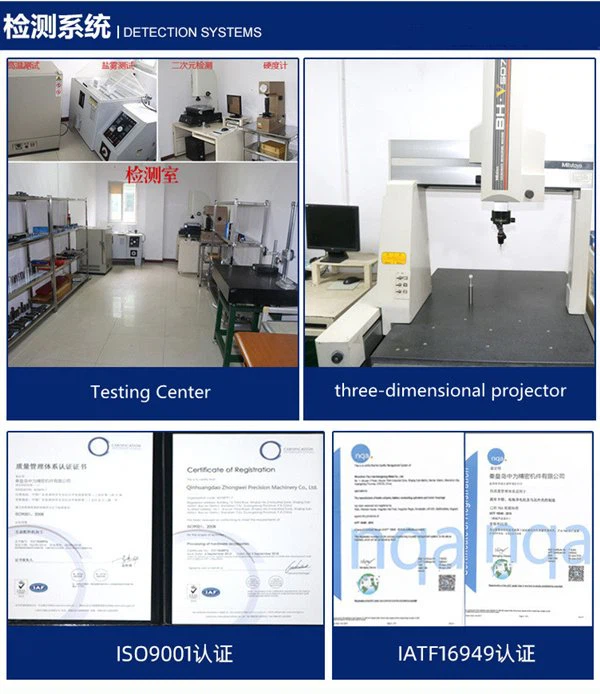
Detection Systems




Send Inquiry
