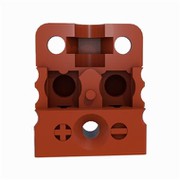
Metal injection molding process can achieve fine component production and reduce more costs
Jul 31, 2023
Metal injection molding process can achieve fine component production and reduce more costs
The automotive, industrial, medical, electronic, and firearms industries have a huge demand for manufactured items, which must be precise and accurate: complex geometric shapes, fine surface treatment, and high tolerance performance. Common manufacturing processes can provide assistance. The products manufactured by metal die-casting production lines are likely to require additional processing steps, which can increase costs and cause waste, while investment casting may be an expensive method.
Better craftsmanship for precision components

There is no doubt in the manufacturing industry that the saying goes, 'The devil hides in the details'. In many applications, achieving "close enough" accuracy is sufficient. Public sinks and faucets, children's metal toys, umbrella frames, galvanized steel roofs, and millions of other products can function normally with low tolerance performance or approximate detail parameters. For metal components, there are many well-known processes that can produce the products that enterprises need.
However, there is also a demand in the industry for small, durable, and precision components, in which details determine everything. The automotive, industrial, medical, electronic, and firearms industries have a huge demand for manufactured items, which must be precise and accurate: complex geometric shapes, fine surface treatments, and high tolerance performance. Common manufacturing processes can provide assistance. The products manufactured by metal die-casting production lines are likely to require additional processing steps, which can increase costs and cause waste, while investment casting may be an expensive method.
There is a method that can achieve the desired precision results more quickly, reduce waste, and ultimately lower costs, which is Metal Injection Molding (MIM). This process can provide the necessary components for the project from scratch, without the need for extensive processing operations after initial production to achieve excellent surface finish, excellent corrosion resistance, and high-strength final products. MIM can also bring impressive cost savings, reducing costs by up to 50% compared to mechanical processing or investment casting methods.
Therefore, it is best to consider MIM as a competitive alternative processing method for mechanical processing, investment casting, and powder metallurgy. It has the following advantages:
Beyond mechanical processing - reduces weight and allows for the use of harder steel. More complex individual components can be produced to merge components to reduce costs and reduce processing steps.
Beyond investment casting - thinner walls, better surface finish, less secondary processing, smaller holes, higher production, and shorter delivery times.
Beyond powder metallurgy - more complex components, thinner walls, component integration, higher density, greater strength, and better corrosion resistance.
MIM can also bring impressive cost savings, reducing costs by up to 50% compared to mechanical processing or investment casting methods

Precision metal components manufactured using MIM technology
MIM Interpretation
In the manufacturing industry, MIM has always been neglected. It is a mature process that has existed for many years, with powerful and effective functions, but for some reason, many universities do not impart MIM knowledge to engineers.
MIM uses extremely fine metal powder with a size of less than 22 microns and a polymer adhesive, mixed in a ratio of approximately 6:4. Heat these mixtures and make them uniform, then cool them and make them into granular raw materials.
The key to this process is the combination of materials, and due to the use of polymer adhesives, the resulting raw materials are somewhat similar to metal plastics or putty. In the molding process, many advantages of MIM processing capability are reflected, including complex contours, holes, small radii, logos, and text that can be incorporated into the components. In this step, the raw materials are heated and injected into the molding equipment, and the components can be generated. This forming process has almost no waste of raw materials, and due to the widespread use of automated operations, it provides a cost-effective and consistent manufacturing solution. Therefore, this process is similar to plastic injection molding in many aspects, and familiarity with the latter can help simplify any transition operation.
Once the components are injection molded, the process of removing the adhesive must begin. Using polymer chemistry catalysts, remove 90% of the adhesive from "green" components with good shape and dimensional integrity. In this step, the component is referred to as "brown", which is a porous matrix composed of metal powder and sufficient adhesive to maintain the shape of the component. At this stage, the weight of the components is reduced by 7% to 10% without shrinkage.
Then sintering is performed to create a solidified metal shape. During the lower temperature range of the sintering process, residual polymer adhesive is burned off. As the heat continues to increase, the metal particle matrix begins to fuse and bond with each other, making the structure more compact and reducing porosity. After sintering, sufficient densification occurs, and components typically have a shrinkage rate of 17% to 22%, depending on the specific material.


MIM considerations
For components manufactured using other metal forming processes, the ones that are suitable for MIM process are those that require extensive processing setup or assembly operations. The main advantage of MIM is that it can produce metal components with complex geometric shapes without the need for mechanical processing.
The MIM process not only provides significant advantages, but also has specific requirements and characteristics. Firstly, in terms of size, the components must be able to fit in a space the size of a tennis ball. Other processes should be considered for larger components. The product weight should preferably be between 0.1 and 35 grams, with a uniform wall thickness ranging from 0.030 inches to 0.250 inches, and have a self-supporting geometric shape during the sintering process.
The main advantage of MIM is that it can produce metal components with complex geometric shapes without the need for mechanical processing.
Potential metal materials include stainless steel (17-4, 316, 420); Low carbon steel (FN02, FN0205, FN08, 4620, 4140, 8620), titanium alloys, and soft magnetic materials (FeSi3, FN50). It can also be Tool steel, controllable expansion alloy and superalloy.
In terms of material properties, even with the use of polymer adhesives, the material composition is similar to steel parts manufactured in other ways and has a raw steel density of approximately 95% to 99%. The tolerance during the manufacturing process is plus or minus 0.5%. It is possible to achieve stricter tolerances, but it is necessary to add a small amount of material to key features and ultimately achieve feature size or position requirements through precision machining processes.
Next, consider the required annual production volume. Due to the cost of mold making and sample operation, MIM is suitable for higher production volumes. If the output is low, the Fixed cost per unit of product will be too high. Usually, it is recommended to estimate an annual production of 10000 units or higher.
The Injection mold construction process needs a gate; The design and mold plan need to include this. Sharp corners are stress points, so it is best to have larger radius dimensions at these positions. The draft angle in component design should be between 0.5 º and 1 º to assist in component ejection. Both internal and external threads can be formed. Wherever possible, the component design should include a flat surface for sintering. Otherwise, for products with highly precise geometric shapes, customized sintering fixtures are required.
In addition, if necessary, the manufacturing process can include secondary processing of MIM components, such as heat treatment, electroplating, and mechanical processing, most of which are carried out at third-party suppliers.
Some types of components are not suitable for MIM processes: screw machine components, stamping parts, precision stamping parts, forgings, cold heading parts, non ferrous alloys, parts with tolerances less than plus or minus 0.002 inches, and gears.
Collaborate with MIM experts
Qinhuangdao Zhongwei Precision Machinery Co., Ltd. has profound and rich experience in MIM processing, providing many advantages as a manufacturing partner. The internal engineering and technical capabilities of the company include:
Advanced development capabilities and customer support, providing pre quotation for new product design, MIM technical training, and guiding the development of new materials and processes.
The project engineer guides Product development and pre production verification.
For the development of new materials and Product development, the material and process engineers guide the development of mold making, rubber discharge and sintering processes.
Manufacturing engineers guide the production operation of new products in the most effective and consistent manner, and can identify opportunities for using automated operations.
Project/manufacturing engineers lead and guide the production of new products in the most efficient and consistent manner, and explore opportunities for using automated operations.
Quality engineering personnel ensure compliance with all quality expectations and requirements, and support the validation of new product designs.
Metallurgical engineers guide metallurgical Test effort to ensure that the mechanical properties of parts meet the material requirements.
Qinhuangdao Zhongwei Precision Machinery Co., Ltd. already has the largest rubber discharge and sintering production capacity in China, and has a continuously operating sintering furnace. Zhongwei Precision also provides professional knowledge in automation, using robots on all press machines to reduce labor, using automatic control on press machines to reduce labor and improve component consistency, and using separate automation operations and 100% inspection in secondary processing operations such as mechanical processing.
Qinhuangdao Zhongwei Precision Machinery Co., Ltd. manufactures molds internally and performs good maintenance throughout the entire life cycle of the molds, ensuring a service life of up to 1 million times. The company uses local supply sources for secondary processing such as mechanical processing, heat treatment, and component coating to improve the efficiency and responsiveness of the supply chain.
Qinhuangdao Zhongwei Precision Machinery Co., Ltd. also has quality management systems such as ISO 9001, ISO 14001, IATF, and ITAR. Our company has demonstrated excellent tolerance control capabilities, which can achieve a tolerance performance of plus or minus 0.002 inches without secondary processing. And it has recognized good material consistency through the use of BASF catalyst materials, including consistency between batches and operational consistency of components.
To explore more ways to innovate using complex and economical components, please visit the metal injection molding website of Qinhuangdao Zhongwei Precision Machinery Co., Ltd.