




Tin Bronze Pipe Joint Silica Sol Investment Castings
Tin bronze QSn6.5-0.4 is a common copper alloy, which has excellent mechanical properties and corrosion resistance, and is widely used in manufacturing various mechanical parts and pipelines. In the welding process, the welding performance of tin bronze QSn6.5-0.4 is influenced by many factors, and this paper will discuss its welding performance.
Product Introduction
|
Tin bronze pipe joint silica sol investment castings |
|||||||
|
Item |
Material |
Production Process |
Sintering Temperature |
Mold |
Custom |
||
|
Tin bronze pipe joint silica sol investment castings |
Bronze alloy |
investment casting |
1380℃ |
To be customized |
Yes |
||
|
chemical composition |
Customized service |
||||||
|
Available Materials |
Low Carbon steel, alloy steel, aluminum alloy, low -carbon stainless steel, titanium alloy (TI, TC4), copper alloy, high temperature alloy (718, 713) |
||||||
|
Smoothness |
Dimensional accuracy |
Product density |
Appearance treatment |
Appropriate weight |
|||
|
Roughness 1~5μm |
(±0.1%~±0.5%) |
7.3-7.6g/CM³ |
According to customer requirements |
0.03g~400g |
|||
Silica sol investment casting of tin bronze pipe joint
Product characteristics of CuSn5Zn5Pb5 copper alloy
1. It has high ductility and high bearing capacity.
2. High hardness and excellent wear resistance, and it is not easy to bite.
3. It has good casting performance and machinability, and good corrosion resistance in atmosphere and fresh water.
Use of CuSn5Zn5Pb5 copper alloy
Mainly used as valves, flanges, pipe joints, pipeline parts, pump parts, etc.
Weldability of tin bronze QSn6.5-0.4 copper bar
Tin bronze QSn6.5-0.4 is a common copper alloy, which has excellent mechanical properties and corrosion resistance, and is widely used in manufacturing various mechanical parts and pipelines. In the welding process, the welding performance of tin bronze QSn6.5-0.4 is influenced by many factors, and this paper will discuss its welding performance.
Physical and Chemical Properties of Tin Bronze QSn6.5-0.4
The chemical composition of tin bronze QSn6.5-0.4 is mainly composed of copper and tin, in which the tin content is 6.5%~7.5% and the zinc content is 0.2%~0.4%. This alloy has good plasticity and machinability, and can be used in pressure vessels, ships, automobiles, petrochemical industry and other fields.
The welding performance
1. Melting temperature range
The melting temperature range of tin bronze QSn6.5-0.4 is wide, generally between 980~1030℃. In the welding process, the melting temperature range will affect the quality and forming effect of welded joints.
2. Thermal conductivity
The thermal conductivity of tin bronze QSn6.5-0.4 is higher, which is 210 W/(m℃), slightly higher than that of low carbon steel. This shows that the material has good heat transfer performance in the welding process, which is beneficial to the rapid cooling and forming of welded joints.
3. Linear expansion coefficient
The linear expansion coefficient of tin bronze QSn6.5-0.4 is 18× 10-6/℃, which is slightly higher than that of carbon steel. In the welding process, due to different materials, certain thermal stress may occur. Therefore, it is necessary to control the welding parameters in the welding process to reduce the thermal stress.
The welding process parameters
1. Preheating temperature
Because the linear expansion coefficient of tin bronze QSn6.5-0.4 is large, preheating can reduce the temperature difference between weldment and weld, thus reducing thermal stress. Generally, the preheating temperature is controlled between 150~200℃.
2. Welding current and arc voltage
Welding current and arc voltage are important factors affecting welding quality. In the welding process, it is necessary to determine the appropriate welding current and arc voltage according to the model and specification of the welder. Usually, the welding current can be properly adjusted, while the arc voltage is generally kept between 20~24V.
3. Welding speed
Too fast welding speed will affect the quality of welded joints, and too slow will increase welding deformation and heat input. Therefore, it is necessary to choose the appropriate welding speed according to the actual situation. Usually, the welding speed is controlled between 20~30cm/min.
In this paper, the physical and chemical properties and weldability of tin bronze QSn6.5-0.4 are discussed. The results show that the material has a wide melting temperature range, high thermal conductivity and large linear expansion coefficient. In the welding process, it is necessary to control the preheating temperature, welding current and arc voltage, welding speed and other process parameters to obtain high-quality welded joints. At the same time, in practical application, it is necessary to select appropriate welding methods and process parameters according to specific conditions to ensure the smooth progress of the manufacturing process.
We are the manufacturer of Tin bronze pipe joint silica sol investment castings, if you need more information please contact us!
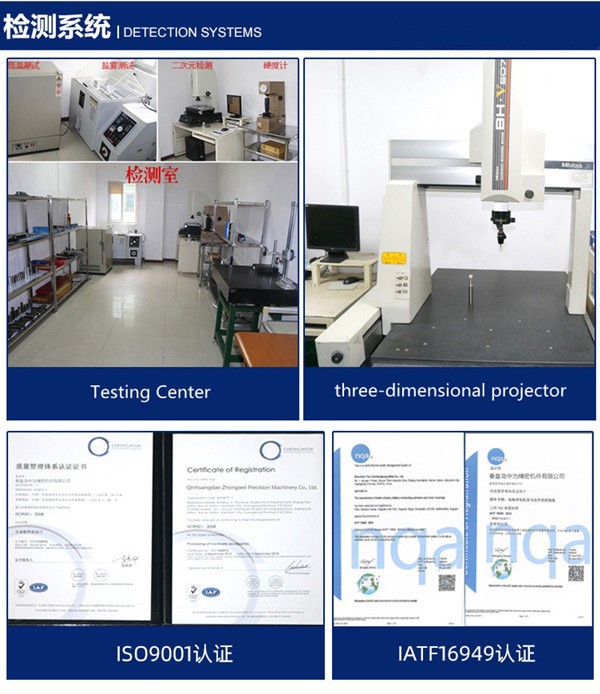
Detection Systems
Copper Silica Sol Investment Casting


Send Inquiry
