



Export Carbide Anti-skid Spikes Metal Injection Molding Parts
Threaded anti-skid spikes range from standard threaded anti-skid spikes to large threaded anti-skid spikes to racing threaded anti-skid spikes.


Threaded anti-skid spikes range from standard threaded anti-skid spikes to large threaded anti-skid spikes to racing threaded anti-skid spikes.
Anti-skid shoes are commonly used in the 6.5-1 series, JX100, JX110, JX300A, JX300B, etc.
Tires are commonly used in the 8-1 series, 9-1 series, 12-1 series, 8-11-2 series, 9-11-2 series, etc.
Racing, ice and snow drift special anti-skid spikes are commonly used in 6-20, 6-25, 6-27, etc., all-steel and tungsten steel nail cores are available!
Specific Implementation Method
A dense tungsten alloy powder metallurgy production process mainly through two processes of powder pressing molding and sintering. Sintering is divided into two steps of low temperature and high temperature.
The process flow is: powder batching → mixing → molding → pre-sintering → high temperature sintering.
A. Pressing molding: Use external force and mold to press the loose powder into a blank of a certain shape, size, density and strength. There are two types of molding: steel mold and isostatic pressing, and the particle size of 4-5μm powder is the best. The molding pressure depends on the quality of the alloy, and 98-358Mpa is commonly used; isostatic pressing can ensure that the density of the blank is uniform, and there will be no defects caused by uneven density in steel mold pressing.
B. Sintering is divided into direct high temperature (vertical melting) and indirect high temperature sintering. It can be carried out under vacuum or hydrogen protection. The current is passed through the blank to directly heat it. The temperature can reach 3000℃ (vertical melting), so that the dense material is densified and purified and a suitable internal structure is obtained. The indirect sintering method uses a medium frequency induction furnace, a tungsten rod furnace or a tungsten mesh furnace for sintering. The temperature reaches 2000-2500℃ and the insulation time is up to several hours.
C. Injection molding-activated sintering aims to directly produce parts with complex shapes using injection molding technology without pressure processing.
The process of the present invention is feasible, showing appropriate molding, debonding or sintering performance, and the parameters can be controlled. By using a binder with a content of 18% (volume) of methyl cellulose and a content of 8% (weight) of water solvent, better molding and sintering performance can be obtained.
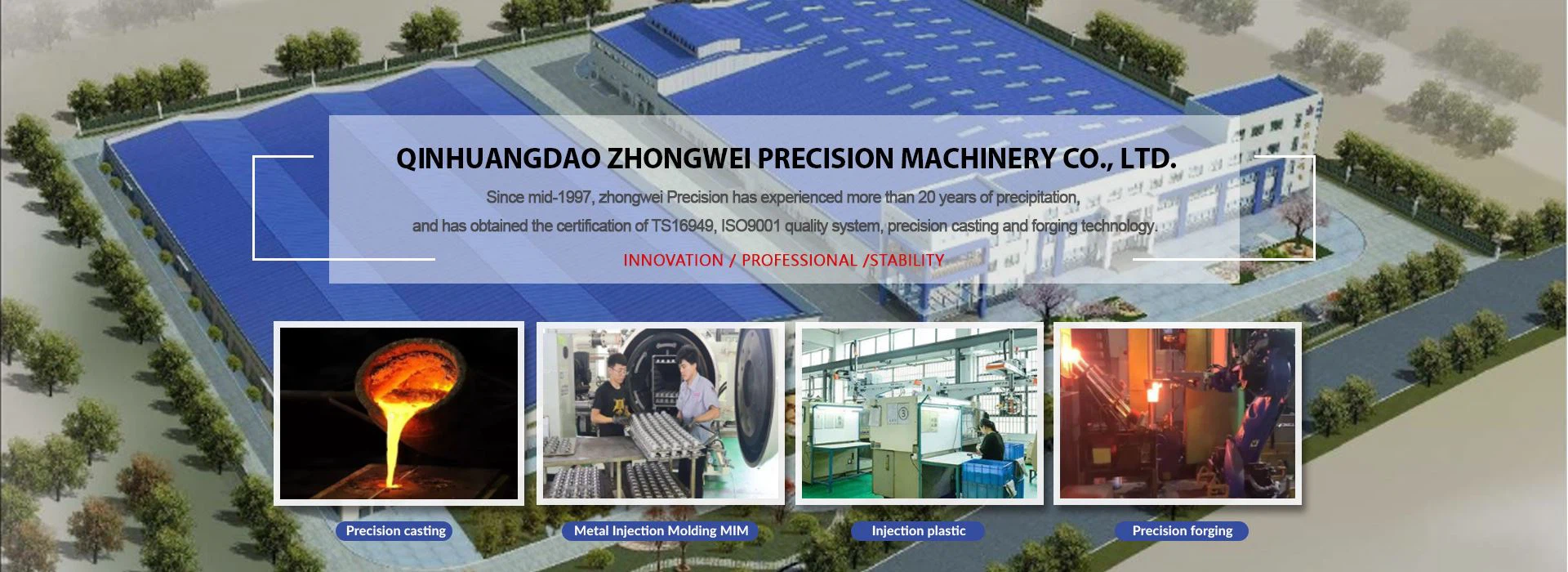
MIM is the abbreviation of Metal Injection Molding, which is a near-net-shape molding technology that injects metal powder into a mold after mixing and kneading with a binder. Zhongwei Precision MIM Project was established in 2003, mainly engaged in the research and development and production of tungsten alloy MIM and titanium alloy MIM. As the project continues to grow and develop, production lines for metals such as stainless steel have been added. At present, the project has MIM and processing platforms and production lines for tungsten alloy, stainless steel, iron-based alloy, copper alloy, soft magnetic material, non-magnetic steel and other materials, and has sintering equipment such as atmosphere-protected push plate furnace and vacuum furnace, with a monthly production capacity of more than 50 million pieces.
 Automobile Tire Anti-skid Spikes Metal Injection Mol...
 66-18R Racing Anti-skid Spikes Metal Injection Moldi...
 44-H12mm Threaded Anti-skid Spikes For Shoes And Boo...
 1.25.013 Five-claw Nail Wear-resistant Nail Metal In...
 Tungsten Alloy Atomizing Nozzles MIM Parts
 Tungsten Alloy Razor Weights MIM Parts
Send Inquiry
