


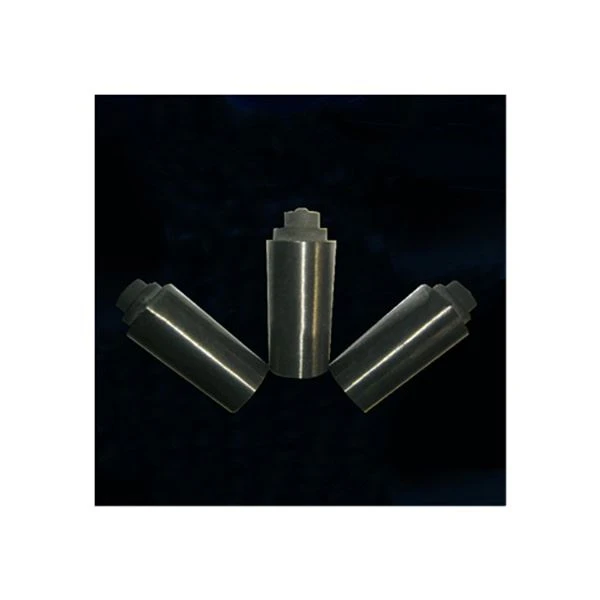


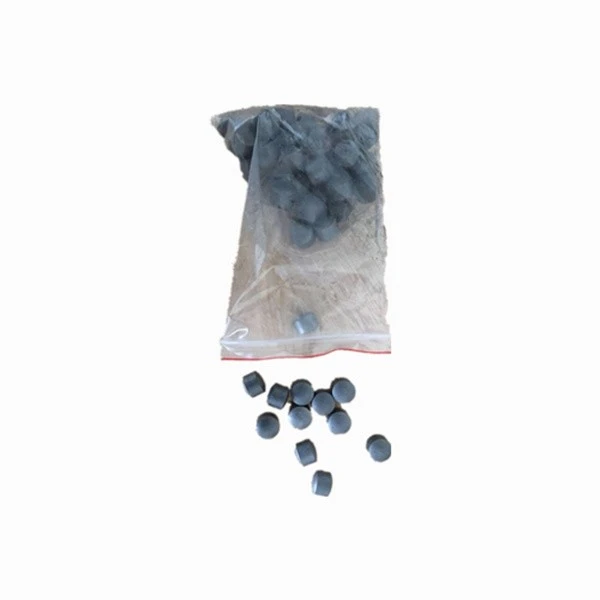

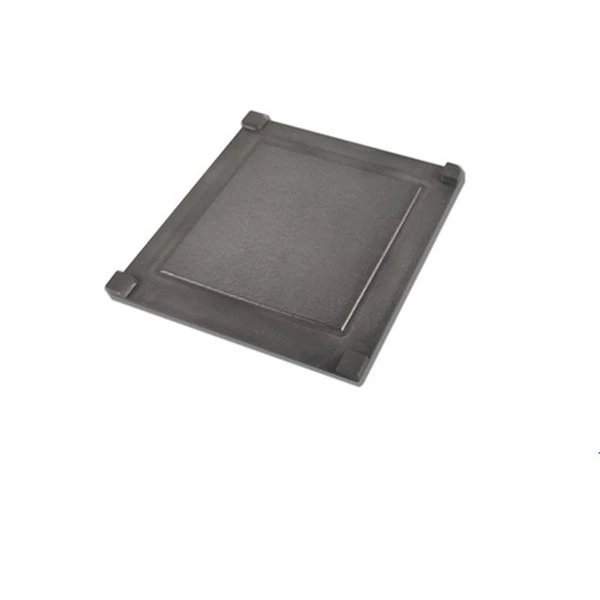
Silicon Carbide Ceramic Parts
SiC ceramics not only have excellent mechanical properties at room temperature, such as high flexural strength, excellent oxidation resistance, good corrosion resistance, high wear resistance and low friction coefficient, but also high temperature mechanical properties (strength, creep resistance) etc.) are the best known ceramic materials.
SiC ceramics not only have excellent mechanical properties at room temperature, such as high flexural strength, excellent oxidation resistance, good corrosion resistance, high wear resistance and low friction coefficient, but also high temperature mechanical properties (strength, creep resistance) etc.) are the best known ceramic materials. The high temperature strength of hot pressing sintering, pressureless sintering and hot isostatic pressing sintered materials can be maintained up to 1600 ℃, which is the material with the best high temperature strength among ceramic materials. The oxidation resistance is also the best among all non-oxide ceramics. Alias Emery.
Zhongwei Precision is committed to providing domestic and foreign customers with advanced Silicon carbide ceramic parts with high strength, high toughness, wear resistance, corrosion resistance and high temperature resistance. technology companies. With a variety of modern high-precision equipment, it has independently realized the completion of the entire production process of ceramic parts from ceramic powder preparation, green body molding, high temperature sintering to ceramic material finishing.
Product Description
1. Implementation standards: the company strictly implements ISO9001 certification, and the products have passed ROHS, FDA EU certification, etc.
2. Product material standards: ISO, GB, ASTM, SAE, EN, DIN, BS, AMS, JIS, ASME, DMS, TOCT, GB
3. Main processes: grouting, injection molding, tape casting, isostatic pressing, 3D printing
4. Available materials for ceramics:
It mainly produces finished ceramic rods, ceramic tubes, ceramic rings, ceramic plates, ceramic suction cups, ceramic blades and other special-shaped ceramic structures. The main ceramic materials are alumina, zirconia, silicon carbide, silicon nitride, and aluminum nitride ceramics. High temperature resistance, wear resistance, corrosion resistance, acid and alkali resistance, anti-magnetic, pressure resistance. And 3D printing, etc. are customized according to customer requirements.
Combined tube, its high wear resistance effectively resists material wear and impact.
Product structure and performance
1. Crystal structure
Silicon carbide mainly has two crystal structures, namely cubic β-SiC and hexagonal - SiC. The basic structural unit of silicon carbide crystals is the interspersed SiC and CSi tetrahedra. The tetrahedrons share edges to form a plane layer, and connect with the next stack of tetrahedra at vertices to form a three-dimensional structure. Hundreds of variants have been discovered due to the formation of different structures due to differences in the packing order of the tetrahedra. Generally, the letters C (cubic), H (hexagonal), and R (rhombic) are used to indicate the lattice type, and the number of layers contained in the unit cell is used to indicate the difference. For example, nH indicates that there are n layers along the c-axis. Repeat cycle The hexagonal structure of , while mR represents a rhombohedral structure with m-layer repeating period along the c-axis.
2. Features
Silicon carbide (SiC) is a compound with strong covalent bonds, and the ionic type of its Si--C bond is only about 12%. Therefore, it also has excellent mechanical properties, excellent oxidation resistance, high wear resistance and Low coefficient of friction, etc. The biggest feature of silicon carbide is its high high temperature strength. The strength of ordinary ceramic materials will be significantly reduced at 1200 ~ 1400 degrees Celsius, while the flexural strength of silicon carbide remains at a high level of 500 ~ 600MPa at 1400 degrees Celsius, so its working temperature can be Up to 1600 ~ 1700 degrees Celsius. In addition, the thermal conductivity of silicon carbide ceramics is also high, second only to beryllium oxide ceramics in ceramics, so silicon carbide has been widely used in high-temperature bearings, bulletproof plates, nozzles, high-temperature corrosion-resistant parts, and high-temperature and high-frequency electronics. Equipment parts and other fields.
Rare earth oxides such as Y2O can also be used as sintering aids for silicon carbide ceramics, and dense silicon carbide can be obtained by liquid phase sintering. Since the liquid phase sintering reduces the porosity and improves the density through the formation of the glass phase, the characteristics of the glass phase have a great influence on the microstructure obtained by sintering.
3. Performance
It has excellent mechanical properties, excellent oxidation resistance, high wear resistance and low friction coefficient. The disadvantage of SiC ceramics is that the fracture toughness is low, that is, the brittleness is relatively large. For this reason, multiphase ceramics based on SiC ceramics, such as fiber (or whisker) reinforcement, heterogeneous particle dispersion strengthening, and gradient functional materials have appeared one after another. , which improves the toughness and strength of the monomer material.
The specific performance is shown in the following table:
Performance | Index |
Molar mass (g mol-1) | 40.097 |
Color | Pure silicon carbide is colorless and transparent, and industrial silicon carbide is light green or black due to impurities such as free iron, silicon and carbon. |
Density (g cm-3) | 3.17~3.47 |
Melting point | Decomposes at about 2830 ℃ under normal pressure, and decomposes into Si, Si2C and SiC3 |
Molar heat capacity ( J·mol-1·K-1) | α - SiC:27.69, β - SiC:28.63 |
Heat of formation (-ΔH) (at 298.15K)/kJ - mol-1 K-1 | α - SiC:25.73±0.63 β - SiC:28.03±2.00 |
Thermal conductivity (W·m-1·K-1) | α - SiC:40.0 β - SiC:25.5 |
Linear expansion coefficient (10-6 ℃-1 ) | α - SiC:5.12 β - SiC:3.80 |
Dielectric constant at 30OK | α - SiC:9.66~10.3 β - SiC:9.72 |
Resistivity (Ω·m) | α - SiC:0.0015~103 β - SiC:9.72~102 |
Process After Sintering
Processing equipment: equipped with CNC engraving machine, centerless grinding, internal and external cylindrical grinding, surface grinding, CNC lathe machining center, wire cutting, turning, milling, grinding and other high-precision production and testing equipment.
Moulds and Inspection Fixtures
1. Mold service life: usually semi-permanent. (except for lost foam).
2. Mold delivery time: 10-25 days, (according to product structure and product size).
3. Tooling and mold maintenance: Zhongwei is responsible for precision parts.
Quality Control
1. Quality control: the defective rate is less than 0.1%.
2. Samples and trial run will be 100% inspected during production and before shipment, sample inspection for mass production according to ISDO standards or customer requirements.
3. Test equipment: roundness measuring instrument, three-coordinate measuring instrument, image coordinate measuring instrument, Hexagon three-coordinate measuring instrument, image measuring instrument, density measuring instrument, smoothness measuring instrument, micro Vickers hardness tester.

Application
The initial application of SiC is due to its superhard properties, which can be prepared into various grinding wheels, abrasive cloths, abrasive papers and various abrasives. Silicon carbide ceramic parts are therefore widely used in the machining industry. In World War II, it was found that it can also be used as a reducing agent and heating element in steelmaking, thus promoting the rapid development of SiC. SiC ceramics have been widely used in petroleum, chemical industry, microelectronics, automobile, aerospace, aviation, papermaking, laser, mining and atomic energy and other industrial fields. Silicon carbide has been widely used in high temperature bearings, bulletproof plates, nozzles, high temperature corrosion resistant parts As well as high temperature and high frequency range of electronic equipment components and other fields.




Send Inquiry
