



Rain Gauge Sensor Titanium Alloy Lost-wax Casting
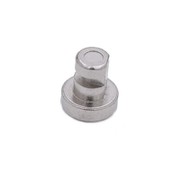
The titanium alloy lost-wax casting of rain gauge sensors is a key component used in rain gauge sensors. It is manufactured using titanium alloy material and a lost-wax casting process. Rain gauge sensors are indispensable devices in fields such as weather monitoring and intelligent windshield wiper systems for accurately measuring rainfall. This casting plays a crucial role in supporting, connecting, and protecting the internal precision components of the rain gauge sensor.
Product Overview
The titanium alloy lost-wax casting of rain gauge sensors is a key component used in rain gauge sensors. It is manufactured using titanium alloy material and a lost-wax casting process. Rain gauge sensors are indispensable devices in fields such as weather monitoring and intelligent windshield wiper systems for accurately measuring rainfall. This casting plays a crucial role in supporting, connecting, and protecting the internal precision components of the rain gauge sensor.
Material Properties
High Strength
Titanium alloy has high strength, allowing the casting to withstand certain external impacts and pressures, maintaining structural integrity in complex operating environments, and resisting deformation or damage, ensuring stable operation of the rain gauge sensor.
Low Density
Titanium alloy has a relatively low density, making the casting lightweight. This is beneficial for applications where weight is critical, such as weather monitoring equipment installed at high altitudes, reducing overall weight, simplifying installation and maintenance, and reducing energy consumption during operation.
Corrosion Resistance
Rain gauge sensors typically operate outdoors for extended periods, exposed to rain, moisture, and chemicals. Titanium alloy has excellent corrosion resistance, resisting these external factors, extending the service life of the casting, and ensuring the performance stability of the rain gauge sensor.
Biocompatibility
While biocompatibility is not a primary consideration in rain gauge applications, in certain environmental monitoring scenarios or applications involving contact with biological environments, the biocompatibility of titanium alloys can prevent adverse effects on the surrounding environment and organisms.
Advantages of Lost-Wafer Casting
High Precision
Lost-wafer casting can produce castings with extremely high dimensional accuracy. Rain gauges have a precise internal structure, requiring strict dimensional accuracy for components. The lost-wafer casting process allows for precise control of the casting dimensions, ensuring perfect fit with other components of the rain gauge, improving the overall assembly accuracy and performance of the sensor.
Manufacturing Complex Shapes
This process can produce castings with complex shapes. Rain gauge designs may require special shapes and structures to meet functional requirements, such as unique flow channel designs to guide rainwater flow. Lost-wafer casting can easily achieve the manufacturing of these complex shapes without complex machining.
High Surface Quality
Lost-wafer casting produces castings with a high surface finish, reducing surface defects and roughness. This not only improves the appearance quality of the castings but also positively impacts the performance of the rain gauge. For example, a smooth surface reduces rainwater adhesion and residue on the casting surface, improving the accuracy of rainfall measurement.
High material utilization
The material utilization rate is relatively high in the lost-wax casting process. Through reasonable mold design and casting technology, material waste can be minimized, reducing production costs.
Application Scenarios
Meteorological monitoring
Rain sensors are crucial monitoring equipment in weather stations. Titanium alloy lost-wax castings are used to construct the housing, support, and other components of rain sensors, enabling them to operate stably for extended periods under various harsh weather conditions, accurately measuring rainfall and providing reliable data for weather forecasting and climate research.
Automotive industry
Modern cars are equipped with intelligent wiper systems. Rain sensors detect the size and frequency of rainwater, automatically adjusting the wiper speed. The high strength and lightweight characteristics of titanium alloy lost-wax castings allow rain sensors to operate more sensitively and accurately, while reducing the overall weight of the vehicle and improving fuel economy.
Aerospace
Rain sensors are used in aircraft, satellites, and other aerospace equipment to monitor weather conditions during flight. The superior properties of titanium alloy lost-wax castings, such as high strength, low density, and corrosion resistance, meet the stringent requirements of aerospace equipment components, ensuring the normal operation of rain sensors in extreme environments such as high altitudes, high speeds, and complex climates.
Quality Control
Raw Material Inspection
Rigorous inspection is conducted on purchased titanium alloy raw materials, including chemical composition analysis and mechanical property testing, to ensure that the raw materials meet design requirements. Only qualified raw materials are used in production, guaranteeing the quality of castings from the source.
Process Monitoring
Real-time monitoring is implemented at each stage of the lost-wax casting process. This includes controlling the manufacturing precision of the mold, the quality of the wax model, and the temperature and composition during the melting process. Advanced testing equipment and technology are used to promptly identify and resolve problems that arise during production, ensuring the stability of casting quality.
Finished Product Inspection
Comprehensive inspection is conducted on the completed titanium alloy lost-wax castings of the rain sensor. This includes dimensional accuracy inspection, surface quality inspection, and internal defect inspection. Commonly used inspection methods include coordinate measuring machine (CMM) measurement and flaw detector inspection for internal defects. Only castings that pass rigorous inspection can proceed to the next process or be delivered for use.
Development Trends
Performance Improvement
With continuous technological advancements, the performance requirements for rain gauges are becoming increasingly stringent. In the future, titanium alloy lost-wax castings will evolve towards higher strength, better corrosion resistance, and lower density to further improve the performance and reliability of rain gauges.
Intelligent Manufacturing
Intelligent manufacturing technologies will be gradually applied to the lost-wax casting process. Through automated equipment, robots, and intelligent control systems, the casting process will be automated and intelligentized, improving production efficiency and product quality consistency.
Green and Environmentally Friendly
Against the backdrop of growing environmental awareness, the titanium alloy lost-wax casting process will place greater emphasis on green and environmentally friendly practices. For example, more environmentally friendly raw materials and processes will be adopted to reduce energy consumption and waste emissions during the casting process, achieving sustainable development.




Send Inquiry
