





Printer Titanium Alloy Wax Loss Casting
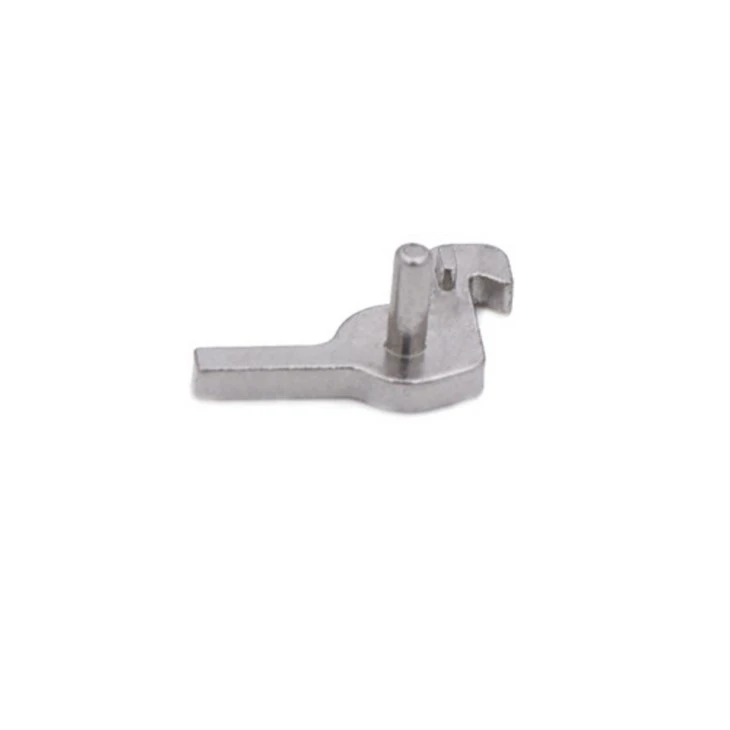
Printer titanium alloy lost wax casting is a method of manufacturing printer components or related structural parts using titanium alloy materials and lost wax casting technology. Lost wax casting, also known as investment casting, is a precision casting technology that can produce parts with complex shapes and high precision.
Overview of Printer Titanium Alloy Wax Loss Casting
Printer titanium alloy lost wax casting is a method of manufacturing printer components or related structural parts using titanium alloy materials and lost wax casting technology. Lost wax casting, also known as investment casting, is a precision casting technology that can produce parts with complex shapes and high precision. Titanium alloy, with its high strength, low density, and good corrosion resistance, is very suitable for use as a key component of printers with high performance requirements.
Selection of Titanium Alloy Materials
Performance advantages
Titanium alloy has the characteristic of high specific strength, which means that while ensuring the strength of printer components, it can reduce their weight and help improve the overall portability and operating efficiency of the printer. Its good corrosion resistance can ensure that the components maintain stable performance in different working environments, such as humid or environments with certain chemicals, and extend the service life of the printer.
Composition selection
Titanium alloys with different compositions can be selected according to the specific requirements of different parts of the printer. For example, for components that require significant pressure and friction, titanium alloys containing elements such as aluminum and vanadium can be chosen to improve their strength and hardness; For some components that require extremely high corrosion resistance, titanium alloys containing elements such as molybdenum and nickel can be chosen.
Lost wax casting process
Wax pattern production: Firstly, based on the design drawings of the printer components, create an accurate wax pattern. This usually uses high-precision molds to press the wax material, ensuring the dimensional accuracy and surface quality of the wax mold. The quality of wax molds directly affects the quality of the final castings, so it is necessary to strictly control the temperature, pressure, and other parameters of the wax material during the production process.
Shell manufacturing: Place the pre made wax mold into a special coating, repeatedly coat multiple layers of refractory materials, and form a shell of a certain thickness. After each coating, drying treatment is required to ensure the strength and stability of the shell. The quality of the shell is crucial for preventing defects such as porosity and slag inclusion in castings.
Dewaxing: Place the wax mold with a shell into a steam dewaxing kettle, use high-temperature steam to melt the wax mold and flow out of the shell, thereby forming a cavity with the same shape as the component inside the shell. The dewaxing process requires controlling the temperature and time to ensure that the wax mold is completely melted and discharged, while avoiding damage to the shell.
Melting and pouring: Select appropriate melting equipment to heat the titanium alloy raw materials to a molten state. During the melting process, it is necessary to strictly control the melting temperature, time, and atmosphere to ensure the chemical composition and purity of the titanium alloy. After the titanium alloy is completely melted, quickly pour it into the preheated shell. The pouring process needs to be fast and smooth to avoid defects such as insufficient pouring and cold insulation.
Cleaning and post-processing: After the casting cools down, remove the mold shell and clean the casting to remove surface impurities and burrs. Then, the castings are subjected to post-treatment processes such as heat treatment and mechanical processing to improve their performance and accuracy, making them meet the requirements for the use of printer components.
Quality Control and Testing
Process control
Strict quality control is required for each link in the entire lost wax casting process. For example, real-time monitoring and adjustment of the dimensional accuracy of wax molds, the strength and thickness of the shell, and the chemical composition during the melting process are carried out to ensure that every step meets the process requirements.
Finished product testing
Conduct comprehensive testing on cast titanium alloy components, including dimensional accuracy testing, surface quality testing, internal defect testing, etc. The commonly used detection methods include coordinate measuring instruments, metallographic microscopes, ultrasonic flaw detectors, etc. Only parts that have passed strict testing and are qualified can be used for the assembly of printers.
Application Prospects
Improving printer performance
Printer components manufactured using titanium alloy lost wax casting technology can enhance the overall performance and reliability of the printer. For example, high-strength titanium alloy components can withstand greater pressure and impact, reducing the occurrence of printer failures during operation.
Meeting personalized needs
The lost wax casting process can produce complex shaped and high-precision components, which can meet the personalized design needs of printer manufacturers. Manufacturers can design unique printer appearances and internal structures based on different market demands and product positioning.
Promoting industry development
The application of wax loss casting technology for titanium alloy printers will help drive the printer industry towards high-end and precision direction. With the continuous advancement of technology and the gradual reduction of costs, this technology is expected to be widely applied in more printer products.


Send Inquiry
