



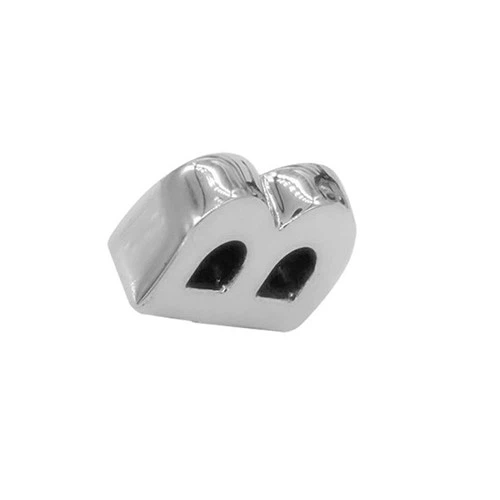


Lost-wax Casting Of Titanium Alloy For Luggage Accessories
Titanium alloy has a very high strength-to-weight ratio. Its strength is close to or even exceeds that of some high-strength steels, but its density is only about 60% of that of steel. For bag accessories, this means that while ensuring the accessories have sufficient strength to withstand the pulling and pressure forces of daily use, the overall weight of the bag can be reduced, improving its portability.
Reasons for Choosing Titanium Alloy Lost-Wafer Casting for Bag Accessories
1. High Strength and Lightweight
Titanium alloy has a very high strength-to-weight ratio. Its strength is close to or even exceeds that of some high-strength steels, but its density is only about 60% of that of steel. For bag accessories, this means that while ensuring the accessories have sufficient strength to withstand the pulling and pressure forces of daily use, the overall weight of the bag can be reduced, improving its portability. For example, bag handles and zipper pulls made of titanium alloy are both sturdy and durable without adding too much burden to the user.
2. Corrosion Resistance
Bags come into contact with various environments during use, such as humid air, rain, and sweat. Ordinary metal accessories are prone to rust and corrosion, affecting their appearance and lifespan. Titanium alloy, however, has excellent corrosion resistance, resisting the erosion of most chemicals. Even in harsh environments for a long time, it can maintain its surface smoothness and performance stability. For accessories such as locks and buckles, using titanium alloy can effectively prevent rust and damage, extending the overall lifespan of the bag.
3. Biocompatibility
Titanium alloys are non-toxic and non-irritating to the human body, exhibiting excellent biocompatibility. This is crucial for bag accessories that come into direct contact with the human body, such as strap buckles and belt buckles. It does not cause adverse reactions such as skin allergies, improving user comfort and safety.
1. High-Precision Molding
Lost-wafer casting can produce bag accessories with complex shapes and high precision. By creating precise wax models, the designer's creativity and intricate design details can be perfectly replicated onto the final titanium alloy accessories. For example, some uniquely shaped bag decorations and brand logos can achieve fine lines and complex patterns using lost-wafer casting, meeting the personalized and refined needs of high-end bags.
2. High Surface Quality
Titanium alloy bag accessories produced using the lost-wafer casting process have a high surface finish, requiring minimal post-processing. This not only improves production efficiency but also reduces costs. Simultaneously, the excellent surface quality enhances the appearance of the accessories, making the bags appear more high-end and sophisticated.
3. High Material Utilization
During lost-wax casting, titanium alloy material can fully fill the mold cavity, reducing material waste. Compared to other processing techniques, such as machining, lost-wax casting can utilize materials more effectively and reduce production costs.
Process Flow of Titanium Alloy Lost-Wax Casting for Luggage Accessories
1. Mold Design and Manufacturing
Based on the design drawings of the luggage accessories, mold design is carried out using CAD/CAM technology, and then the mold is manufactured using methods such as machining and EDM. The precision and quality of the mold directly affect the dimensional accuracy and surface quality of the wax model; therefore, dimensional tolerances and surface roughness must be strictly controlled during the manufacturing process.
2. Wax Injection
The wax material is heated to an appropriate temperature to achieve good fluidity, and then injected into the mold cavity using an injection molding machine. Parameters such as injection pressure, injection speed, and holding time need to be adjusted according to the properties of the wax material and the structure of the mold to ensure the molding quality of the wax model.
3. Wax Model Finishing
After removing the wax model from the mold, it needs to be finished by removing burrs, flash, and other excess parts, and checking the dimensional accuracy and surface quality of the wax model. Defective wax models need to be repaired or remade.
1. Coating
Immerse the wax model in the coating, ensuring the coating evenly covers the surface. The coating typically consists of refractory materials (such as silica sand, zirconium sand, etc.) and binders (such as water glass, silica sol, etc.), its function being to form a hard outer shell on the wax model surface.
2. Sanding
Immediately after coating, place the wax model in a sand box, evenly sprinkling a layer of sand on its surface. The particle size and material of the sand need to be selected according to the thickness and strength requirements of the shell.
3. Drying and Hardening
After sanding, place the wax model in a drying chamber for drying and hardening treatment, allowing the binder in the coating to solidify, forming a solid shell. The drying and hardening time and temperature need to be controlled according to the type of coating and environmental conditions.
4. Repeated Operations
To obtain a shell with sufficient thickness and strength, repeated operations such as dipping in coating, sanding, and drying/hardening are required, generally 4-8 times.
1. Dewaxing
The prepared shell is placed in a dewaxing device. Heating melts the wax model, causing it to flow out of the shell, thus forming a cavity inside the shell that matches the shape of the bag/bag accessory. Dewaxing methods include hot water dewaxing and steam dewaxing; the appropriate method must be selected based on the shell material and the properties of the wax model.
2. Firing
After dewaxing, the shell is placed in a firing furnace for high-temperature firing to remove residual wax and moisture, improving the shell's strength and permeability. The firing temperature and time need to be adjusted according to the shell material and size, generally between 800-1200℃, with a firing time of 1-3 hours.
1. Titanium Alloy Melting
The titanium alloy raw material is placed in a vacuum induction furnace for melting. Heating is used to melt the raw material and achieve a uniform composition and temperature. Strict control of the vacuum level, temperature, and melting time within the furnace is necessary during the melting process to ensure the quality of the titanium alloy.
2. Casting
When the titanium alloy reaches the appropriate casting temperature, it is poured into the mold. Parameters such as casting speed, casting temperature, and casting pressure need to be adjusted according to the size, shape, and structure of the mold for the bag accessories to ensure that the titanium alloy fully fills the mold cavity and avoids defects such as porosity and shrinkage.
1. Sand Removal and Cutting
After casting, the mold is allowed to cool to room temperature. It is then broken, the casting is removed, and sand removal is performed to remove any remaining mold residue from the casting surface. Next, cutting equipment is used to separate the casting from the gate, riser, and other excess parts.
2. Heat Treatment
To improve the mechanical properties of the titanium alloy bag accessories, heat treatment is required. Common heat treatment processes include annealing, quenching, and tempering. The specific heat treatment process needs to be selected based on the composition of the titanium alloy and the application requirements.
3. Surface Treatment Surface treatments, such as polishing, electroplating, and spraying, are applied to the heat-treated castings to improve their surface quality and corrosion resistance. The surface treatment methods and processes need to be selected based on the design requirements and market demand of the luggage.
Quality Control of Lost-Wafer Casting of Titanium Alloy for Luggage Accessories
1. Titanium Alloy Raw Material Inspection Strict inspections are conducted on the purchased titanium alloy raw materials, including chemical composition analysis and mechanical property testing, to ensure they meet design requirements. Simultaneously, the packaging and labeling of the raw materials must be checked to prevent mixing and incorrect materials.
2. Wax and Coating Quality Control The quality of wax and coating directly affects the quality of the wax model and shell, therefore, strict quality control is required. The melting point, hardness, and fluidity of the wax are tested regularly, and the viscosity, density, and particle size of the coating are monitored to ensure stable performance.
1. Process Parameter Monitoring
During the production process, real-time monitoring of process parameters, such as temperature, pressure, and time, is required for each stage, including wax model making, shell fabrication, and melting and casting. By establishing a process parameter database and a real-time monitoring system, deviations in process parameters can be promptly detected and corrected, ensuring the stability of the production process and the consistency of product quality.
2. Quality Inspection and Testing
Quality inspection and testing are conducted on products at each production stage, such as dimensional accuracy testing of wax models, strength testing of shells, and non-destructive testing of castings. Advanced testing equipment and methods, such as coordinate measuring machines and ultrasonic flaw detectors, are used to ensure that product quality meets standard requirements.
1. Visual Inspection
Visual inspection is performed on finished bag and luggage accessories to check for defects such as cracks, pores, and sand holes, and to ensure that surface smoothness and color meet requirements. Products that fail to meet visual standards need to be repaired or scrapped.
2. Dimensional Accuracy Testing
The dimensions of finished bag and luggage accessories are tested using measuring tools to ensure that their dimensional accuracy meets design requirements. For products with dimensional deviations exceeding the standard, adjustments or reprocessing are required.
3. Mechanical Performance Testing
Mechanical performance tests, such as tensile tests and hardness tests, are conducted on finished bag accessories to assess whether their mechanical properties meet usage requirements. For products with unqualified mechanical properties, the causes need to be analyzed and corresponding improvement measures taken.
Market Prospects for Titanium Alloy Lost-Wafer Casting of Bag Accessories
Growing Demand in the High-End Bag Market
With the improvement of people's living standards and changes in consumption concepts, the demand for high-end bags is constantly increasing. High-end bags emphasize quality, design, and personalization, and the requirements for the quality and appearance of bag accessories are also becoming increasingly higher. Titanium alloy lost-wafer casting can produce high-precision, high-quality bag accessories, meeting the demand for personalization and refinement in the high-end bag market, thus possessing broad market prospects.
Driven by the Development of the Fashion Industry
The development of the fashion industry has placed higher demands on the design and quality of bags. Bags are no longer just practical tools, but also fashion accessories. Titanium alloy lost-wafer casting can realize various unique shapes and designs, providing bag designers with more creative space and meeting the fashion industry's demand for innovation and personalization. With the continuous development of the fashion industry, the market demand for lost-wax casting of titanium alloys for luggage accessories will continue to expand.
Technology Spillover from Aerospace and Other Fields
Titanium alloy lost-wax casting technology has been widely applied and developed in aerospace, automotive, and other fields. The technological advancements and experience accumulated in these fields provide technical support and reference for lost-wax casting of titanium alloys for luggage accessories. With continuous technological innovation and cost reduction, the market competitiveness of lost-wax casting of titanium alloys for luggage accessories will continue to improve, and the market prospects will be even broader


Send Inquiry
