




GS370-17 Ductile Iron Castings
Ductile iron casting is a kind of high strength, high toughness, high wear resistance casting, widely used in machinery manufacturing, auto parts, engineering machinery and other fields. The production process is mainly divided into raw material preparation, modeling, drying, dipping, baking, melting and casting, cooling, cleaning, processing and surface treatment steps.
Product Introduction
|
GS370-17 Ductile iron castings |
|||||||
|
Item |
Material |
Production Process |
Sintering Temperature |
Mold |
Custom |
||
|
GS370-17 Ductile iron castings |
GS370-17 |
Molten mold casting |
1380℃ |
To be customized |
Yes |
||
|
Available Materials |
Carbon steel, alloy steel, aluminum alloy, low -carbon stainless steel, titanium alloy (TI, TC4), copper alloy, high temperature alloy (718, 713) |
||||||
|
Smoothness |
Dimensional accuracy |
Product density |
Appearance treatment |
Appropriate weight |
|||
|
Roughness 1~5μm |
(±0.1%~±0.5%) |
7.3-7.6/CM³ |
According to customer requirements |
0.03g~40kg |
|||
1. Summary
Ductile iron casting is a kind of high strength, high toughness, high wear resistance casting, widely used in machinery manufacturing, auto parts, engineering machinery and other fields. The production process is mainly divided into raw material preparation, modeling, drying, dipping, baking, melting and casting, cooling, cleaning, processing and surface treatment steps.
2. The process flow
1. Raw material preparation
The main raw materials of nodular cast iron are cast iron and nodular cast iron desulfurizer, mafic alloy and so on. The raw materials need to be inspected and prepared before production. The inspection of cast iron should include the detection of chemical composition, mechanical properties and metallographic structure. The content and quality of desulfurizer for ductile cast iron should be tested.
2. Styling
Ductile iron casting molding is divided into sand casting and sand free casting two kinds. In sand casting, the mold needs to be made, and the mold is filled with sand core, and then the molten iron is poured into the mold cavity for molding. In non-sand casting, it is necessary to use clay, gypsum, wax wire and other materials for simulation molding.
3. Dry
After the molding of ductile iron parts is completed, the mold needs to be dried in order to evaporate the residual water.
4. Dip
Impregnation is a key step in the pre-treatment of nodular cast iron. In this step, it is necessary to mix the nodular cast iron with a desulfurizer and a magnesia alloy in proportion and impregnate the sand core in the mold at a certain temperature. The impregnation time and temperature need to be adjusted according to different workpiece types and requirements.
5. Bake
After the impregnation, the mold needs to be baked to dry the moisture and residual material in the mold, while allowing the impregnated desulfurizer and magnesium alloy to form a uniform and stable layer in the mold for subsequent melting and casting.
6. Casting
Fusion casting is the core step in manufacturing ductile iron parts. In the melting casting process, it is necessary to put the pre-impregnated mold into the molten hot metal, and maintain the appropriate temperature and time, so that the hot metal fully wets the impregnated mold, and forms a uniform ductile iron structure.
7. Cool down
After the casting is completed, the mold and nodular cast iron need to be allowed to cool naturally. In this process, it is necessary to pay attention to controlling the cooling rate and temperature, so that the organizational structure of ductile iron parts can achieve the best state.
8. Clean up
After the cooling is completed, the ductile iron parts need to be removed from the mold and shaken to remove mold residues and impurities such as sand cores. At this time, it is necessary to pay attention to the control of vibration time and strength, so as not to cause damage to ductile iron parts.
9. Processing
After the cleaning is completed, it is necessary to process the ductile iron. Different nodular iron parts need to be processed in different ways, which can be carried out by casting, hot processing, machining and other methods.
10. Surface treatment
Ductile iron parts need surface treatment after the above process steps. This process is mainly to treat the surface of nodular cast iron to eliminate surface defects and oxide layers.
Conclusion
Through the detailed introduction of the production process of nodular cast iron, we can clearly understand the manufacturing process of nodular cast iron. In actual production, each process step needs to be carefully controlled to ensure the quality and performance of ductile iron parts.
Zhongwei Precision has the following services
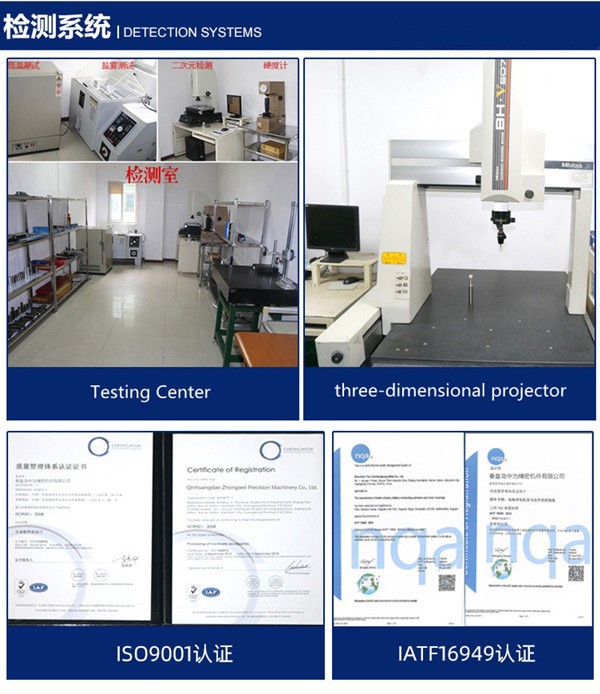
Detection Systems
Copper Silica Sol Investment Casting


We are the manufacturer of "GS370-17 Ductile iron castings", if you need more information please contact us!


Send Inquiry
