



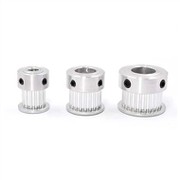
Synchronous Motor Gear PM Sintered Part
The material of powder metallurgy gears meets the standards of powder metallurgy materials. There are many material standards for powder metallurgy materials, and most countries and some large companies have their own standards. Since Japan and the United States are at the forefront of powder metallurgy research in the world, the widely used material standards are JIS (Japan) and MPIF (United States).
Product Introduction
|
Synchronous motor gear PM sintered part |
||||||
|
Item |
Material |
Production Process |
Sintering Temperature |
Mold |
Custom |
|
|
synchronous motor gear |
45# |
Powder metallurgy |
1280℃ |
To be customized |
Yes |
|
|
Chemical composition |
C:0.42~0.50; Cr:≤0.25; Mn:0.50~0.80; Ni:≤0.25; P:≤0.035; S:≤0.035; Si:0.17~0.37 |
|||||
|
Available Materials |
Low carbon stainless steel, titanium alloy (Ti, TC4), copper alloy, tungsten alloy, hard alloy, high temperature alloy (718, 713) |
|||||
Product advantages
|
Smoothness |
Dimensional accuracy |
Product density |
Appearance treatment |
Appropriate weight |
|
Roughness 1~5μm |
(±0.1%~±0.5%) |
92~95% |
According to customer requirements |
0.03g~400g) |
|
Mechanical behavior |
σb\MPa:≥600 σs\MPa:≥355 δ5\%:≥16 ψ\%:≥40 Hardness\HB:≤197 The recommended heat treatment temperature for 45 steel stipulated in GB/T699-1999 standard is 850°C for normalizing, 840°C for quenching, and 600°C for tempering, and the performance achieved is yield strength ≥ 355MPa The GB/T699-1999 standard stipulates that the tensile strength of 45 steel is 600MPa, the yield strength is 355MPa, the elongation is 16%, and the reduction of area is 40%. |
|||
The material of powder metallurgy gears meets the standards of powder metallurgy materials. There are many material standards for powder metallurgy materials, and most countries and some large companies have their own standards. Since Japan and the United States are at the forefront of powder metallurgy research in the world, the widely used material standards are JIS (Japan) and MPIF (United States). Gears usually have certain requirements on strength, so the selected materials have better performance. At present, Fe-Cu-C-Ni materials are widely used for gears (in line with JIS SMF5030, SMF5040 standards; in line with MPIF FN-0205, FN-0205-80HT standards); some manufacturers choose Cu and Fe-Cu-C materials . The material column should indicate the material grade: such as JIS SMF5030, the recommended corresponding density and hardness range is included in the material standard.

Powder metallurgy gear density
Because the gears are used for transmission, the requirements for the strength of the gears are relatively high, so the product density is also required to be relatively high (generally, the higher the gear density, the greater the resistance of the teeth and the better the strength). It is usually controlled at 6.60g/cm3 min or 6.80 g/cm3 min, and the density of warm-pressed gears is usually controlled at 7.00g/cm3 min.
Post-processing of powder metallurgy gears
In order to improve the strength and wear resistance of the gear, it is sometimes necessary to sinter the gear and add post-treatment to improve the strength and wear resistance of the gear. There are usually two methods for post-processing of gears:
1. Surface water vapor treatment: In a high temperature environment, water vapor reacts with Fe on the surface of the gear to form a dense substance Fe3O4. Fe3O4 has high hardness, which can increase the wear resistance and surface hardness of the product.
2. Carburizing treatment: Carburizing treatment is the same as that of ordinary machined gears; carbonitriding and quenching are integrated treatment, and the hardness range is the same as above.
In conclusion
Powder metallurgy gears are immersed in anti-rust oil to prevent the gears from rusting. After the gears are produced, in order to prevent the gears from rusting during storage and transportation, usually when packing the gears, a certain amount of anti-rust oil should be sprayed on the surface to prevent the gears from rusting. rust. There are many types of anti-rust oil, and the anti-rust oil used by each manufacturer is different. If there is no requirement for the type of oil in the product, just indicate the product anti-rust agent on the drawing, and the manufacturer will impregnate the anti-rust oil.
Metal Injection Molding Process

Detection Systems




Send Inquiry
