



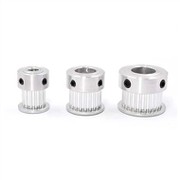
Lock PM Sintered Part
Powder metallurgy products are made of metal powder, such as iron powder, copper powder, stainless steel powder, etc., which are refined by forming-sintering method. The traditional process: powder mixing-pressing-sintering-finishing-post-processing (oil immersion ; packaging; machining, etc.).
Product Introduction
|
Lock PM sintered part |
||||||
|
Item |
Material |
Production Process |
Sintering Temperature |
Mold |
Custom |
|
|
Lock shift fork powder |
40rc |
Powder metallurgy |
1180℃ |
To be customized |
Yes |
|
|
Chemical composition |
C:0.37~0.44 Si:0.17~0.37 Mn:0.50~0.80 Cr:0.80~1.10 Ni:≤0.30 P:≤0.035 S:≤0.035 Cu:≤0.25 Mo:≤0.10 |
|||||
|
Available Materials |
Low carbon stainless steel, titanium alloy (Ti, TC4), copper alloy, tungsten alloy, hard alloy, high temperature alloy (718, 713) |
|||||
Product advantages
|
Smoothness |
Dimensional accuracy |
Product density |
Appearance treatment |
Appropriate weight |
|
Roughness 1~5μm |
(±0.1%~±0.5%) |
92~95% |
According to customer requirements |
0.03g~400g) |
|
Mechanical properties |
Sample blank size (mm): 25 heat treatment: Heating temperature for the first quenching (℃): 850; coolant: oil Second quenching heating temperature (°C):- Tempering heating temperature (°C): 520; Tensile strength (σb/MPa): ≥810 (when the actual hardness is 25HRC) Yield point (σs/MPa): ≥785 Elongation after break (δ5/%): ≥9 Reduction of area (ψ/%): ≥45 Impact absorption energy (Aku2/J): ≥47 Brinell hardness (100/3000HBW) (annealed or high temperature tempered state): ≤207 |
|||
Powder metallurgy process and product defect solution
Powder metallurgy products are made of metal powder, such as iron powder, copper powder, stainless steel powder, etc., which are refined by forming-sintering method. The traditional process: powder mixing-pressing-sintering-finishing-post-processing (oil immersion ; packaging; machining, etc.). That is to say, firstly, the prepared high-purity mixed powder is put into the mold, pressed and formed under a certain pressure, and then the compact is sintered in a controllable atmosphere sintering furnace at a temperature lower than the melting point of the base material to make the powder particles form a metallurgical bond.
Advantages of PM powder metallurgy process:
1). No or only a small amount of machining is required;
2). The material utilization rate is high, which can reach more than 95%;
3). Parts have good size consistency and stability;
4). The material composition can be adjusted according to the performance requirements of the customer's parts;
5). The surface of parts can be treated according to customer needs to improve strength and hardness;
6). Due to the use of mold forming, it can produce complex or strange shaped parts that cannot be produced by other cutting processes;
7).Because it is suitable for mass production, the production efficiency is high and the cost is lower than cutting processing.
About the surface roughness of powder metallurgy parts you don't know: The overall surface roughness and surface reflection ability of powder metallurgy parts depend on density, mold state and subsequent operations. The surface roughness given by conventional profilometry readings is a false impression, because the surface of powder metallurgy parts is not in the same condition as the cut or ground surface of general casting and forging materials. The general reading counts the peaks and valleys of the machined surface, while the powder metallurgy part is a series of very flat surfaces composed of broken planes with pores of different sizes. The effective surface flatness of powder metallurgy parts is better than that of ground or ground and polished surfaces of cast and forged parts. The surface roughness can be further improved with subsequent operations such as repressing, honing, polishing or grinding. Both the manufacturer and the purchaser must agree on the requirements and measurement methods for surface roughness, taking into account the end use of the part.
Powder metallurgy structural parts: sintered parts manufactured by powder metallurgy method with certain dimensional accuracy and able to withstand loads such as tension, compression, distortion or work under friction and wear conditions, also known as sintered structural parts. The main advantages of sintered structural parts are material saving, labor saving, low production cost, suitable for mass production, and obvious energy saving effect. Widely used in automobiles, agricultural machinery, sewing machines, cameras, electric tools and other industries. The main difference between materials such as sintered structural parts and ordinary cast and forged materials is that their density is a variable. Given the same chemical composition and microstructure, the properties of such materials are a function of their density. Due to the presence of residual porosity, its ductility and impact value are lower than those of cast and forged materials with the same chemical composition, which limits its application range. Advantages of powder metallurgy mechanical structural parts: save metal to a great extent and reduce product cost.

The cause of burrs in powder metallurgy parts: the gap of the mold. Powder metallurgy technology is a metal powder molding technology. The relative sliding between the die and die punch, die punch and mandrel must have a fit gap. When the metal powder or finished sintered blank is under pressure in the mold When forming, flow or plastic deformation occurs. The filling effect of molded parts in the mold fit gap is the root cause of burrs. When the gap is about 0.008mm, burrs will appear on the straight line and corners of the part; when the mold gap reaches 0.002mm, sharp edge burrs will easily appear. The burrs of powder metallurgy parts will change with the change of the gap, and the gap of the mold also depends on the change of the surface roughness. When the Ra value increases from 0.2 to 0.8, the gap increases from 0.002mm to 0.008mm. This type of burr is evenly distributed around the part, and the surface roughness of the part is good. Attention should be paid to the structural process of powder metallurgy parts: the junction of each wall should adopt rounded corners or chamfered corners to avoid sharp corners. Harbin powder metallurgy accessories processing
Powder metallurgy is suitable for producing a large number of products with the same shape, and the production cycle can be greatly reduced by powder metallurgy.
Causes of burrs in powder metallurgy parts: Powder metallurgy is a green manufacturing technology with high quality, high precision, and has been widely used in machinery, electronics, automation, aerospace and other fields. With the improvement of industrialization and automation level, the requirements for manufacturing precision of mechanical parts are getting higher and higher, and the requirements for service conditions are becoming more and more stringent. Burrs have gradually attracted great attention, and deburring has become a key process in the processing of parts. The generation of burrs has a lot to do with the design and manufacturing methods of parts. Powder metallurgy is a process in which metal powder (or a mixture of metal powder and non-metal powder) is used as raw material to produce metal materials, composite materials and various types of products through forming and sintering. The design of powder parts pressing die and installation of powder billet forming process will directly affect the surface quality of powder metallurgy parts. Shenzhen powder metallurgy lock parts products.
Metal Injection Molding Process

Detection Systems




Send Inquiry
