




Mobile Phone Frame MIM Parts
There are various ways to treat the surface of the shell, and the collection shells of different materials have their own unique treatment methods. Both the metal mobile phone shell and the plastic mobile phone shell have their own treatment process.
Product Introduction
Mobile Phone Frame MIM Parts | |||||||||
Item | Material | Production Process | Sintering Temperature | Mold | Custom | ||||
Mobile Phone Frame | 17-4 | Metal Injection Molding | 1550℃ | To be customized | Yes | ||||
Chemical Composition | C:≤0.07 | ||||||||
Available Materials | Low carbon stainless steel, titanium alloy (Ti, TC4), copper alloy, tungsten alloy, hard alloy, high temperature alloy (718, 713) | ||||||||
Finish | Dimensional Accuracy | Product Density | Appearance Treatment | Appropriate Weight | |||||
Roughness 1~5μm | (±0.1%~±0.5%) | 92~95% | Mirror Reflection | 0.03g~400g) | |||||
Mechanical properties | Tensile strength σb (MPa): aged at 480°C, ≥1310; aged at 550°C, ≥1060; aged at 580°C, ≥1000; aged at 620°C, ≥930 | ||||||||
Surface treatment method of mobile phone shell
There are various ways to treat the surface of the shell, and the collection shells of different materials have their own unique treatment methods. Both the metal mobile phone shell and the plastic mobile phone shell have their own treatment process. Secondary processing and different surface treatments can not only increase the service life of the mobile phone case, but also improve the visual aesthetics. Let's see what crafts are available!
【Non-conductive vacuum plating】
The non-conductive electroplating technology adopts thin films such as metal and insulating compounds, and utilizes the discontinuous characteristics to finally obtain the existing metal texture without affecting the effect of wireless communication transmission. The process of coating metal materials on the surface of the substrate by vacuum evaporation coating. Generally, the coated metal target is made of pure indium and other materials, which can ensure non-conductive properties.
>>>>Process Features
1. Products made of this material are non-conductive, and can pass the high-voltage test of tens of thousands of volts by a high-voltage meter without conducting or being broken down.
2. The surface of this material product has a metallic texture and can also achieve translucency control.
【Ion Plating】
Ion plating is a method of using gas discharge to partially ionize gas or evaporated substances under vacuum conditions, and deposit evaporated substances or their reactants on the substrate under the bombardment of gas ions or evaporated substance ions. These include magnetron sputtering ion plating, reactive ion plating, hollow cathode discharge ion plating (hollow cathode evaporation method), etc.
>>>>Process Features
1. Good coating adhesion
2. Strong plating ability
3. Good coating quality
4. The cleaning process is simplified
5. A wide range of materials can be plated
【Injection molding of in-mold inserts】
Put the printed and formed decorative sheet into the injection mold, and then inject the resin on the back of the formed sheet, so that the resin and the sheet are combined into one solidification molding technology. IMD is a technology that inserts decorations at the same time as injection molding. The product is integrated with the decorative printing material, and the three-dimensional molded product can be decorated with printing to make the product both decorative and functional. Effect, the surface is a layer of hardened transparent film, the middle is a printed pattern layer, and the back is a plastic layer. Because the ink is sandwiched in the middle, the product can prevent the surface from being scratched and rubbed, and can keep the color bright and not easy to fade for a long time. .
>>>>Process Features
1. Product stability: make the product produce consistent and standardized correct color registration
2. Product durability: through the protection of the specially treated COATING film, the product can provide better surface wear resistance and chemical resistance
3. 3D complex shape design: the application of the excellent stretchability of the film can successfully meet the required product complexity and external design requirements
4. Diversified styles: special styles of metal plating or natural materials can be created according to customer needs
5. Simplified manufacturing process: Through one-time injection molding method, molding and decoration can be achieved at the same time, which can effectively reduce costs and man-hours, and can provide stable production
6. Reducing costs and man-hours: In the IMD process, only one set of molds is required, unlike other old alternative processes that require multiple sets of fixtures, which can eliminate the manpower and man-hours of an operation procedure, and reduce system costs and inventory costs
【Finishing】
Spraying is a coating method in which spray guns or disc atomizers are dispersed into uniform and fine droplets by means of pressure or centrifugal force and applied to the surface of the object to be coated. It can be divided into air spraying, airless spraying, electrostatic spraying and various derived methods of the above basic spraying forms, such as large flow and low pressure atomization spraying, thermal spraying, automatic spraying, multi-group spraying, etc.
>>>>Process Features
1. High production efficiency of spraying operation
2. The main problem in spraying is highly dispersed paint mist and volatilized solvent, which not only pollutes the environment, is not conducive to human health, but also wastes paint and causes economic losses.
3. Large-flow low-pressure atomization spraying is low atomization air pressure and low air jet velocity, and low atomization paint running speed improves the rebound of paint from the surface of the object to be coated.
【Deplating】
After the vacuum evaporation coating, film exposure is used to protect the part of the coating that needs to be retained, and then part of the coating is removed with a deplating solution. The remaining coating will form different coating patterns, and the pattern can maintain different degrees of metal texture. The flatness of the surface avoids unevenness. This process is generally used for large flat battery covers.
>>>Process principle
Use the principle that the photosensitive ink can enhance the ink adhesion after absorbing the exposure energy to protect the pattern that needs to be retained; the ink that does not absorb light energy will be removed because it is not cured, and the pattern that needs to be protected will be retained because the surface ink is cured , and then remove the ink on the surface of the pattern to obtain the desired coating pattern.
【Mold etching】
After the mold is coated with special resin glue for protection, the required pattern texture is transferred through the film, and then the mold is corroded with chemical potion. It is a mold processing process. The pattern can be made to make the surface of the product surface and the surface of the cavity accommodate A small amount of air will not form vacuum adsorption, making demoulding easier.
>>>>Vision
Because the surface of the mirror-clean product is easy to be scratched, dust and fingerprints are easily stained, and the defects, silk marks and ripples generated during the formation process will undoubtedly be exposed on the smooth surface of the product, while some leather grains, orange peel grains, etc. , wood grain, rain pattern, matt surface and other decorative patterns can conceal the defects of the product surface during the molding process, making the product beautiful in appearance and meeting the visual needs.
【Laser】
The high-intensity focused laser beam emitted by the laser is used at the focal point to oxidize the material and thereby process it; the effect of marking is to expose the deep material through the evaporation of the surface material, or to cause traces of the chemical and physical changes of the surface material through the light energy. Either by burning off part of the material through light energy, and "engraving" traces, or by burning off part of the material through light energy, the graphics and characters to be etched are displayed.
【Water transfer printing】
It is a kind of printing that uses water pressure to hydrolyze the transfer paper/plastic film with color patterns. With the improvement of people's requirements for product packaging and decoration, the use of water transfer printing is becoming more and more extensive. The principle of indirect printing and perfect printing effect solve the problem of surface decoration of many products, and it is mainly used for transfer printing of various ceramics and glass decals.
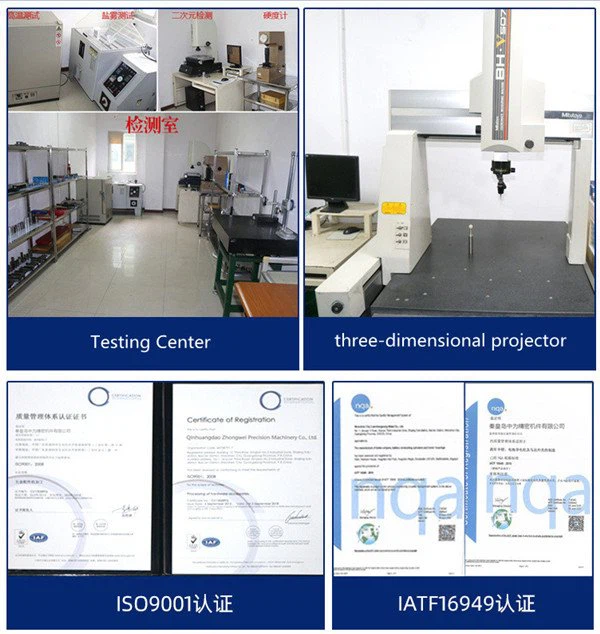
Detection Systems
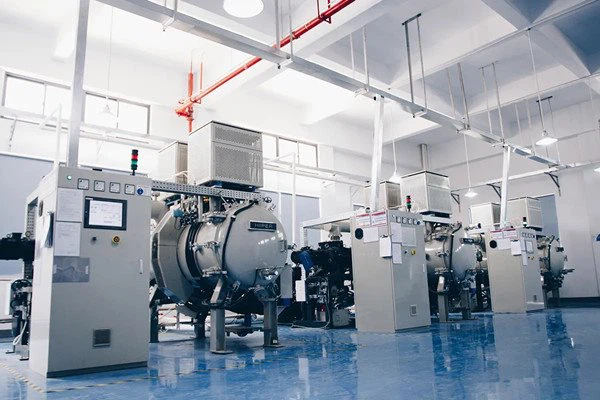
Metal Injection Molding Process



Send Inquiry
