




Micro Gears MIM Parts
The particle size of the metal powder used in the MIM parts process is generally 0.5-20 μm. Theoretically speaking, the finer the particles, the larger the specific surface area, which is easier to shape and sinter.
Product Introduction
Micro Gears MIM Parts | |||||||||
Item | Material | Production Process | Sintering Temperature | Mold | Custom | ||||
17-4 | Metal Injection Molding | 1350-1500℃ | To be customized | Yes | |||||
Chemical Composition | C:≤0.07 | ||||||||
Available Materials | Low carbon stainless steel, titanium alloy (Ti, TC4), copper alloy, tungsten alloy, hard alloy, high temperature alloy (718, 713) | ||||||||
Finish | Dimensional Accuracy | Product Density | Appearance Treatment | Appropriate Weight | |||||
Roughness 1~5μm | (±0.1%~±0.5%) | 92~95% | Mirror Reflection | 0.03g~400g) | |||||
Mechanical properties | Tensile strength σb (MPa): aged at 480°C, ≥1310; aged at 550°C, ≥1060; aged at 580°C, ≥1000; aged at 620°C, ≥930 | ||||||||
1. Micro gear MIM parts production process and parameter selection
The experimental selection method of process parameters and main parameters for mass production of a micro gear.
2. Selection of metal powder and binder
The particle size of the metal powder used in the MIM parts process is generally 0.5-20 μm. Theoretically speaking, the finer the particles, the larger the specific surface area, which is easier to shape and sinter. At present, the main methods for producing powders for MIM parts are: water atomization method, gas atomization method, and base removal method. Each method has its own advantages and disadvantages: the water atomization method is the main powder-making process, which has high efficiency and is more economical in large-scale production, and can make the powder finer, but the shape is irregular, which is conducive to shape retention, but it is better to use viscose There are more binders, which affect the accuracy. In addition, the oxide film formed by the high-temperature reaction of water and metal hinders sintering. The gas atomization method is the main method to produce powder for MIM. The powder it produces is spherical, with low oxidation degree, less binder required, good formability, but high price and poor shape retention. The powder produced by the dial-up method has high purity and extremely fine particle size. It is most suitable for MIM, but it is limited to Fe, Ni and other powders, which cannot meet the requirements of various materials. In order to meet the powder requirements of MIM parts, many powder-making companies have improved the above methods, and have also developed powder-making methods such as micro-atomization and laminar flow atomization. The selection of powder should be comprehensively considered from the aspects of MIM parts technology, product shape, performance, price, etc. Now, water atomized powder and gas atomized powder are usually mixed, the former increases the tap density and the latter maintains shape retention. Since the gear is used in a corrosive environment, water atomized 316L stainless steel powder is used, and its chemical composition (mass fraction) is: Cr: 17.0%, N: 11.5%, Mo: 2.2%, C: not more than 0.3%, Fe: around 69%. Its physical properties are listed in Table 1.
In the process of MIM parts, the binder plays a very important role. It directly affects the mixing, injection molding, degreasing and other processes, and has a great impact on the quality, degreasing, dimensional accuracy and alloy composition of the injection molding blank. The binders used in MIM include thermoplastic systems, thermosetting systems, water-soluble systems, gel systems and special systems, each of which has its own advantages and disadvantages. Thermoplastic binder systems are the mainstream and leader of MIM parts binders. Thermosetting systems Adhesives are rarely used. Although these adhesives have good shape retention, they are difficult to remove. Here, the binder is a thermoplastic binder with a formula of 70% paraffin wax and 30% high-density polyethylene.
3. Mixing, granulation and injection molding
After the powder and binder are determined, kneading is a complex process of improving powder fluidity and completing dispersion. Commonly used mixing devices include twin-screw extruder, Z-shaped impeller mixer, double planetary mixer, etc., and the continuous mixing process is currently being developed. The feeding rate, mixing temperature and rotation speed during mixing will all affect the mixing effect. Here, the powder and binder were mixed on a double planetary mixer at a loading (volume fraction) of 63:37 for 1.5 h, and the mixing temperature was 130±10°C, so that the powder and binder were fully mixed and then mixed in a single The granulation is performed on a screw extrusion device, the granulation temperature is 130°C-150°C, and the screw rotation speed is 40 r/min. Use TMC60EV injection machine for injection molding. One of the key issues in injection molding is the various designs related to molding, including product design and mold design. Although the products currently produced can be from 0.003 g to 200 g, and important progress has been made in improving precision, most designs, especially mold designs, are based on experience, lacking reliable design knowledge, and CAD systems are difficult to apply well MIM. The principle of plastic molds has been used to gradually standardize MIM molds. With the accumulation of experience, the time for mold design and production will be greatly reduced, and multi-cavity molds should be used as much as possible to improve injection efficiency.
The purpose of injection molding is to obtain a defect-free forming blank of the desired shape. Injection defects cannot be eliminated in subsequent processes, so this step must be strictly controlled. Ultrasonic testing technology can be used to detect internal defects of injection molded blanks. Defect control in the injection stage is mainly based on experience. With the advancement of science and technology, using computer to simulate the injection filling process of feeding, and linking it with feeding performance, optimizing injection condition parameters, and eliminating injection defects is an advanced experimental method at present, and it is also a future development trend. It has been reported abroad that moldflow is applied to the analysis of MIM injection process, and achieved good results. We also tried to apply this technology, but found that the simulation results did not agree well with the experimental results. This aspect needs further research.
4. Degreasing and pre-sintering
The degreasing method adopts thermal degreasing, and the thermal degreasing process should be reasonably determined according to the thermal decomposition characteristics of the binder components, and at the same time, it is necessary to prevent defects such as bubbling and cracking of the degreasing billet due to excessive degreasing speed. Since stainless steel powder is very sensitive to carbon content, it is necessary to choose a reducing atmosphere to prevent residual carbon due to the decomposition of the binder. In the temperature range from room temperature to 200 ° C, the decomposition of paraffin wax is the main process. The binder in this process Paraffin is the most important component, so in order to successfully remove paraffin, the heating rate is generally lower than 1°C/min. The degreasing furnace of this process is a hydrogen atmosphere. The degreasing temperature is below 200°C and the temperature is raised at a heating rate of 0.8°C/min. , To remove the binder polymer component high-density polyethylene, and form interconnected holes. After 450°C, the temperature is rapidly raised to 800°C at a speed of 4°C/min, and then kept for 45 minutes to completely decompose the polymer components in the binder, and complete the degreasing and pre-sintering of the blank.
5. Sintering
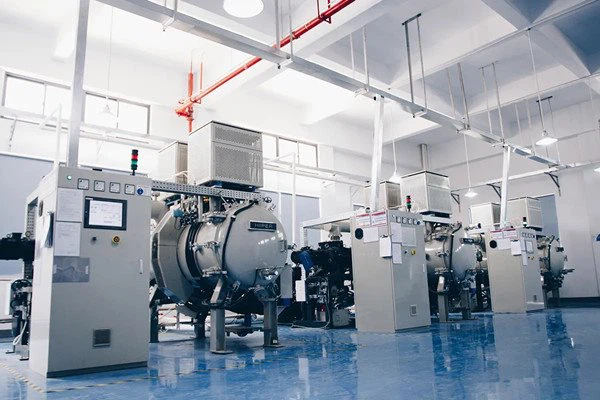
Sintering was carried out in a vacuum sintering furnace with a vacuum of 0.1 Pa.
The sintering process is as follows: start with a heating rate of 4°C/min to 1000°C, hold for 45 minutes, then rapidly rise to a sintering temperature of 1 380 ±10(°C) at 6°C/min, hold for 45 minutes, and then cool down to room temperature. The sintering temperature should be as stable as possible, and the sintering temperature fluctuates by tens of degrees Celsius, which can lead to 10% fluctuations in sintered density and 3% changes in shrinkage.
Dimensional accuracy and mechanical properties of the final product:
For finished parts (as shown in Figure 3), metallographic analysis and mechanical performance tests were carried out on the standard samples prepared together with the parts. The metallographic structure of the part is pure austenite, and its mechanical performance test results: the yield strength is 220 MPa, the tensile strength is 510 MPa, and the elongation is 45%.
8%。 Randomly take 10 measured its average density was 98.8% of the theoretical density. Basically reached the theoretical performance index, to meet the use requirements. The structure and size meet the precision requirements, and no processing is required.
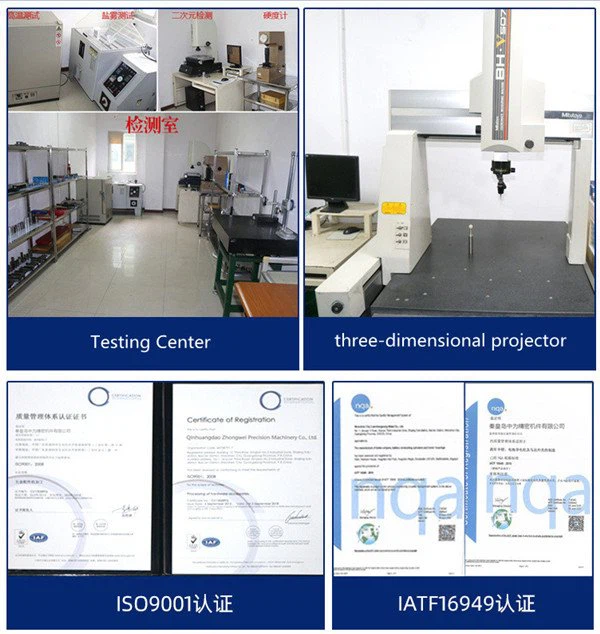
Detection Systems
Metal Injection Molding Process



Send Inquiry
