



Copper Alloy Turning Lost Wax Casting
Copper alloy, a mixture of copper and other metallic elements of the material, because of its excellent electrical conductivity, thermal conductivity and good plasticity, is widely used in electrical, mechanical, construction and many other fields.
Product Introduction
|
Copper alloy turning lost wax casting |
|||||||
|
Item |
Material |
Production Process |
Sintering Temperature |
Mold |
Custom |
||
|
Copper alloy turning lost wax casting |
Investment casting |
880℃ |
To be customized |
Yes |
|||
|
Available Materials |
Low carbon stainless steel, titanium alloy (Ti, TC4), copper alloy, tungsten alloy, cemented carbide, high temperature alloy (718, 713) |
||||||
|
Smoothness |
Dimensional accuracy |
Product density |
Appearance treatment |
Appropriate weight |
|||
|
Standard Ra6.3-12.5, special Ra3.2 |
CT3-7 class, the limit tolerance can reach ±0.10 according to customer requirements |
8.9 |
According to customer requirements |
0.08g -5kg |
|||
Various copper alloy turning workpiece
Copper alloy, a mixture of copper and other metallic elements of the material, because of its excellent electrical conductivity, thermal conductivity and good plasticity, is widely used in electrical, mechanical, construction and many other fields. However, transforming the original copper alloy material into products of the various shapes and uses we see in our lives requires a series of complex processing steps. Let us know what steps are involved in copper alloy processing.
1. Raw material preparation
The first step in any metalworking process is the preparation of raw materials. For copper alloys, this usually involves the selection of copper and other metal elements of appropriate purity, mixed in predetermined proportions. The mixing process requires strict control of the proportion and order of various elements to ensure that the performance of the final product meets the expected requirements.
2. Smelting and casting
The prepared raw material is put into the furnace for melting, a process that requires precise control of temperature and time. After smelting is completed, the molten copper alloy needs to be converted into ingots, billets or plates with initial shape by certain methods, such as continuous casting or sand casting.
3. Heat treatment
In order to make copper alloys have better mechanical properties or processability, heat treatment is usually required. This includes annealing, quenching, aging treatment and other steps, can change the internal structure of the copper alloy, so as to achieve the purpose of improving its performance.
4. Mechanical processing
After the heat treatment is completed, the copper alloy enters the machining stage. This includes cutting, drilling, turning, milling and other operations to remove excess material and process the copper alloy into a shape closer to the final product. This stage requires the use of various mechanical equipment and tools and requires a high level of skill on the part of the operator.
5. Molding processing
For some copper alloy products that require complex shapes or special structures, such as pipes, coils, etc., molding processing is also required. This includes extrusion, drawing, rolling and other steps that can process copper alloys into a variety of complex shapes and sizes. These steps usually require the use of specialized equipment and processes, and the skill requirements of the operator are also high.
6. Surface treatment
After the molding process is completed, the surface of the copper alloy usually needs to be treated to improve its aesthetics and corrosion resistance. This includes cleaning, polishing, painting and other steps to remove surface oxides and stains, making the surface of the copper alloy more smooth and bright. At the same time, the coating can also increase the corrosion resistance of the copper alloy and extend its service life.
7. Quality inspection and control
In the whole process of copper alloy processing, quality inspection and control is a crucial part. This includes quality inspection of raw materials, quality control during processing and quality inspection of finished products. Through the use of various testing equipment and methods, such as spectral analysis, metallographic inspection, mechanical properties testing, etc., it is possible to ensure that the quality of copper alloys meets the predetermined requirements.
8. Packaging and storage
The final step is to package and store the finished product. The purpose of packaging is to protect copper alloy products from damage and pollution of the external environment, while facilitating transportation and use. The storage environment needs to be kept dry and ventilated to avoid oxidation and discoloration of the copper alloy.
We are the manufacturer of Copper alloy turning lost wax casting, if you need more information please contact us!
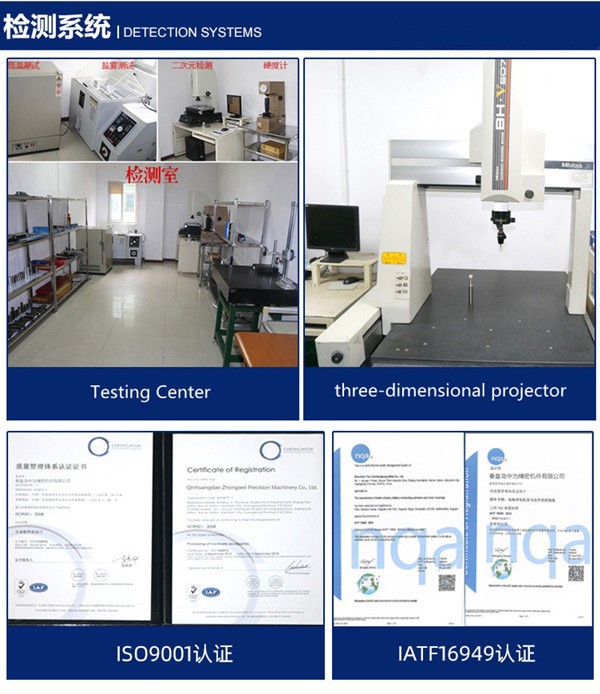
Detection Systems
Copper Silica Sol Investment Casting


Send Inquiry
