




Brass Alloy Right Angle Joint Lost Wax Castings
The difference in definition: Brass, by definition, is an alloy of copper and zinc. If it is only composed of these two components of ordinary brass, but if it is composed of these two elements, it is special brass. Purple copper is a relatively pure type of copper. Due to its purple red color, it is also known as purple copper.
Product Introduction
|
Brass alloy right angle joint lost wax castings |
|||||||
|
Item |
Material |
Production Process |
Sintering Temperature |
Mold |
Custom |
||
|
Brass alloy right angle joint lost wax castings |
Investment casting |
1380℃ |
To be customized |
Yes |
|||
|
Available Materials |
Low carbon stainless steel, titanium alloy (Ti, TC4), copper alloy, tungsten alloy, cemented carbide, high temperature alloy (718, 713) |
||||||
|
Smoothness |
Dimensional accuracy |
Product density |
Appearance treatment |
Appropriate weight |
|||
|
Roughness 1~5μm |
(±0.1%~±0.5%) |
7.3-7.6g/CM³ |
According to customer requirements |
0.03g~400g |
|||
The difference between copper and brass joints
1. The difference in definition: Brass, by definition, is an alloy of copper and zinc. If it is only composed of these two components of ordinary brass, but if it is composed of these two elements, it is special brass. Purple copper is a relatively pure type of copper. Due to its purple red color, it is also known as purple copper.
2. The difference in appearance color: When we observe purple copper and brass, we will find that the color of brass is generally golden yellow, which is more glossy, but copper is rose red, which is also glossy, so we can distinguish them from their appearance color.
3. Differences: The main component of purple copper is copper, with a copper content of up to 99.9%. However, the components in brass are copper and zinc, and more special brass may have other magazines, so it can be well distinguished from its composition.
4. Strength difference: Red copper and brass have different strengths, and we can distinguish them in terms of strength. Brass has more components, so the strength of brass is generally higher. However, the main component of red copper is copper, which has almost no impurities, so the strength of red copper is relatively low.
5. Density difference: The density of brass is 8.52-8.62, and the density of copper is 8.9-8.95, so the density of copper and brass is relatively higher, while the density of brass is lower.
6. Differences in conductivity: Due to the presence of copper in both copper and brass, they can conduct electricity. However, the composition of copper and brass is also different, so the conductivity of copper and brass is different. Brass has more components, so the conductivity is relatively low. The main component of copper is copper, so the conductivity of copper is relatively low.
7. The difference between corrosion resistance and cutting performance: Brass has slightly poorer corrosion resistance but better cutting performance, while copper has better corrosion resistance but poorer cutting performance.
Expansion
Copper, also known as purple copper, is a single element of copper, named after its purple red color. All performance can be found in copper. Using industrial pure copper, with a melting point of 1083 ℃, no isomeric transformation, and a relative density of 8.9, which is five times that of magnesium. The mass of steel of the same volume is about 15% heavier than ordinary steel.
Due to the rose red color of purple copper, which forms an oxide film on the surface and turns purple, it is commonly referred to as purple copper. Copper is a type of copper that contains a certain amount of oxygen, hence it is also known as oxygen-containing copper.
Flavonoids are an alloy composed of copper and zinc, and brass made of copper and zinc is called ordinary brass. If the alloy contains two or more elements, it is called special brass. Brass has strong wear resistance, and brass is commonly used in the manufacturing of valves, water pipes, air conditioning internal and external unit fittings, and radiators.
The earliest copper products discovered in the world were mainly in West Asia, such as in the Zawi Chumi region of Iraq, where copper ornaments were discovered, dating back approximately 10000 to 9000 BC; Copper ornaments were discovered in the Ali Kashgar region of western Iran, dating back approximately 9000 to 7000 BC. The products are all made from natural red copper, rather than copper produced by smelting ore.
We are the manufacturer of Brass alloy right angle joint lost wax castings, if you need more information please contact us!
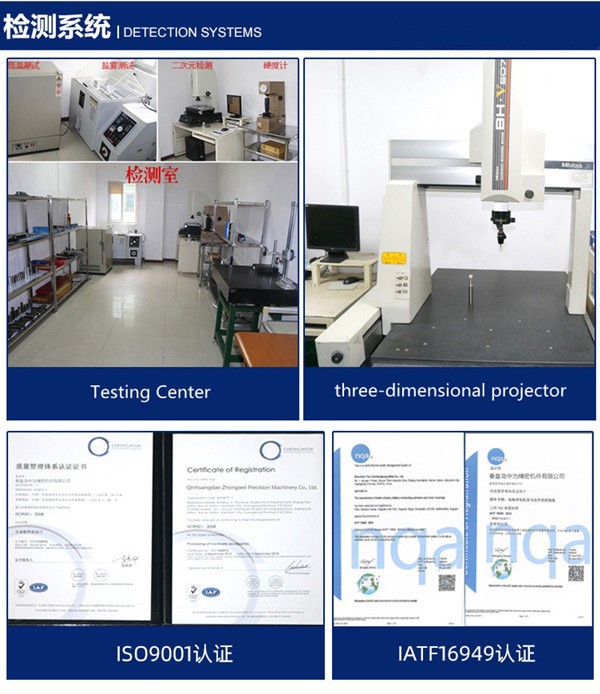
Detection Systems
Copper Silica Sol Investment Casting


Send Inquiry
