

CNC Machining
CNC machined parts for aerospace industry

When it comes to spaceflight, most people probably think that humans can accomplish such a great task. But, have you ever wondered why those planes or planes are safe in the universe? In this article, we will tell you the answer. That is CNC machining.

1.Why do we use CNC technology in the aerospace industry?
The aerospace industry includes all types of air traffic, from massive Boeing 747 jets carrying hundreds of passengers to spacecraft rockets designed to explore the International Space Station, the moon and even Mars. The spacecraft is designed to stay in outer space for months or even years. Given this long-term maintenance, they must be developed with incredible accuracy and precision. In this case, Computer Numerical Control (CNC) is more and more suitable for this field.
2. What is aerospace CNC machining?
Aerospace CNC machining is used to manufacture assembly and maintenance parts for aircraft and space shuttles. In the aerospace industry, aircraft often require CNC machined parts, kits and assemblies. Aerospace equipment and aircraft components require the best components to manufacture hinges, bushings, valves, fixtures or other custom parts in the highest quality metal. Titanium and Kovar are most commonly used for aerospace components, but others include stainless steel, Inconel, aluminum, brass, bronze, ceramic, copper, and other specific types of plastics.
3. Aerospace Product Technology
There are many products in the aerospace field, the structure is complex, and many processes are required to achieve mass production, and the following production processes are indispensable for the fast, accurate and safe operation of the aerospace field.
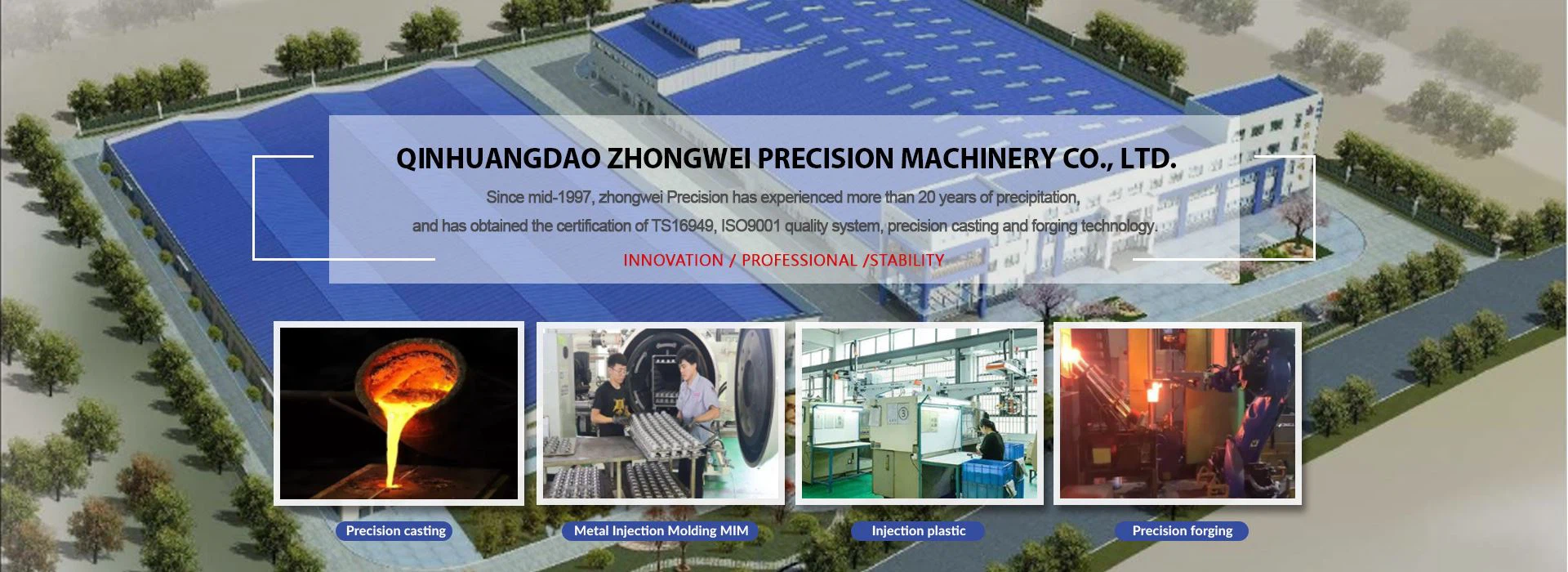
A: Precision Casting
Precision casting refers to the general term for the process of obtaining precise size castings. Compared with the traditional sand casting process, the castings obtained by precision casting are more accurate in size and have better surface finish. It includes: investment casting, ceramic casting, metal casting, pressure casting, lost foam casting.
Precision casting is also called lost wax casting. Its products are precise, complex, and close to the final shape of the part. It can be used directly without processing or with little processing. It is an advanced process with near-net shape.
B: Metal Injection Molding MIM
Metal Injection Molding (MIM) is a new type of powder metallurgy near-net forming technology derived from the plastic injection molding industry. It is well known that plastic injection molding technology produces various complex shapes at low prices, but plastic The strength of the product is not high. In order to improve its performance, metal or ceramic powder can be added to the plastic to obtain a product with high strength and good wear resistance. In recent years, this idea has evolved to maximize the solids content and completely remove the binder and densify the green body during the subsequent sintering process. This new powder metallurgy forming method is called metal injection molding.
C: Precision Forging
Precision forging refers to a forming technology that meets the requirements of the part with only a small amount of processing or no processing after the part is forged. Precision forging is an important part of advanced manufacturing technology, and it is also a widely used parts manufacturing process in automobile, mining, energy, construction, aviation, aerospace, weapons and other industries. Precision forging not only saves materials, energy, and reduces processing procedures and equipment, but also significantly improves productivity and product quality, reduces production costs, and improves product market competitiveness.
D: Precision Die Casting
Precision die casting is an advanced forming technology of precision metal parts, which specifically refers to the use of heat, force, molecular motion and other means to make liquid or semi-liquid metal or metal alloy fill the mold cavity at a high speed under the action of force, and Forming and solidification to obtain metal structural parts, and then through post-processing and CNC finishing, the final product size, shape and performance can meet the target requirements of precision manufacturing technology.
In precision die casting, aluminum alloy materials have many excellent casting properties such as good fluidity, low shrinkage, easy absorption, and easy oxidation compared with other metal materials (such as brass, bronze, zinc, etc.) The main selected materials account for more than 80%. Generally, the dimensional accuracy of precision die-casting products is within 5 wires (1=0.01 mm), the surface roughness (Ra) of the product is within 1.6 microns, and the product geometry tolerance is within 0.1 mm/300 mm;
E: Plastic Injection
Injection molding is a method of producing shapes for industrial products. Products usually use rubber injection molding and plastic injection molding. Injection molding can also be divided into injection molding and die casting.
Injection molding machine (referred to as injection machine or injection molding machine) is the main molding equipment for making thermoplastic or thermosetting materials into various shapes of plastic products using plastic molding molds. Injection molding is achieved by injection molding machines and molds.
(1) Rubber injection molding: Rubber injection molding is a production method in which the rubber material is directly injected into the model from the barrel for vulcanization. The advantages of rubber injection molding are: although it is an intermittent operation, the molding cycle is short, the production efficiency is high, the blank preparation process is cancelled, the labor intensity is small, and the product quality is excellent.
(2) Plastic injection molding: Plastic injection molding is a method of plastic products. The molten plastic is injected into the mold of plastic products by pressure, and the desired plastic parts are obtained by cooling and molding. There are mechanical injection molding machines dedicated to performing injection molding. The most commonly used plastics are polyethylene, polypropylene, ABS, PA, polystyrene, etc.
(3) Molding and injection molding: The resulting shape is often the final product, and no other processing is required before installation or use as a final product. Many details, such as bosses, ribs, and threads, can be formed in a single injection molding operation.
F: Precision Ceramics
Strictly controlled ingredients and specific processes are used to produce ceramics with smooth and flat surfaces without mechanical grinding.
Mainly used to make circuit substrates, coil bobbins, tube sockets, high-voltage insulating porcelain, rocket nose cones, etc. It can also be made into high porosity precision casting cores for casting alloys. It can also be used as a high temperature material with good shock resistance.
4. Aerospace CNC machining materials
A critical part of aerospace engineering is material selection. Aerospace manufacturing requires materials with exceptional strength, reliability and wear resistance to ensure they are ready for changing conditions and demanding structural loads. Here are some of the materials needed for aerospace machining:
(1) Stainless steel
Stainless steel is a viable alloy material for a variety of aerospace components and has been used in aerospace applications for decades. Stainless steel
Stainless steels are resistant to corrosion and high temperature oxidation because their chromium content creates a rich oxide film. Common aerospace applications for stainless steel include fuel tanks, exhaust components, aircraft panels, high-temperature engine components, and components that require welding.
(2) Aluminum
Aluminum has always been a major material in the aerospace industry. The metal is almost one-third the weight of stainless steel, contributes to fuel efficiency and weight margin, and is generally cheaper and easier to handle. But it's also a more efficient heat conductor, so it's not suitable for parts that require higher heat resistance and are more difficult to solder. As technology develops, other alloys (and composites) may replace aluminum as the primary aerospace material, but it still has applications in industry today.
(3) Titanium
The aerospace industry is now leading the way in the use of titanium alloys because of its incredible strength-to-weight ratio. This metal is an attractive choice for aerospace engineering because it is lighter than aluminum but has impressive heat and corrosion resistance. Its excellent resistance occurs when treated with carbon fiber reinforced polymer (CFRPS). From frames to engines, manufacturers look to titanium as the ideal solution for complex aerospace processes.
(4) High temperature superalloy
These superalloys, metal alloys, are characterized by heat resistance, corrosion resistance, lightweight construction, and high strength. Superalloys are often the best choice for the hottest parts of jet engines, turbine and compressor stages. Some of the superalloys we use are nickel superalloys, cobalt superalloys, and iron superalloys.
5. Aerospace processing methods
(1) 3D processing
With 3D CNC machining, almost any model or technical drawing can be formed to exacting specifications. 3D machining is especially suitable for large aerospace components. 3D technologies and techniques can handle complex operations easily, accurately and cheaply.
(2) 5-axis machining
Five-axis CNC machining uses a high-precision CNC-operated machine tool that moves a tool or part in five axes simultaneously. This extremely precise method is ideal for aerospace engineering, which involves the use of special materials to create particularly complex parts.
(3) Three-coordinate detection
Capability Maturity Model (CMM) inspection services ensure that your aerospace component CAD models and 2D drawings are fully achievable in terms of quality, reliability and safety. Three-coordinate detection is an important step in all aerospace engineering projects, where safety is very important.
By converting component geometry into CMM programmable data, every complete component is inspected with a detailed report.
(4) CNC turning
CNC turning enables the manufacture of multiple parts to interact flawlessly. Computer-aided drafting (CAD) software controls CNC lathes that can cut excess and rotated material at high speeds. The precision of this machine is less than 10 microns. Ensuring that CNC lathes work to exact specifications based on design drawings, resulting in the highest quality and reliability of aerospace components.
This article briefly introduces the application of CNC machining in the aerospace field from several aspects: why we use CNC technology in the aerospace industry, what is aerospace CNC machining, aerospace CNC machining materials, and aerospace machining methods.